

Introduction
It's 9am at Kew Bridge in west London, where tourists, runners, and dog walkers queue at the Dear Coco vintage Italian coffee cart.
The coffee served is high-grade arabica, brewed using an expensive La Marzocco machine. Prices reflect this quality: £4.50 for an iced latte, £4.10 for a 10 oz latte, and £3.90 for a 6 oz flat white.
While these prices might once have seemed steep, the £4 mark has been surpassed across much of the UK, including in chains that do not use premium beans. In central London, a large coffee with alternative milk options like soy or almond approaches £5.
Earlier this year in the US, Starbucks CEO Brian Niccol faced criticism for describing a "$9 [£6.68] experience" at one of his outlets as a "really affordable premium experience."
The barista at the Kew cart, Anthony Duckworth, offers a contrasting perspective. Operating under street trading fees rather than high rents and business rates, he still feels the pressure.
"We feel super strongly about keeping the price of a flat white under £4 for as long as possible," Anthony Duckworth says, as rowing boats glide past. "But it's becoming increasingly difficult, because every part of the supply chain has become more expensive. We think there's a really important psychological threshold around that four pound mark."
Coffee is more than a daily ritual; it offers insight into the modern global economy. The latte reflects issues from commodity inflation and trade disruptions to geopolitical tensions and climate change. It reveals rising demand from the Chinese middle class and lingering economic effects from historical events like the Vietnam War.
All these factors are encapsulated in every frothy cup.
Industry hiccups
The contemporary coffee journey began in Turin, northern Italy, at a train station in 1895. Steam-powered coffee machines were developed to serve time-pressed travelers, often on the Milan express—one theory behind the name "espresso." This marked the start of mass consumption of what was once a luxury beverage.
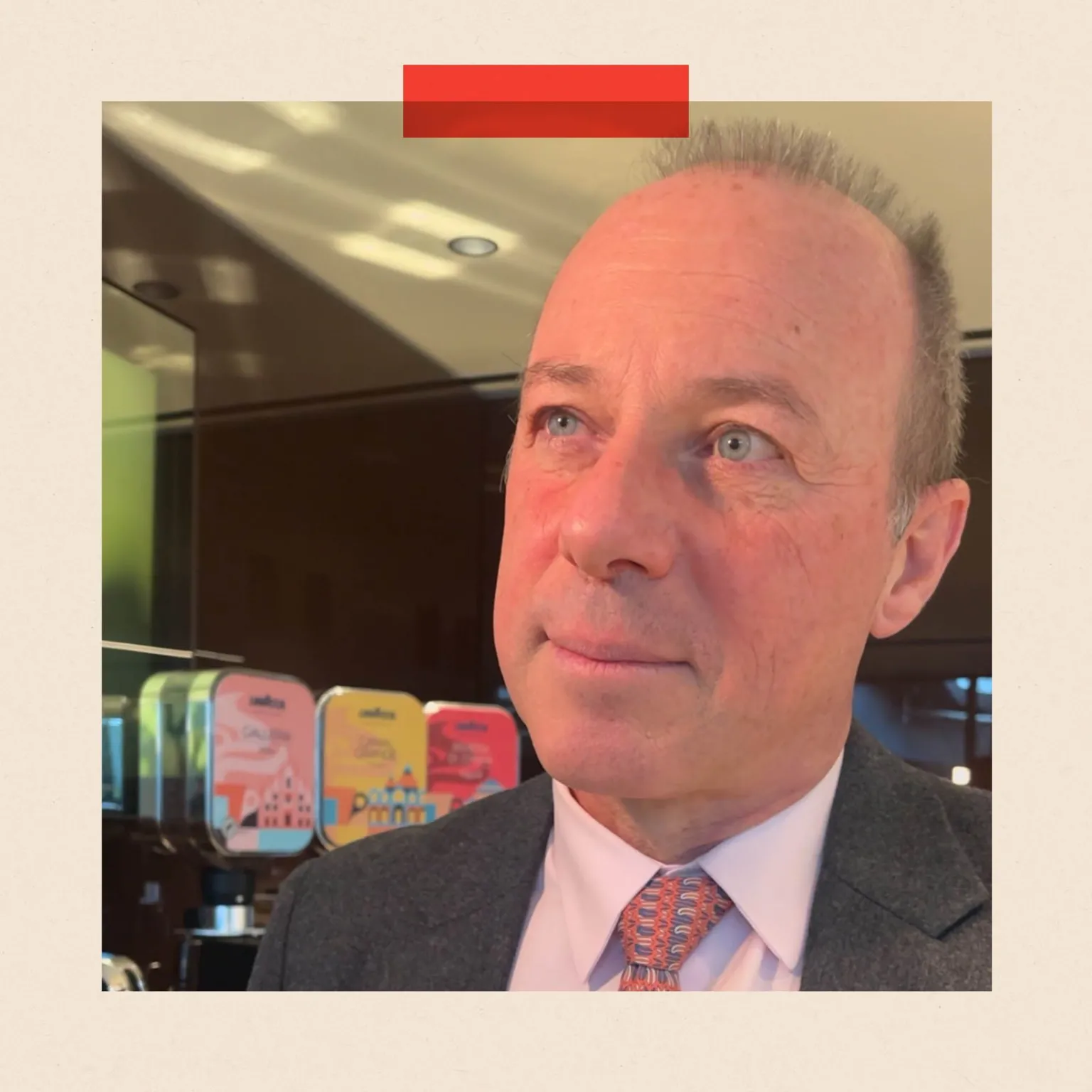
Near the Turin ring road, at a modern glass and steel facility, I spoke with Giuseppe Lavazza, whose great-grandfather founded the Lavazza coffee brand 131 years ago.
"The secret of surviving is having a company ready to modify," Lavazza says while holding what he hopes is his next innovation: a coffee cookie called a tabli, designed for the growing at-home coffee market without the environmental concerns of metal pods.
In recent years, the coffee industry has faced significant challenges affecting both major coffee bean types.
Arabica beans, prized for their sweetness and aroma, are hand-picked at high altitudes in Brazil, Ethiopia, and Kenya—a meticulous process even more intricate than harvesting grapes for fine champagne. Robusta beans, known for higher caffeine content, are mass harvested by machines. Vietnam has dominated robusta production since emerging from its war in the 1970s.
The climate squeeze
Two years ago, a series of climatic events pushed prices for both arabica and robusta beans to multi-decade highs.
In early 2024, Vietnam experienced its worst drought in decades, with rainfall dropping by 30%. Later that year, a typhoon during harvest further impacted production. Meanwhile, Brazilian farmers continue to recover from a severe frost in 2021 that damaged the arabica crop.
Consequently, arabica prices peaked last year above $4 (£2.97) per pound of green beans, up from a historical average of about $1.20. Prices have since settled at $3.08. Robusta prices rose even more, reaching $2.59 (£1.92) before settling near $1.56. Both remain significantly higher than pre-2020 levels.
Lavazza describes recent years as an "unprecedented time in terms of complexity and troubles," adding that prices are unlikely to fall soon.
"Unfortunately, we have to wait for at least a couple of years, because we need two big crops from Brazil, Vietnam, arriving on the market that could create a different market condition."
He also highlights speculation in financial markets.
Every morning at 4:30am, thousands of Vietnamese coffee farmers check prices and forecasts for robusta beans on their smartphones. This ritual has led many to store their coffee beans post-harvest, anticipating price increases, effectively engaging in market speculation.
Attention now turns to Brazil's July crop. Some analysts predict a bumper arabica harvest that could reduce prices. However, the possibility of a "super" El Niño event this autumn—a periodic Pacific Ocean warming—could cause further disruptions.
Additionally, ongoing geopolitical tensions continue to affect coffee markets.
Trade wars
A notable aspect of former US President Donald Trump's 'Liberation Day' tariffs announced last year was their impact on coffee-producing countries. Vietnam faced a 46% tariff, Indonesia 32%, and Brazil 50% after an escalation from 10%. The coffee-producing regions coincided with the tariff zones.
This caused significant disruption in global coffee markets. Brazilian exports to the US plummeted, more than halving in the summer following the tariffs. Prices for beans from countries with lower tariffs, such as Colombia, rose as American suppliers sought alternatives.

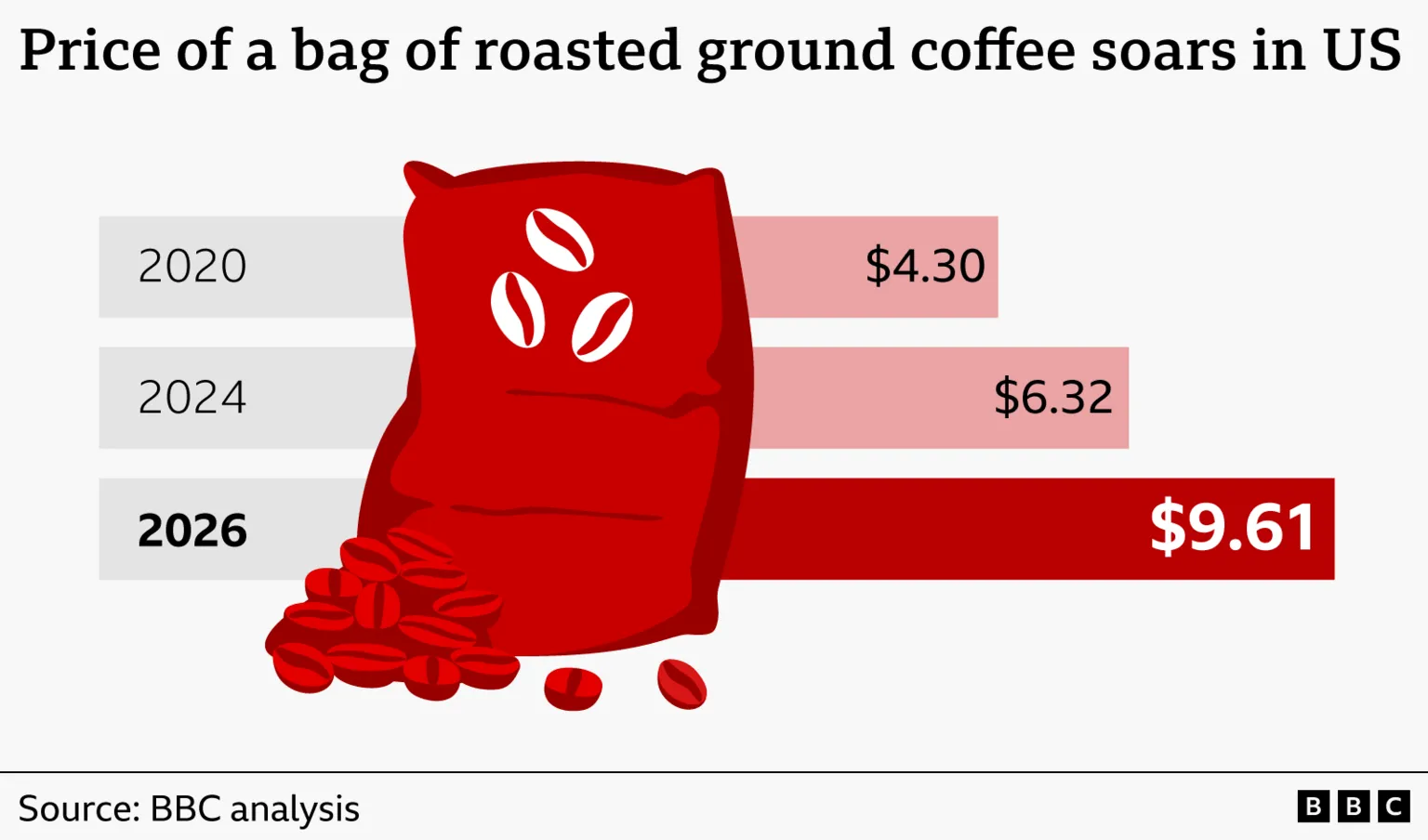
American consumers felt the impact. US roasted coffee prices increased by 17% in the year to March, while instant coffee surged nearly 25%, outpacing gasoline price rises. Instant coffee became the fastest-rising item in the inflation basket after fuel oil. A bag of ground roast coffee that cost $4.30 in 2020 rose to $6.32 in 2024 and $9.61 in 2026, approaching $10. The cheapest coffee varieties were hardest hit, affecting lower-income Americans.
Brazilian exports were redirected to Europe, with Germany surpassing the US as the largest importer of Brazilian beans in 2025, somewhat shielding European consumers.
Facing voter dissatisfaction over rising supermarket prices, Trump signed an executive order in November last year exempting coffee beans (along with bananas and beef) from tariffs.
Many viewed coffee as exposing flaws in the tariff policy. Trump claimed tariffs targeted countries "cheating America," but Vietnam's coffee dominance is largely due to its "comparative advantage"—its climate and low labor costs—rather than unfair practices.
Trump also argued tariffs would encourage reshoring industry, but this is irrelevant for coffee, which requires subtropical growing conditions.
The import collapse and price surge delivered a predictable lesson.
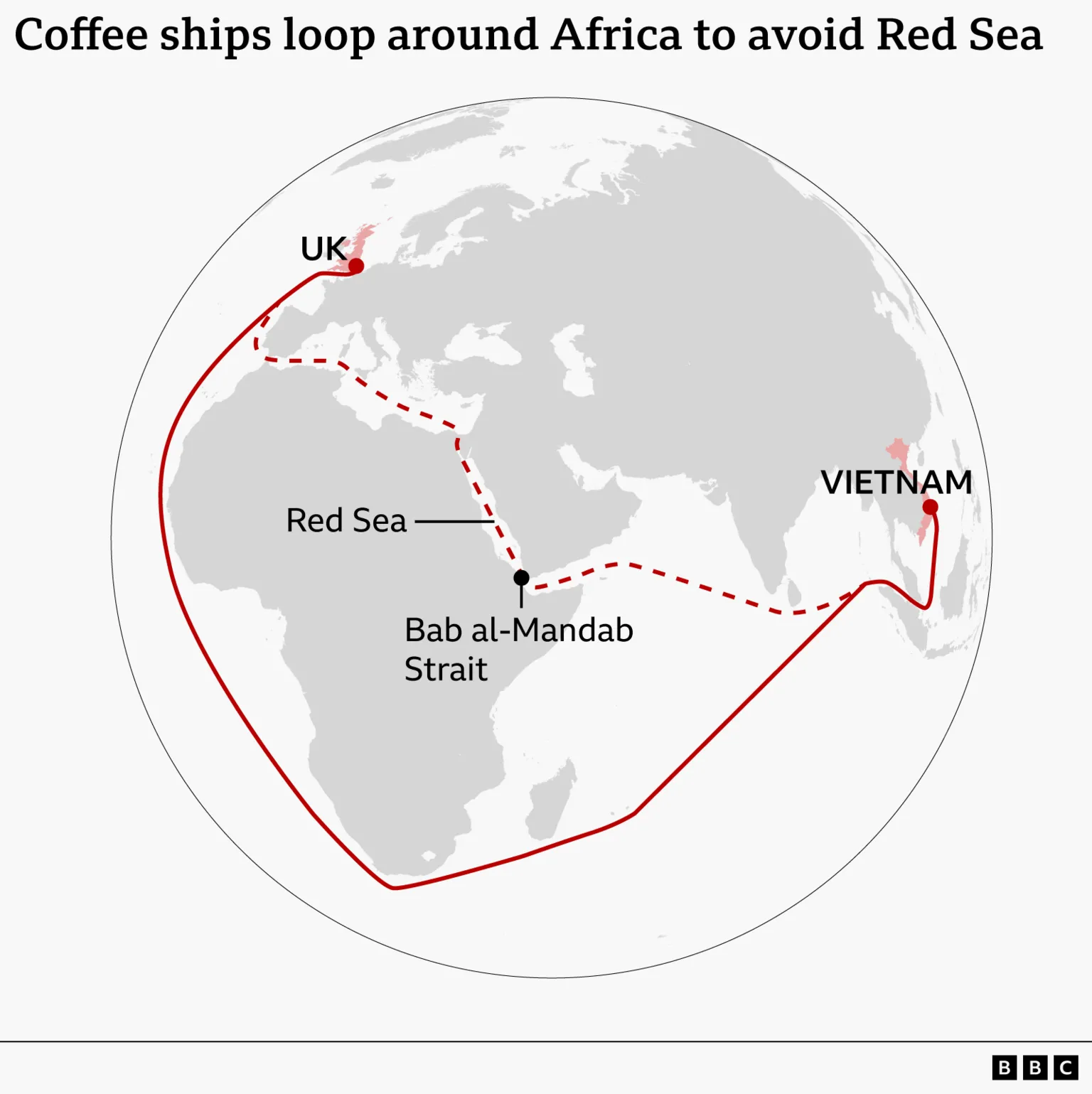
Global shipping disruptions also contribute. Vietnamese coffee shipments to Europe now avoid the Red Sea's Bab al-Mandab Strait, threatened by Houthi militants, by routing around Africa's southern tip—adding approximately 4,000 miles to the journey.

New EU anti-deforestation regulations, set to take effect in 2026 and 2027, also influence the market. Vietnamese and Brazilian suppliers must provide GPS coordinates of plantations to prove coffee is not sourced from land deforested in the past five years. Although implementation has been delayed, compliance costs are already mounting.
Coffee premiumisation
Despite these challenges, consumers continue to pay higher prices. Demand is inelastic, meaning it does not significantly decrease with price increases.
"We saw that despite the high prices, people love having coffee," Lavazza says in Turin. "We don't see any significant decrease in terms of volumes in the most important countries."
In an era of rising prices, Lavazza notes the importance of diversifying coffee offerings, such as increasing production of cold brews, which are gaining popularity.
The growing appeal of cold brews among younger consumers exemplifies "premiumisation," where businesses enhance product perception to justify higher prices.
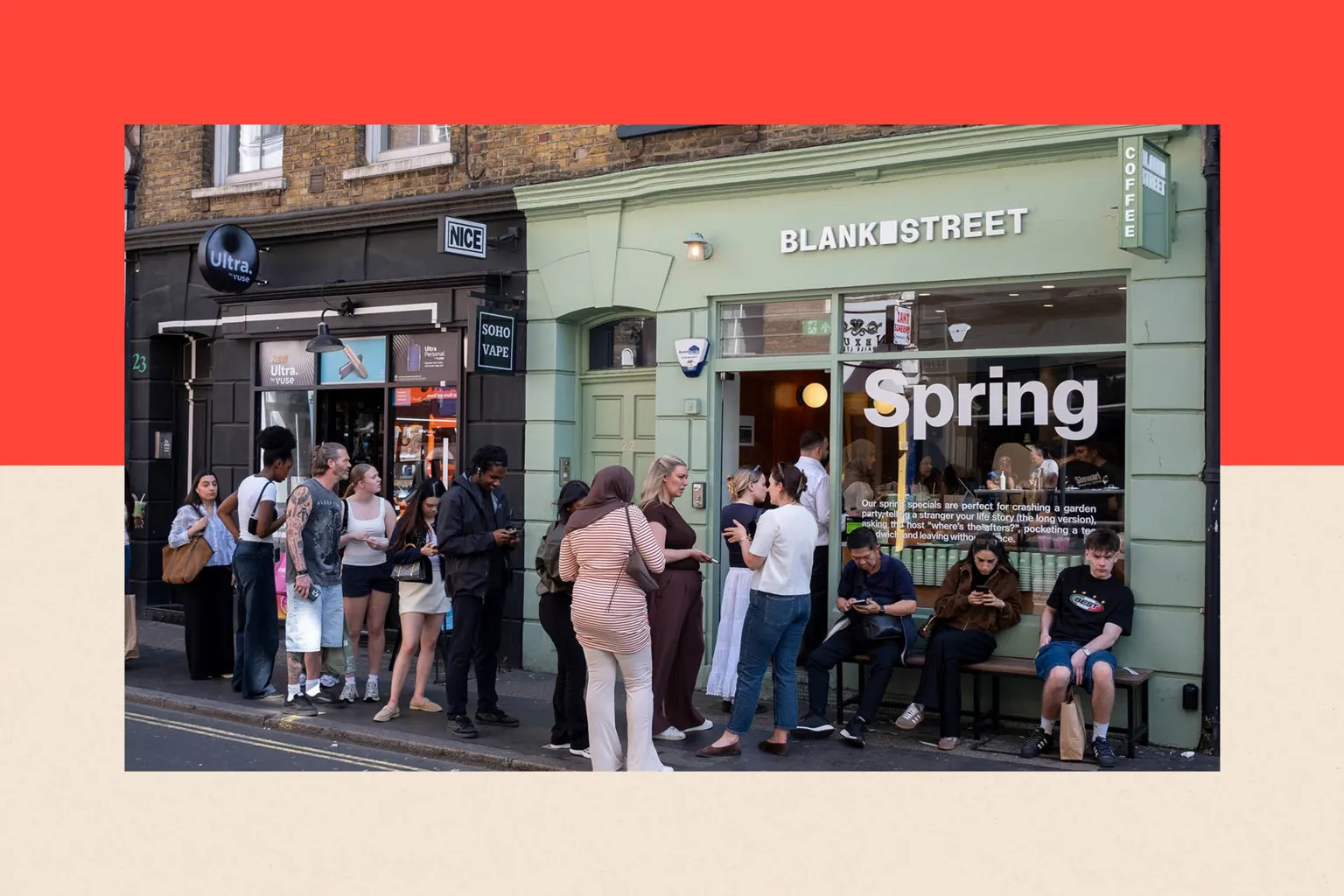
One example is the New York-founded chain formerly known as Blank Street Coffee, developed by ex-venture capitalists. Baristas sell elaborate fruit and cake-themed drinks and act as "brand ambassadors," using curated experiences to support premium pricing.
Some coffee shops have shifted focus away from coffee entirely. Matcha, a bright green tea powder, has gained popularity with younger, health-conscious customers seeking milder caffeine and better sleep. Blank Street rebranded last year, dropping "coffee" from its name and adopting a green color scheme.
In China, Luckin Coffee competes with Starbucks as the largest coffee chain. Originating as a tech company, Luckin uses detailed data on customer preferences by day and weather. They track when customers' phones are near kiosks and offer personalized coffee options, adjusting sugar and milk ratios with weather-triggered recommendations. Their cafes prioritize rapid delivery via apps over seating and are expanding into the US.
At the other end of the market, the British chain Greggs maintains low prices through automation, using bean-to-cup Swiss machines. A regular latte costs about £2.40, significantly less than other UK coffee shops. Greggs is now the UK's largest coffee provider, with more outlets than Costa.
In summary, the coffee market reflects two contrasting trends.
On one side, supply chain disruptions—including climate issues and geopolitical tensions—drive prices upward.
On the other, a coffee-loving public remains willing to absorb higher costs.
While commodity price increases significantly affect supermarket prices, cafes focus on selling experiences rather than just drinks.
Prices are expected to remain elevated even if Brazilian and Vietnamese harvests normalize and raw coffee prices decline.
The £5 large latte may well be a permanent fixture.
Conclusion
BBC InDepth offers in-depth analysis and fresh perspectives on major issues. Emma Barnett and John Simpson curate thought-provoking reads and analysis every Saturday. Readers can to the newsletter for updates.



