

Introduction: British Energy Bills to Decrease by £117 Annually
Good morning, and welcome to our continuous coverage of business, financial markets, and the global economy.
Energy bills in Great Britain will decrease by £117 to a typical annual amount of £1,641 starting in April, according to an announcement by the regulator Ofgem this morning.
Ofgem declared a 7% reduction in the energy price cap for the period from 1 April to 30 June.
This adjustment equates to a reduction of approximately £10 per month for the average household consuming both electricity and gas. This figure is more than £200 lower than the corresponding amount a year ago.
"Today’s announcement will be welcome news for many households. Wholesale energy prices have fallen in recent months, and we’re investing in our network to safeguard the future energy system. The main driver of today’s reduction is the change to policy costs announced by the chancellor in the budget."
— Tim Jarvis, director general in charge of markets at Ofgem
He added that there are positive signs of increased engagement and competition, with switching rates rising by nearly 20% year on year. More households are opting for time-of-use tariffs that provide cheaper off-peak rates, and suppliers are offering a broader range of products, including deals with savings during evenings or weekends.
Gold prices increased by 1% as investors sought safe-haven assets amid ongoing uncertainty regarding new US tariffs. The US imposed new global tariffs at 10% for 150 days on Tuesday, with efforts underway to raise the rate to 15%, according to a White House official, following a threat by the US president on Saturday.
Spot gold rose to $5,198 an ounce after closing more than 1% lower on Tuesday when investors took profits.
Meanwhile, Iran is nearing an agreement with China to purchase anti-ship cruise missiles, reported, as Tehran and Washington prepare for a third round of nuclear talks in Geneva on Thursday.
US President Trump declared his first year in office a success during the State of the Union address on Tuesday night, despite low approval ratings ahead of November’s midterm elections, which could shift control of Congress to Democrats.
His speech, the longest-ever State of the Union at nearly 1 hour and 50 minutes, included falsehoods and exaggerations but few new policy proposals.
He briefly justified a potential attack on Iran, stating he would not allow the country to acquire a nuclear weapon.
10am GMT: Eurozone inflation (final) for January
2.15pm: Treasury committee to question former OBR chairs Richard Hughes and Sir Robert Chote
Trainline CEO Jody Ford Resigns After Six Years, Impacting Shares
Jody Ford, the chief executive officer of Trainline, is stepping down after more than six years with the company.
The announcement caused shares of the London-based digital rail and bus ticketing platform to drop nearly 7%.
Ford, who succeeded Clare Gilmartin as CEO in 2021, oversaw a doubling of net ticket sales and expansion into new markets including France, Spain, and Italy.
She will remain in her role during the transition period until a successor is appointed.
Prior to becoming CEO, Ford served as Trainline’s chief operating officer and was previously CEO of Photobox Group, which owns Moonpig and Photobox brands, as well as leading global growth at eBay.
"Under Jody’s leadership the group has undergone a period of exceptional growth. We have created Europe’s #1 rail app serving 27 million customers, doubling net ticket sales in the UK and international consumer businesses, more than doubling profits and growing new markets in France, Spain and Italy."
— Brian McBride, Trainline chair
"The unscheduled departure of Jody Ford as CEO of Trainline has derailed shares in the ticketing platform. News of Ford’s exit intentions has wiped £51m off the company’s market value, implying investors are troubled by the sudden leadership change. Shares in Trainline have been volatile in recent years amid fears of growing competition. The prospect of a UK government-run ticketing platform has troubled investors, while market transformation in mainland Europe is paving the way for new booking operators and apps. The fact Trainline doesn’t have someone else lined up to become its next CEO leaves investors wondering what’s going on. Ford’s comments imply it was a mutual decision for him to leave and at least he will stay in place until a successor is appointed. Investors hate uncertainty and this announcement poses more questions than answers."
— Russ Mould, investment director at AJ Bell

Aston Martin to Cut Up to 500 Jobs Amid Losses
Luxury carmaker Aston Martin Lagonda plans to reduce its workforce by up to 500 employees, representing a 20% cut, aiming to save approximately £40 million following reports of widening losses.
The company, majority-owned by Canadian billionaire Lawrence Stroll, had already cut 170 jobs early last year and is now consulting on this latest redundancy program.
"Having undertaken at the start of 2025 a process to make organisational adjustments to ensure the business was appropriately resourced for its future plans, we had to take the difficult decision at the end of 2025 to implement further changes. This latest programme will ultimately see the departure of up to 20% of our valued workforce."

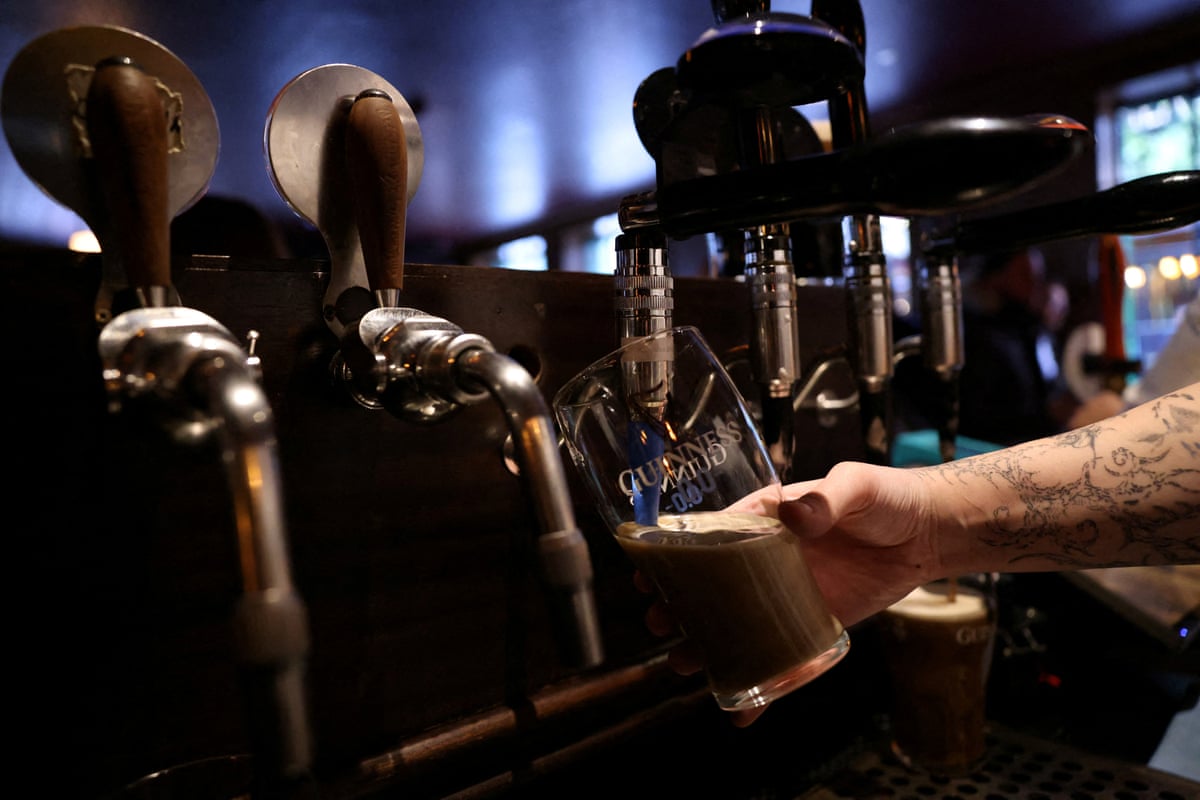
Diageo Cuts Dividend and Lowers Forecast Amid Guinness Supply Issues
Diageo, the world’s largest spirits producer, is the biggest decliner on the FTSE 100 index this morning, down more than 5% in early trading and currently 3.8% lower on the day.
The company has reduced its dividend and lowered its annual sales and profit forecast for the second time in four months, citing capacity constraints affecting Guinness availability in pubs.
Brands under Diageo include Smirnoff vodka, Johnnie Walker whisky, and Don Julio tequila. The company reported weak demand in the US and China in its first results under new CEO Dave Lewis.
Lewis, formerly Tesco’s CEO and known for cost-cutting at Unilever, took over in January and promptly halved the shareholder dividend from 40.5 cents to 20 cents per share.
"This is not an easy decision to make, but we believe it is the right one. The North American market is challenged. Our portfolio needs some time and investment to make it more competitive. At the same time, we need to invest in our business, specifically in its capacity and capability."
HSBC CEO Signals End of Overhaul Despite Profit Decline
Georges Elhedery, HSBC’s CEO since 2024, indicated that the bank’s restructuring is nearing completion despite a 7% decline in pre-tax profits to $29.9 billion last year, impacted by $4.9 billion in one-off charges.
HSBC aims to raise its return on tangible equity target to 17% or better through 2028, up from a mid-teens target for 2025-2027. Last year’s return was 13.3%.
HSBC shares led gains on the FTSE 100 earlier, rising more than 5%, and are currently up 4.6%.

GSK Acquires Canada’s 35Pharma for Pulmonary Hypertension Drug
GSK, the UK’s second-largest pharmaceutical company, has agreed to acquire Canadian biotech 35Pharma for $950 million (£703 million) to bolster its respiratory drug portfolio, marking its second major acquisition under new leadership.
35Pharma is developing HS235, a drug for pulmonary hypertension (PH), a life-shortening condition characterized by high blood pressure in the lungs.
The drug has completed initial clinical trials with healthy volunteers, with further studies planned for pulmonary arterial hypertension and PH due to heart failure.
PH affects approximately 82 million people worldwide, with limited treatment options and a five-year survival rate of only 50%. The global market for PH therapies is projected to reach $18 billion by 2032, with activin signaling inhibitors expected to comprise half of this.
HS235, administered via injection, targets the activin receptor signaling pathway and may reduce bleeding risk, a significant limitation of current PH treatments.
GSK noted that HS235’s mechanism may also provide metabolic benefits such as fat-selective weight loss, preservation of lean mass, and improved insulin sensitivity, potentially offering advantages over Merck’s Winrevair.
The company anticipates HS235 could become a multi-blockbuster drug and be available by the early 2030s, pending successful trials.
"Pulmonary hypertension affects millions of people worldwide, yet patients are underserved. We’re delighted to add HS235 to our pipeline, a potential best-in-class medicine with a differentiated profile to reduce risk of bleeding and provide potential metabolic benefits clinically relevant to PH patients."
— Tony Wood, GSK chief scientific officer
"In recent years, we witnessed a revolution in our understanding of pulmonary hypertension and how this life-threatening disease could be reversed. We are pleased to be combining our efforts with GSK, a leader in respiratory and inflammatory drivers of disease."
— Ilia Tikhomirov, CEO of 35Pharma
Earlier in January, GSK acquired a Californian biotech developing treatments for severe food allergies and recently agreed to a $1 billion deal to develop RNA therapies targeting kidney diseases.

Haleon Forecasts Slower Sales Growth Amid Weak US Consumer Confidence
British consumer healthcare company Haleon, maker of Sensodyne toothpaste, Centrum vitamins, and Advil and Voltaren pain relief products, has forecast 2026 sales growth below its medium-term target due to weak consumer confidence in the US, its largest market.
Haleon’s London-listed shares fell more than 5% earlier and are currently down 4%.
The company, spun off from GSK four years ago, projects organic revenue growth of 3% to 5% this year, below its medium-term forecast of 4%-6% and analysts’ expectations of 4.4%. Revenue growth slowed to 2.1% in the three months to December from 3.4% in the previous quarter.
A mild cold and flu season in North America and Europe, along with increased competition pushing consumers toward cheaper alternatives, especially in the struggling Smokers’ Health segment, impacted sales.
Sales in both respiratory and smokers’ health categories declined in double digits.
The company aims to achieve annual gross cost savings of £175 million to £200 million over the next two years.
"While the consumer environment remains challenging near-term, we are even more focused on driving category growth and increasing our market outperformance."
— Brian McNamara, Haleon CEO
Martin Lewis Highlights Biggest Savings for High Electricity Users
Martin Lewis, founder of MoneySavingExpert.com, noted that the largest savings from the April price cap reduction will benefit higher electricity users.
He provided a briefing on the new average UK direct debit rates effective 1 April:
- Electricity unit rate: 24.67p/kWh (previously 27.69p) — down 10.9%
- Electricity standing charge: 57.21p/day (previously 54.75p) — up 4.5%
- Gas unit rate: 5.74p/kWh (previously 5.93p) — down 3.2%
- Gas standing charge: 29.09p/day (previously 35.09p) — down 17.1%
The price cap applies only to firms’ standard variable tariffs, which cover over 60% of homes, typically those who have never switched or whose fixed deals have ended without renewal. Fixed or special tariffs are not subject to the cap.
Lewis explained that most of the reduction stems from the removal of two policy costs: the end of the ECO scheme and shifting 75% of the Renewable Obligation costs to general taxation for three years. This government measure equates to a £150 reduction in bills, though actual savings vary by usage.
Most existing fixed deals will also decrease by 7% to 9% in April, depending on usage, due to the removal of policy costs affecting all bills. Some smaller companies exempt from the ECO scheme will see smaller reductions.
Lewis advised that fixing a tariff remains the simplest way to save, as the cheapest fixed deals are currently 14% less than the price cap and will likely remain so after April.
Regarding future price cap predictions, analysts expect the April cap to serve as a new baseline, with prices remaining within a few percent of this level for the remainder of the year.
"Stripping out levies from our bills will help struggling households, but significantly less than it should, because the cost of electricity is still set by volatile global gas prices. The government’s efforts to make energy more affordable could be wiped out by another gas price spike. People are crying out for lower energy bills, and the government must do more to help them by stopping gas from setting the price we pay for electricity."
— Angharad Hopkinson, political campaigner for Greenpeace UK
Energy analysts Cornwall Insight stated on X:
"The price cap is falling in April, but will this trend continue? Ofgem has confirmed exactly what we forecast - the price cap for April-June 2026 will be falling to £1,641 per year for a typical dual-fuel household, a saving of £117, or 7%, on current bills. This will bring…"
Starmer Acknowledges More Effort Needed to Reduce Cost of Living
UK Prime Minister Keir Starmer and Chancellor Rachel Reeves have both commented on the reduction in the UK energy price cap.
"Energy bills are at the front of everybody’s mind, and I know they’ve been too high for too long. I promised to bring bills down and I meant it. And today – because of the actions this government took at the last budget – the price cap on energy bills has come down by £117. That means lower energy bills for millions across the country, but I know there is more to do and my government is pulling every lever to bear down on the cost of living and protect the pound in the pockets of working people."
— Keir Starmer, UK Prime Minister
The cut follows the November budget, in which Chancellor Reeves shifted some green energy costs from household bills to general taxation by reallocating levies supporting renewable energy projects and scrapping a bill-payer funded energy efficiency scheme.
"Cutting the cost of living is this government’s number one priority and I know energy bills are one of the biggest concerns, that’s why at the budget I said we would bear down on energy bills. We are cutting the cost of living, cutting the national debt and creating the conditions for growth and investment in every part of the country. It is the right economic plan to build a stronger and more secure economy."
The new price cap rate is the lowest since October 2024, though experts note some fixed tariffs remain cheaper.
Energy prices are still more than £500 (44%) higher than when the price cap was introduced in 2019.
MoneySuperMarket experts caution consumers against the “price cap trap,” noting that several fixed deals currently available are less expensive than the new cap rate, describing the cut as a “sticking plaster.”
"Today’s announcement will come as welcome news for families across the country and represents a significant cut to household energy bills. However, much of this reduction comes from adjustments to green levies, rather than energy costs themselves getting cheaper for customers. In fact, some energy bosses are predicting that by 2030 UK electricity costs could be even higher than the peak of the energy crisis in 2022. This makes today’s news something of a sticking plaster and doesn’t necessarily mean energy prices will continue trending downwards. It’s important to remember that the energy price cap isn’t a deal, it’s the maximum suppliers can charge for a standard variable tariff. Right now, there are fixed deals available that may offer savings compared with the current price cap, depending on your usage and circumstances. So, don’t fall for the ‘price cap trap’, be vigilant, shop around and switch if you find a better deal that works for you."
— Kara Gammell, MoneySuperMarket Energy


