

Senegal's Role in Supplying UK Winter Vegetables
If you consumed corn on the cob, green beans, or spring onions in the UK this winter, there is a strong likelihood these originated from one of two farms located at the northern edge of Senegal, near the Sahara Desert.
The West African country is emerging as a significant contributor to the UK's food supply chain. This development prompts the question: is this beneficial?
Harvesting Amid Harsh Conditions
Hidden among dense green leaves and tall stalks, the sound of Diarra working can be heard before she is seen.
The corn cobs she harvests are plentiful, and the maize plants tower so high that she is nearly engulfed in a vast expanse of crops. The work is demanding.
Located so far north in Senegal, close to the desert, temperatures can surpass 35°C during this season, with minimal to no rainfall.
Wearing sunhats and working swiftly, Diarra and her team produce a consistent rustling noise, punctuated by the thud-thud of cobs being detached and placed into soft buckets strapped to their backs.
Within an hour, the harvested cobs are transported to a refrigerated packing facility where they are cooled to 0°C. Subsequently, they are trucked to a port near the capital city, Dakar, and loaded onto container ships. Six days later, these vegetables are available for purchase in British supermarkets.
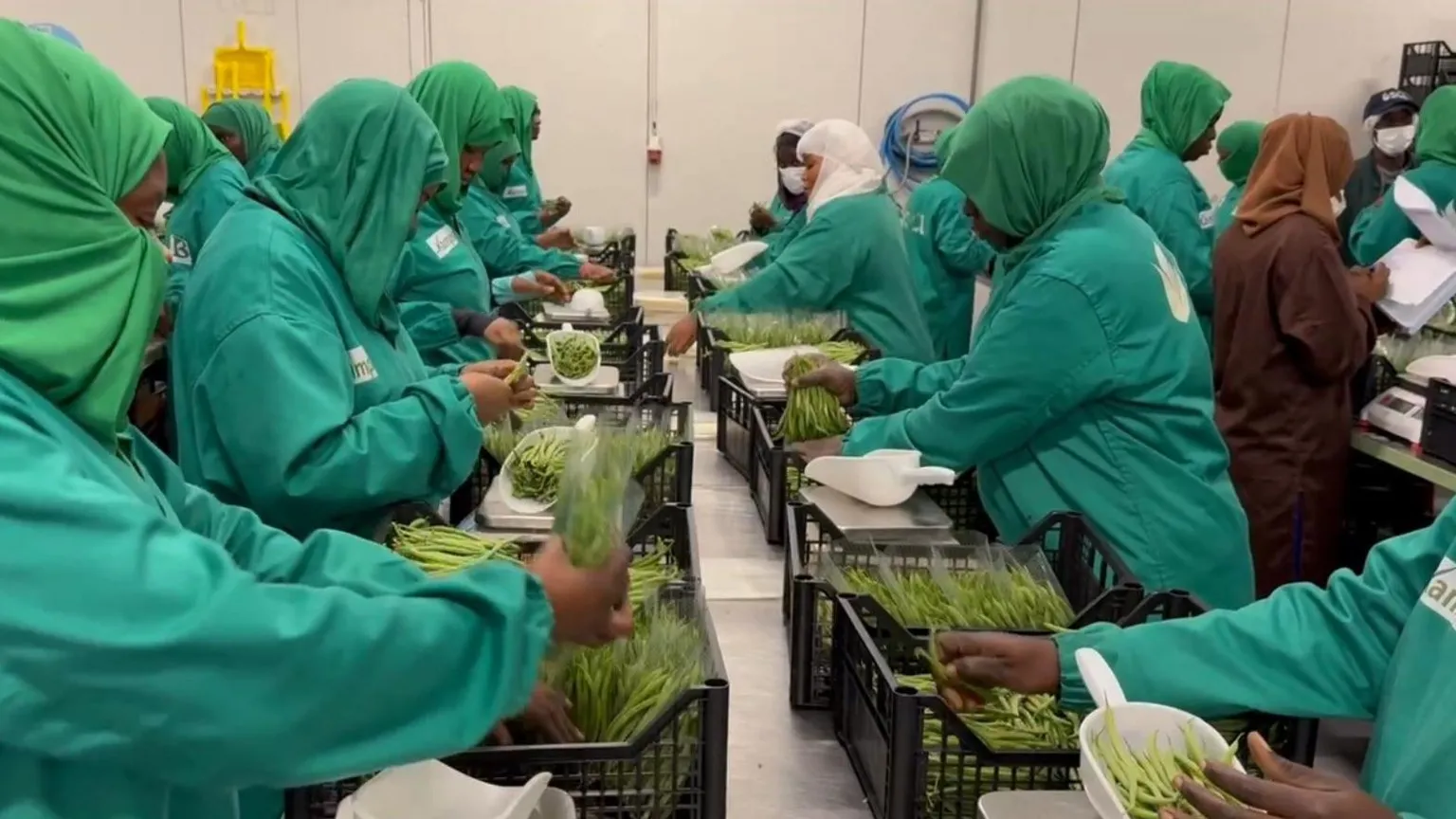
Employment and Production Scale
Diarra is among 9,000 employees, predominantly women, working across two British-operated farms in Senegal's Saint-Louis region.
Between January and March, shoppers in the UK's leading supermarkets such as Tesco, Sainsbury's, Asda, Aldi, and Lidl are likely to find spring onions, radishes, green beans, chillis, butternut squash, and corn cobs labeled as Produce of Senegal.
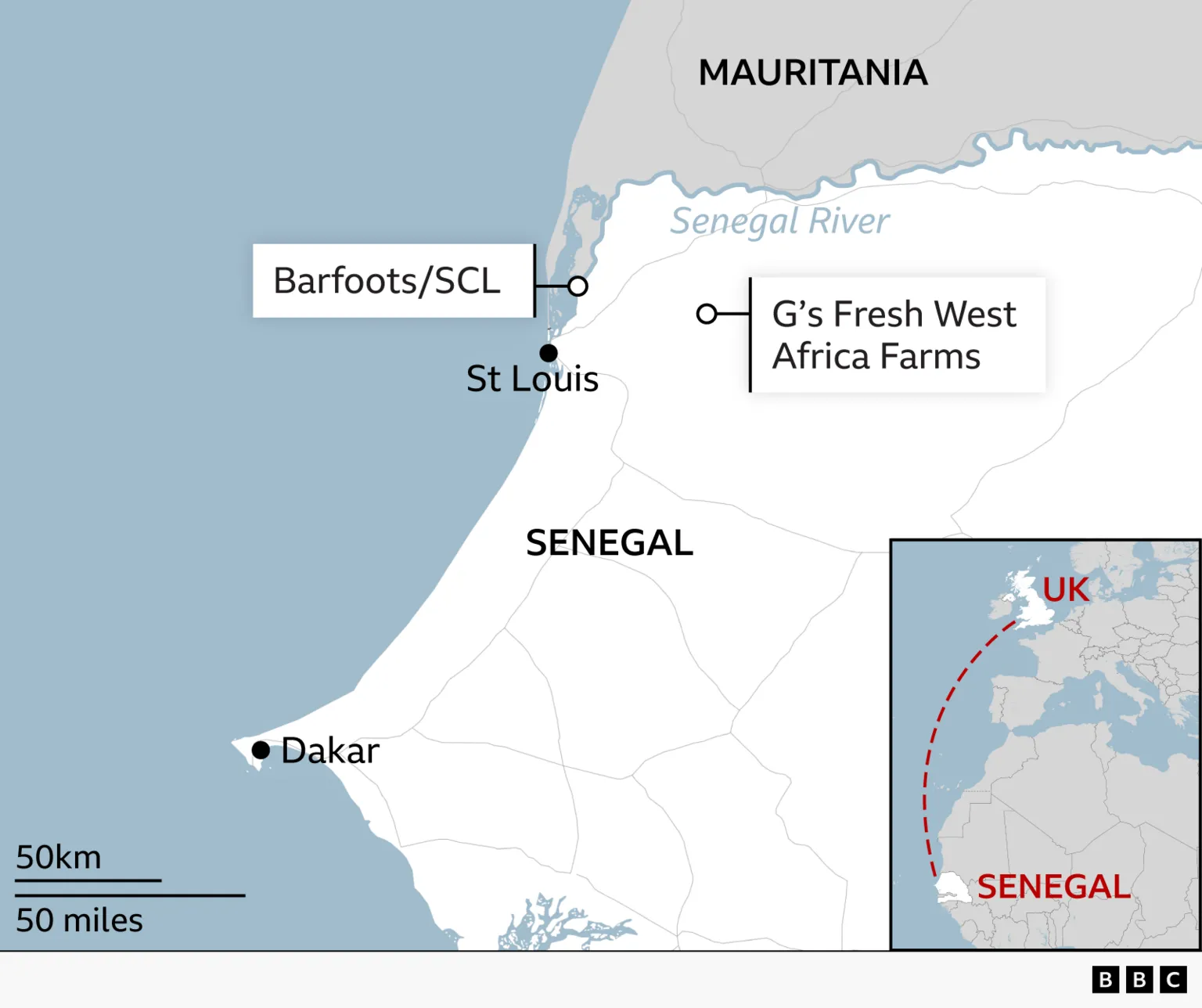
The region's hot climate and sandy, dry soil might seem unsuitable for fruit and vegetable cultivation, yet these two farms, operated by major UK fresh produce companies G's Fresh and Barfoots, are expanding their output from this desert-edge location.
Origins and Agricultural Development
The farms' origins date back to the early 2000s when French entrepreneur and agronomist Michael Laurent utilized Google Earth to identify promising areas for food production.
He identified Saint-Louis as having abundant sunlight, available land, and labor resources. Although rainfall is scarce, the 1,600 km-long Senegal River forms the northern border with Mauritania and flows into the Atlantic Ocean.
Water from the river is diverted into a network of canals, with pumps and pipes distributing irrigation water across extensive arid land, transforming the desert landscape into productive farmland.
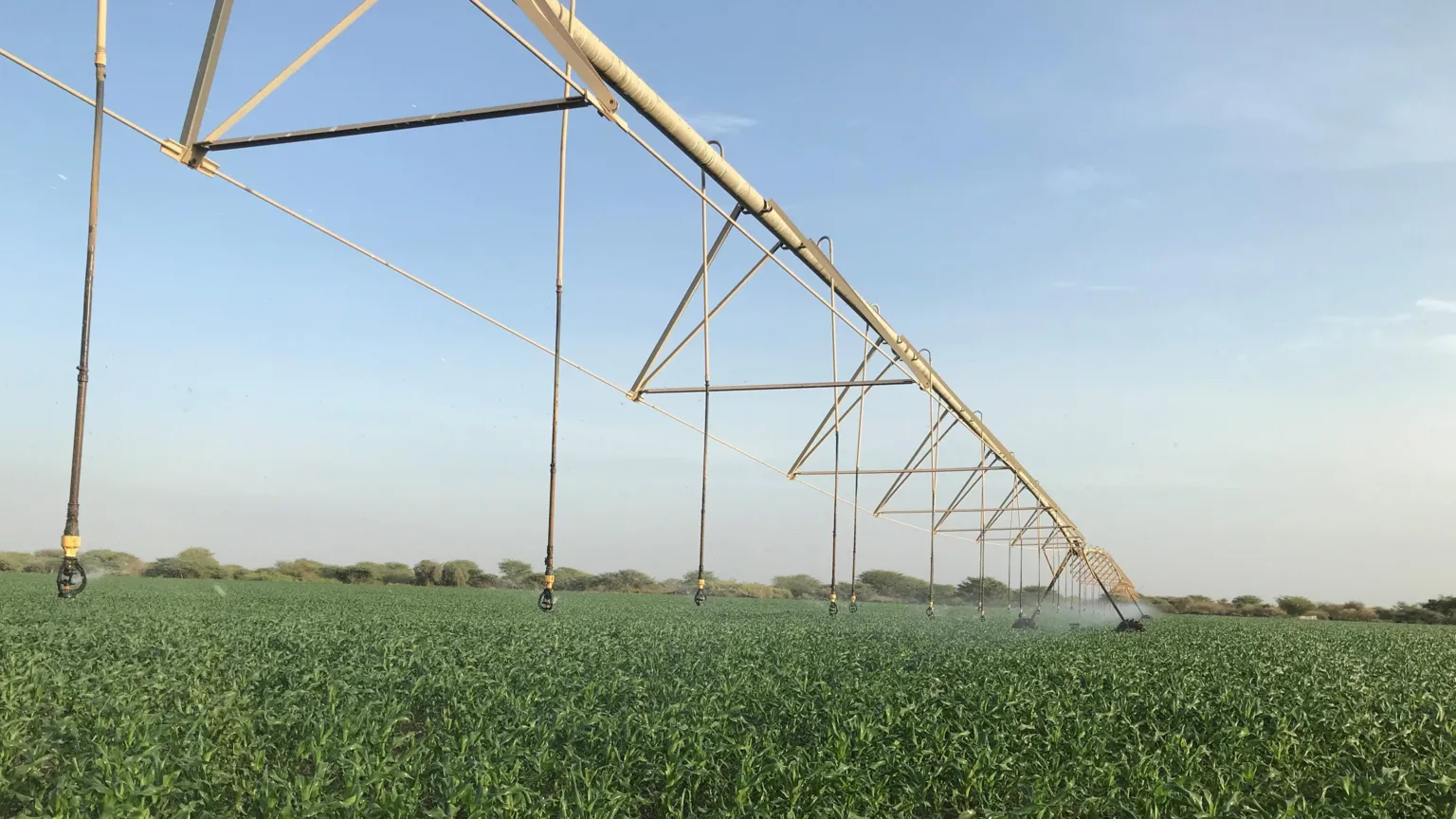
"There was nothing here when we started,"says Laurent.
"It was all bush."Today, the farms span 2,000 hectares, equivalent to nearly 3,000 football pitches.
Of this, 500 hectares are managed by Cambridgeshire-based salad specialist G's Fresh through its Senegalese subsidiary, West African Farms.
During the British winter, this operation supplies two million bunches of spring onions, 100 tonnes of green beans, and 80 tonnes of radishes weekly. Approximately 70% of this produce is sold to UK supermarkets, with the remainder distributed to retailers in Germany and the Netherlands.
The larger farm is a joint venture between Sussex-based Barfoots and SCL, the company founded by Michael Laurent.
This farm supplies the UK with 55 million corn cobs annually, along with chillis, butternut squash, and green beans.
Harvested vegetables are transported by road to the deep-water Port of Dakar, a five-hour journey. From there, a container ship departs weekly on a 3,000-mile voyage to Poole in Dorset.
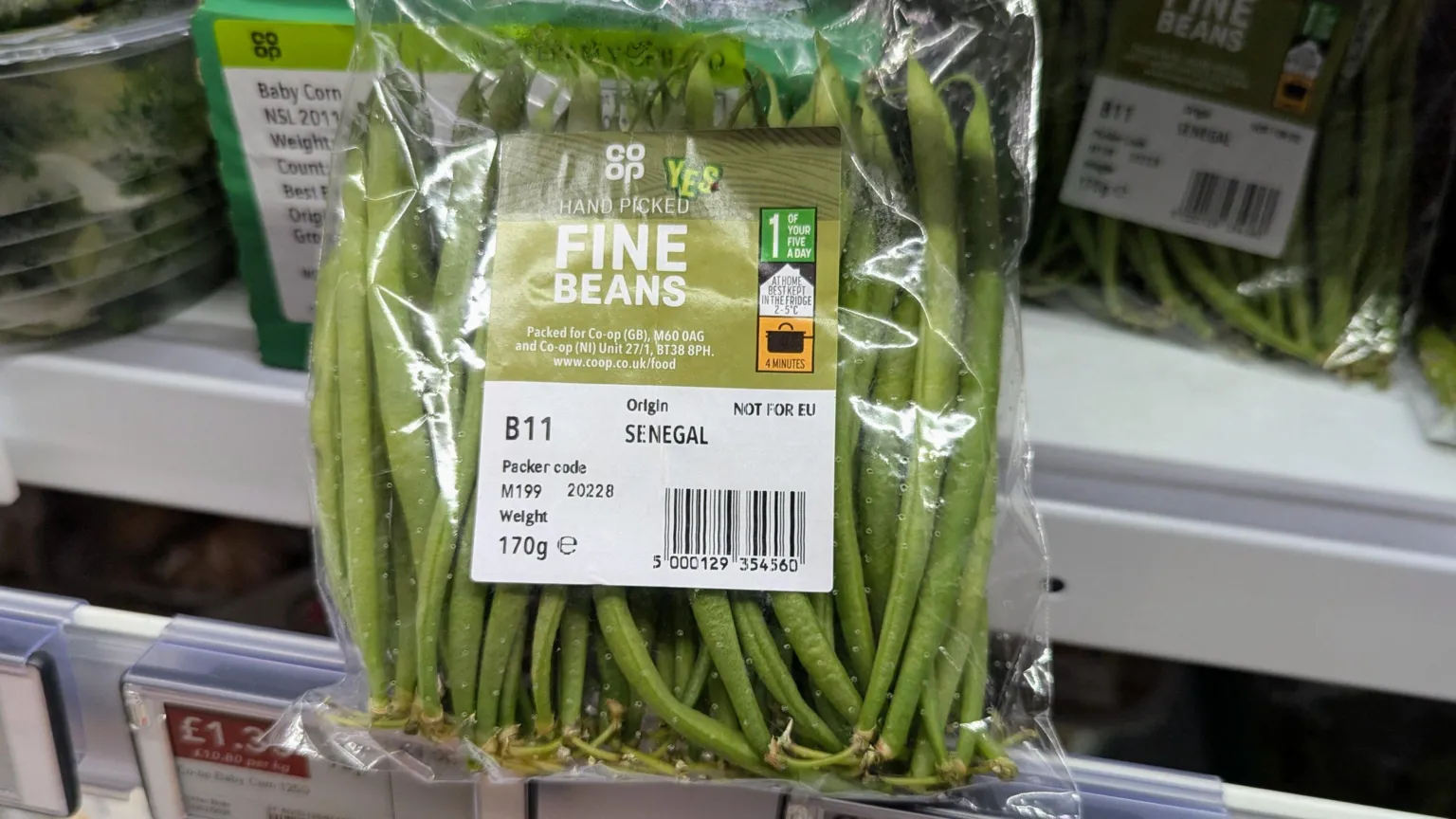
UK Food Import Context
The UK imports approximately 40% of its food overall, but during winter, imports of fresh produce can reach as high as 90%.
Historically, most UK fruit and vegetable imports originated from southern Europe and Latin American countries like Peru, while airfreighted produce such as green beans came from East Africa.

West Africa is now emerging as a new source. Mike Knowles, a fresh produce analyst, explains several factors driving this shift:
"Competition for land around the Mediterranean has become more intense, droughts in Spain have become more frequent, and flying vegetables across continents has fallen out of favour,"he states.
Additionally, Brexit has diminished some advantages of importing from continental Europe, making Senegal increasingly attractive.
Politically and economically, Senegal is relatively stable. It is the only West African nation that has not experienced a military coup or government overthrow.
Foreign businesses cannot purchase land outright but can secure long-term leases through agreements with the government and local communities. Water access is managed via licenses granted by local committees.
"We've been confident enough to invest around £70m in our Senegalese operation,"says Julian Marks, group manager at Barfoots.
There is ongoing pressure to expand operations, driven by British consumers' expectations to have consistent produce availability year-round.
Benefits and Challenges for Senegal
While Senegal helps meet UK demand, the impact on the African nation is multifaceted.
The creation of 9,000 jobs across the two farms is significant. Senegal's population of 18 million has faced rising unemployment during the pandemic, which remains high at approximately 19%, especially among young adults in rural areas.
Senegalese land rights activist Elhadj "Ardo" Samba Sow, who previously viewed the arrival of foreign-owned farms as neo-colonialism, now holds a more positive perspective on their presence, despite acknowledging that wages are modest.
Most farm workers earn the Senegalese minimum agricultural wage of about 2,500 West African francs per day ($4.50; £3). Pickers like Diarra receive bonuses for exceeding daily targets.
Senegal has recently increased its minimum wage. Michael Laurent recognizes that wages are low but emphasizes the need to maintain competitiveness due to narrow profit margins.
The relatively low wages contribute to the potential for further farm expansion in Senegal.
"When we grow spring onions in the UK, 60% of the cost is labour,"says Derek Wilkinson, managing director at G's Fresh.
"In Senegal, labour counts for less than one third."
Even considering transportation costs from West Africa, Wilkinson predicts it will soon be economically viable to replace more UK production with Senegalese imports, including during the British summer growing season.
"It'll be down to the consumer to decide if they want to buy British or imported,"he adds.
Environmental Considerations
The environmental impact of shipping vegetables from Senegal to the UK raises concerns.
Tim Lang, emeritus professor at City University and originator of the term "food miles," states:
"No,"in response to whether it is beneficial to transport vegetables such distances.
While sea freight has a lower environmental footprint than air freight, maritime shipping still accounts for 3% of global greenhouse gas emissions.
"We should align our diets with the seasons as much as possible,"Lang advocates.
"And instead of imports from Africa, we need to be exploring the wider range of crops that can be grown in the UK."


