

UK growth for 2026 cut, but faster growth ahead
Chancellor Rachel Reeves addressed the UK’s economic growth outlook, noting that the Office for Budget Responsibility (OBR) has revised the GDP growth profile. The forecast now anticipates slightly slower growth in 2026, followed by faster growth in 2027 and 2028.
The updated growth projections are as follows:
- 2026: 1.1% growth, down from 1.4% forecast in November
- 2027: 1.6% growth, up from 1.5% forecast in November
- 2028: 1.6% growth, up from 1.5% forecast in November
- 2029: 1.5% growth, unchanged from November forecast
Reeves concluded her statement by reaffirming her confidence in her economic plan, emphasizing its appropriateness for the current circumstances. She cautioned against altering the course and advocated for avoiding a return to austerity measures.
"We must reject the temptation of easy answers and reckless borrowing to protect family finances and get the cost of living down, and we must reject the political instability which would put at risk all the progress that we have made."
During her speech, Reeves echoed sentiments similar to those of the UK’s newest MP, Hannah Spencer, expressing belief in a government that supports working people and ensures security and fair opportunities for all, regardless of their background.
"And that being able to manage the bills, afford a home and pay for a holiday is never too much to ask."
Reeves also revealed that GDP per capita is expected to grow by 5.6% over the current parliamentary term, exceeding previous autumn expectations. GDP per capita, a key indicator of living standards, had declined in the latter half of the previous year.
Reeves: borrowing down, headroom up
Regarding public borrowing, Reeves highlighted that the UK is projected to borrow less than the G7 average, a benchmark not achieved by the Conservative Party in any year over the past 14 years, including during austerity and the Covid-19 pandemic.
Current forecasts indicate a steady decline in public sector net borrowing as a percentage of GDP:
- 2023-24: 4.3%
- 2024-25: 3.6%
- 2025-26: 2.9%
- 2026-27: 2.5%
- 2029-30: 1.8%
Reeves also announced an increase in fiscal headroom against the stability rule for 2029-30, rising from £21.7 billion to £23.6 billion, and against the investment rule, now at £27.1 billion.
This demonstrates her commitment to adhering to the government’s fiscal rules, which under normal circumstances would provide reassurance to financial markets.
Debt levels are forecasted to be lower in every year compared to the autumn projections.
Reeves criticized the previous government’s 2022 mini-budget, which she described as disastrous and responsible for a significant depreciation of the pound. She noted that the event was supported by the current opposition leader and Nigel Farage, whom she pointed out was absent during her statement.
She also challenged outdated economic theories, such as "trickle-down" economics, which she claims have yielded diminishing benefits for working people.
Looking ahead, Reeves outlined three major economic priorities she intends to discuss in the upcoming Mais Lecture in London:
- Strengthening global relationships, reducing trade barriers, and deepening alliances with European partners
- Supporting innovation and leveraging artificial intelligence
- Transforming the UK’s economic geography to promote broad-based growth and unlock opportunities nationwide
Reeves: We can beat the forecasts again
Reeves expressed optimism that the government could outperform economic forecasts once more, despite global uncertainties.
She cited factors such as energy cost discounts, trade agreements with India, the US, and the EU, reforms to support entrepreneurs, investments in infrastructure and skills, funding for further education, and planning reforms as contributors to this potential.
The OBR forecasts indicate that unemployment is expected to peak later in the current year before declining annually throughout the forecast period.

Reeves: Inflation expected to fall faster than forecast (except...)
The OBR anticipates inflation will decrease more rapidly than previously forecasted in autumn, although these projections likely do not account for the recent surge in energy prices.
Reeves reminded MPs of the £150 energy bill reduction scheduled for April, announced last year.
"In the current global context, with the risk that rising energy prices will put upward pressure on inflation, the action that I have taken is even more crucial to keeping inflation low and stable, and the best way to support family incomes and reduce pressures on the cost of living."
She also noted that the UK has seen six interest rate cuts since the last general election, though the possibility of a seventh remains.
Reeves emphasized that the government’s plan is validated by the OBR’s latest forecasts.
"Inflation is down, borrowing is down, living standards are up and the economy is growing."
She criticized the previous government for allowing inflation to exceed 11% following the Ukraine conflict, marking the last parliament as the first where people were poorer at the end than at the beginning.
Reeves: in regular contact with Bank of England governor
Reeves assured MPs that she maintains regular communication with the Bank of England governor, international counterparts, and key sectors impacted by the Middle East crisis, including the maritime industry.
Reeves: Economic plan is "even more important" given Middle East crisis
Opening her statement, Reeves asserted that the government has the appropriate economic plan for the country, which elicited a strong reaction in the Commons.
She stressed that this plan is "even more important" amid increasing global uncertainty, particularly due to the unfolding conflict in Iran and the Middle East.
"It is incumbent on me to chart a course through that uncertainty, secure the economy against shocks and protect families from the turbulence beyond our borders."
Reeves begins statement on spring forecast
Reeves delivered her response to the UK’s spring economic forecast in Parliament, updating MPs on the state of the economy. The forecast, prepared by the OBR, provides the latest outlook on growth, inflation, and unemployment, and allows economists to assess whether the UK is on track to meet the chancellor’s fiscal rules.
However, the recent Middle East crisis and the associated surge in oil and gas prices likely render these forecasts outdated even before their publication.
Today’s event was intended to be routine, as the government has committed to holding only one major fiscal event annually in the autumn, with no major policy changes expected.
Reeves delivered her statement against a backdrop of declining financial markets. The UK’s FTSE 100 index was down 2.5%, marking its worst day since the onset of the US-China trade war in April last year.
Additionally, market expectations for an interest rate cut this month have diminished, with only a 22% chance currently forecast.
Rachel Reeves and Labour leader Sir Keir Starmer were present in the House of Commons during Foreign Office questions.
Our Politics Live blog provides comprehensive coverage of all key developments.
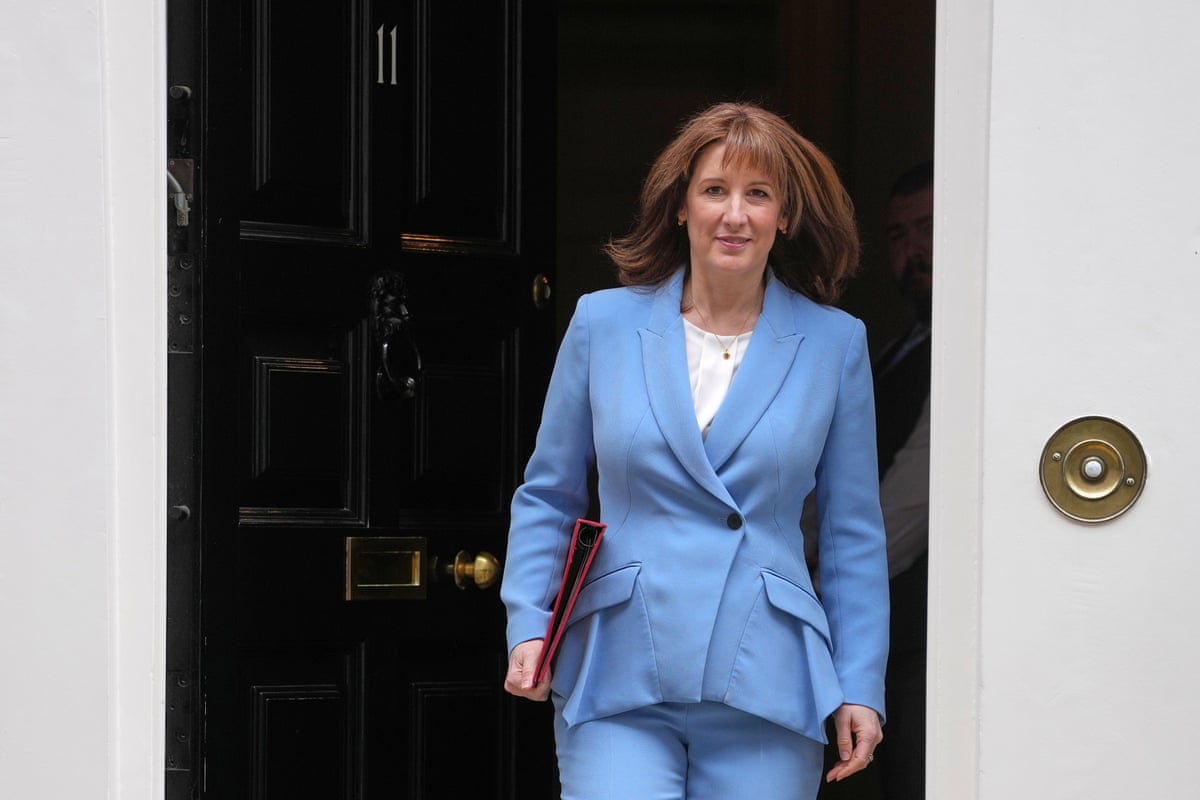
Prior to her statement, Reeves departed 11 Downing Street to attend Parliament and respond to the OBR’s Spring Economic Forecast, which was published following her speech.


