Changes in Inflation Calculation Reflect Healthier Living Trends
A shift towards healthier living habits has influenced updates to the way inflation is measured in the UK.
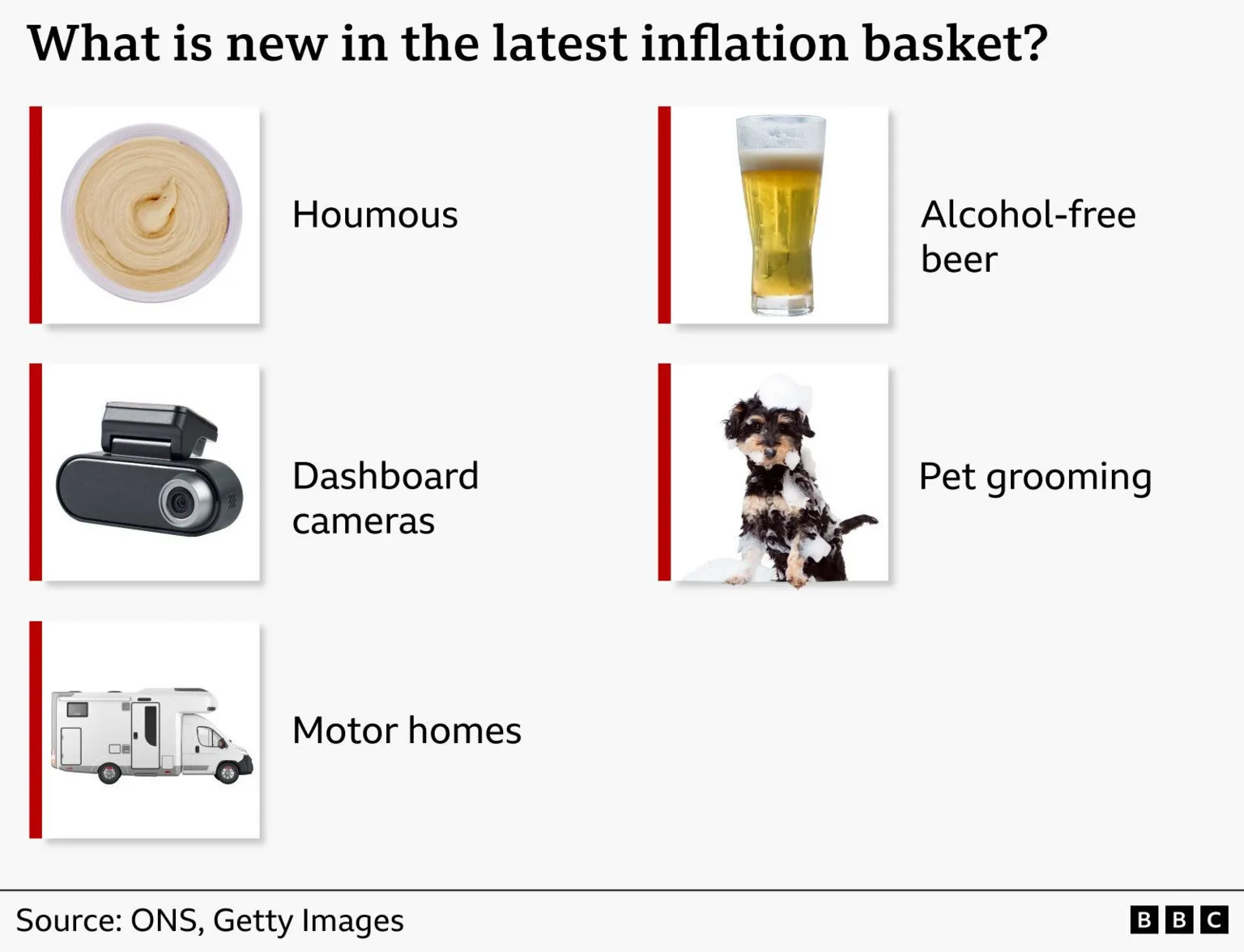
Alcohol-free beer and houmous have been added to the virtual basket of goods and services used by the Office for National Statistics (ONS) to monitor the rising cost of living.
The ONS collects prices for 760 products and services from various retailers to produce monthly inflation figures. These items are reviewed annually and chosen based on their representativeness of typical consumer spending.
Other new additions in the latest review include motorhomes, dashboard cameras, and pet grooming services.
"This year, healthier lifestyle choices influence consumer spending, reflected by goods such as houmous and non-alcoholic beer," said Stephen Burgess, the deputy director for prices at the ONS.
The items added or removed over time provide insight into evolving tastes, trends, and lifestyles.
For example, wild rabbit was included in the original list in 1947, while tea bags were only added by 1980.
In this update, 27 items have been added and 19 removed, maintaining a total of 760 items in the basket.
The ONS explained that 0% beer and houmous were included due to their increasing popularity and consumer expenditure. While caravans were already part of the basket, motorhomes—typically more expensive—have now been added as well.
Dashboard cameras reflect the growing availability of security products for drivers, helping the basket stay current with technological advancements.

Additionally, pet owners are increasingly using grooming and care treatments beyond veterinary services, prompting their inclusion in the basket.
ONS to Use Scanning Technology for Data Collection
Sheets of wrapping paper have been replaced by rolls of wrapping paper in the basket, as the latter are more commonly found in stores.
Many of the basket adjustments stem from a new data collection method employed by the ONS.
The ONS will now utilize supermarket scanner data covering more than half of the grocery market.
This means thousands of manually collected prices will be replaced by millions of automatically gathered prices from supermarket tills.
Once collected and processed, this data produces the UK's inflation rate—a key economic indicator widely used to measure the cost of living increases.
Inflation figures influence benefits, pensions, and interest rate decisions made by the Bank of England.
The government targets a 2% Consumer Prices Index (CPI) inflation rate. The most recent published rate was 3% in January.
Official forecasters had anticipated a decline to 2% by year-end, but this is now considered unlikely due to economic impacts from the war in Iran. A rate closer to 3% is currently predicted.