

Oil Prices Climb Amid Iran's Strait of Hormuz Warning
Oil prices continued to rise on Tuesday following a statement from an Iranian official warning that his country would "set fire to anyone who tries to pass through" the Strait of Hormuz. This escalation occurs amid ongoing tensions between Iran, the United States, and Israel.
During afternoon trading in Asia, Brent crude increased by approximately 3.2%, reaching over $80 (£59.67) per barrel. Meanwhile, US-traded oil rose by about 2.6%.
This surge follows significant increases in oil and gas prices on Monday, coinciding with the US government's preparation to announce measures addressing the rising energy costs.
Asian stock markets also declined on Tuesday as investors assessed the potential financial impact of the conflict.
On state television, Ebrahim Jabbari, an adviser to the Commander-in-Chief of Iran's Islamic Revolutionary Guard Corps (IRGC), stated:
"Ships should not come to this region. They will certainly face a serious response from us."
The Strait of Hormuz is a vital maritime passage for the global economy, with approximately 20% of the world's oil and gas transported through it. However, recent attacks on several vessels have caused shipments to cease temporarily.
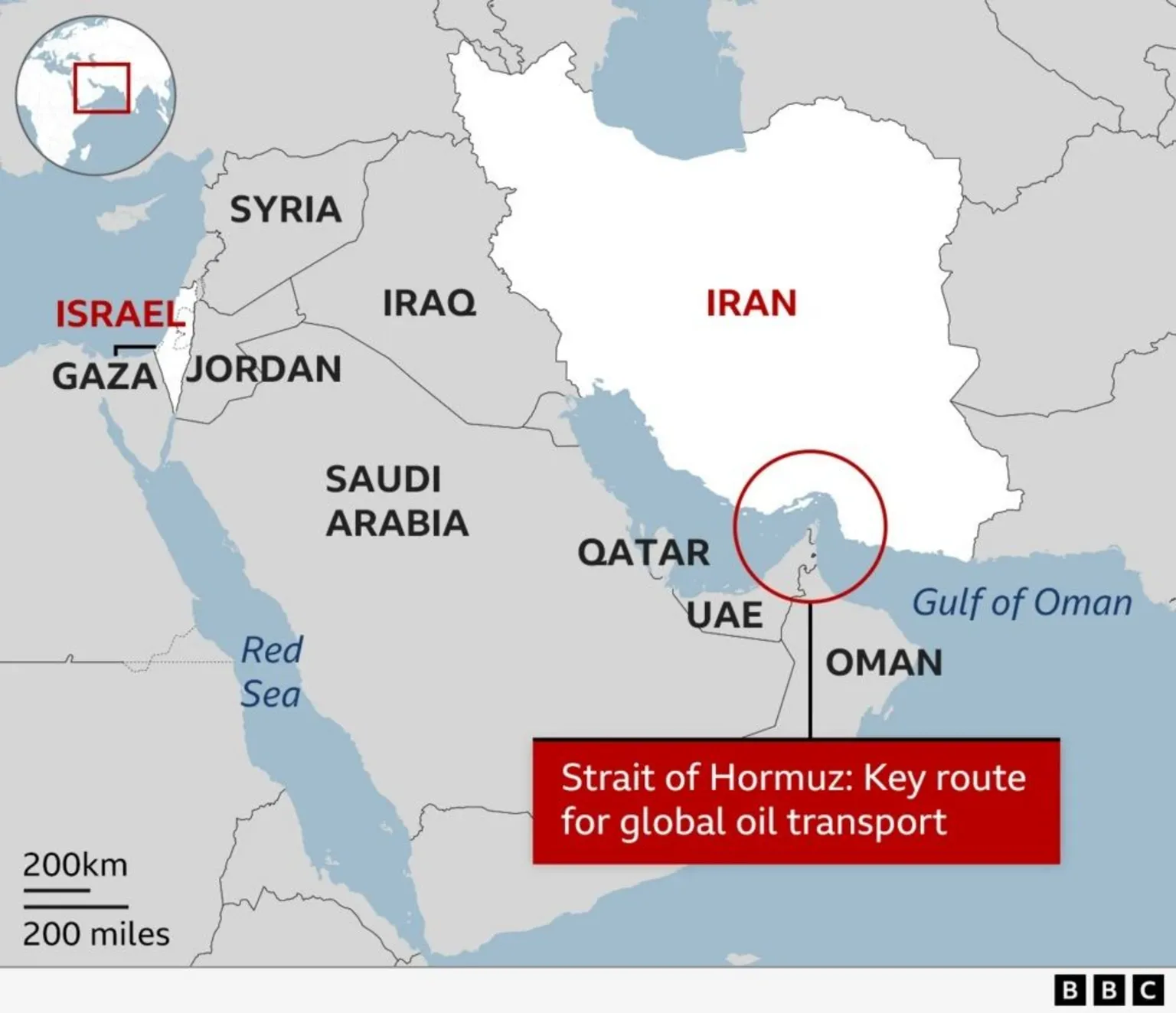
In addition to driving up global energy prices, the conflict has increased transportation costs for oil shipments.

The cost to hire a supertanker for transporting oil from the Middle East to China reached a record high on Monday, exceeding $400,000 (£298,300). This figure nearly doubles the cost recorded the previous week, according to data from the London Stock Exchange Group.
US Government Response and Market Reactions
US President Donald Trump faces growing concerns that the Middle East conflict may exacerbate living costs. He is scheduled to meet with Treasury Secretary Scott Bessent and Energy Secretary Chris Wright on Tuesday to discuss the situation.
Secretary of State Marco Rubio indicated that Washington would announce plans to address the rising energy prices, stating:
"We knew that going in would be a factor. Starting tomorrow you will see us rolling out those phases to try to mitigate against that."
Meanwhile, major Asian stock exchanges experienced declines for a second consecutive day as investors evaluated the conflict's economic implications.
Japan's Nikkei index closed 3.3% lower, with export-dependent companies such as Toyota, Panasonic, and Sony among the most affected.
Hong Kong's Hang Seng and China's Shanghai Composite indices also fell.
South Korea's Kospi index, which was closed on Monday for a public holiday, dropped by more than 7% on Tuesday. The export-driven South Korean economy is particularly sensitive to geopolitical developments, with shares of leading firms Hyundai, Samsung, and chip manufacturer SK Hynix declining by 10%.


