Introduction: Markets Prepare for US Jobs Report as White House Urges Calm
Good morning, and welcome to our continuous coverage of business, financial markets, and the global economy.
Today is the release day for the US non-farm payrolls report, a highly anticipated economic indicator. The White House has sought to temper market expectations ahead of the data.
Peter Navarro, senior counselor for trade and manufacturing to former President Donald Trump, spoke on Fox News last night, stating:
"We have to revise our expectations down significantly for what a monthly job number should look like. When we were letting in 2 million illegal aliens a day we had to produce 200,000 [jobs] a month for steady stay. Now 50,000 a month is going to be more like what we need. Wall Street, when this stuff comes out, they can’t rain on our parade, they just have to adjust for the fact that we’re deporting millions of illegals."
When asked if the number would be weak, Navarro clarified that it would not be, but emphasized that investors should anticipate smaller job numbers going forward.
This follows a similar message from National Economic Council director Kevin Hassett on Monday, who advised: "One shouldn’t panic. You should expect slightly smaller job numbers." The data release, which was delayed from last week, is forecasted to show the economy added 70,000 jobs in January, up from 50,000 in December.
Derren Nathan, head of equity research at Hargreaves Lansdown, commented:
"The FTSE 100 is set to open higher after a subdued close on Tuesday. On quiet days for earnings and economic data, the index often reflects commodity price movements. Gold prices have risen slightly, nearing two-year highs, supported by optimism about US rate cuts this year. Copper and oil prices are also providing modest support today."
US stock futures are cautiously optimistic ahead of the jobs data expected later today. Expectations for a Federal Reserve rate cut next month have improved following unexpectedly flat American retail sales in December, with shares in Costco, Target, and Walmart all declining on Tuesday.
The upcoming US non-farm payrolls data will provide further guidance for rate setters. Forecasts predict an increase in hiring from 50,000 in December to 70,000 in January. Although this remains a relatively low figure, a lower number could increase market confidence in the possibility of three rate cuts this year. The report will also include benchmark revisions expected to revise last year’s hiring rates downward.
Economists at Deutsche Bank stated:
"Our US economists anticipate nonfarm payrolls to rise by 75,000, with the unemployment rate remaining at 4.4%. Today's report will include the annual benchmark revisions to payrolls, which may alter recent historical trends. Preliminary data from September indicated payrolls were 911,000 lower as of March 2025; however, final revisions may be less severe."
Key upcoming events include:
- 1.30pm GMT: US non-farm payrolls for January (previous: 50,000; forecast: 70,000)
- 5.30pm GMT: Bank of England policymaker James Talbot delivers a speech
Barratt Shares Decline Following Profit Warning and Market Outlook
Barratt Redrow shares fell sharply after the UK’s largest housebuilder reported lower profits and issued a warning about a subdued housing market.
Unlike rival Bellway, which recently noted "clear signs of improvement" in housing demand, Barratt Redrow expressed a more cautious outlook. The company’s shares dropped 5.3%, making it the second-largest faller on the FTSE 100 index this morning.
Chief Executive David Thomas stated:
"During the first half we delivered a resilient performance in a subdued market while making strong progress integrating Redrow. As that integration nears completion, our focus is on disciplined execution. We are embedding our proven operating model across the enlarged group, delivering operational excellence, strengthening efficiency, and positioning Barratt Redrow to deliver volume growth, margin progression, and capital returns through the cycle.
However, while progress made on planning reform is encouraging, a stable and supportive demand environment is essential to enable increased delivery at scale across the sector."
Barratt, once the UK’s largest housebuilder, reported that its adjusted profit before tax declined by nearly 14% to £199.9 million in the six months ending 28 December.
There were some positive indicators: the company completed 7,444 homes in the first half, a 4.7% increase compared to the previous year. The average number of homes sold per site rose slightly from 0.54 to 0.55. Forward sales as of 1 February were also higher year-on-year, at 11,168 homes compared to 10,093.
Richard Hunter, head of markets at trading platform Interactive Investor, remarked:
"Along with its peers, Barratts suffered an extended period of uncertainty from buyers ahead of the budget, although once this hurdle was overcome, many customers then decided to complete before the end of the calendar year.
Even so, the currently unstable political environment continues to weigh on consumer confidence, while affordability concerns remain in sharp focus particularly for first-time buyers. That being said, mortgage availability constraints are easing and the possibility of interest rate cuts later this year could help to spark the sector as a whole.
Any such relief is for the future, however, and the budget hangover is plain to see."
Wealth Management, Insurance, and Price Comparison Stocks Decline Amid AI Concerns
Shares in UK wealth management firms and price comparison websites declined amid concerns that artificial intelligence (AI) tools could disrupt their business models.
UK wealth management companies experienced significant share price drops after Californian AI firm Altruist Corp launched a service designed to assist advisers in creating personalized tax strategies by analyzing clients’ pay stubs, account statements, and other documents.

Shares in St James’s Place fell 9% in early trading, Quilter declined 4.8%, and AJ Bell dropped 5.3%. Investors are concerned that autonomous AI systems, which can manage tax affairs or provide advice, may reduce revenues for these firms.
Insurance company Hiscox saw a 2.1% decline. The sector’s downturn followed the launch by Massachusetts-based online insurance platform Insurify of an AI-powered comparison tool built on ChatGPT, enabling users to compare car insurance quotes directly.
Susannah Streeter, chief investment strategist at Wealth Club, commented:
"Fresh casualties from AI advances are falling on the investment landscape."
Altruist Corp, led by former Wall Street professionals, unveiled a tool to help financial advisers personalize tax strategies and manage administrative tasks. The concern is that this represents only the beginning of AI-driven efficiencies that could disrupt the financial advice and investment sectors, potentially reducing fees.
Shares in two of the UK’s largest price comparison companies continued to decline. Mony Group, owner of Moneysupermarket, fell 2% in early trading after a 12% drop the previous day, reaching its lowest level in 13 years. Go.Compare owner Future was down 2.7%, following a 3.6% decline the day before.
Additionally, Spain-based digital insurer Tuio plans to offer home insurance quotes directly to ChatGPT users, with other companies expected to follow suit. This development raises concerns that consumers may increasingly use chatbots to gather and compare insurance quotes for car, home, and travel policies.
London Stock Exchange Group Shares Rise on Elliott Management Stake Reports
Shares in the London Stock Exchange Group (LSEG) rose 7% after reports that activist investor Elliott Management has acquired a stake in the company and is engaging with the board to enhance performance, according to a source.
LSEG shares are currently up 1.5%, following a decline of over one-third in value over the past 12 months, including a recent sell-off in global software stocks that erased nearly $1 trillion in combined market value.
The data and analytics group, which operates the London Stock Exchange, has faced concerns about rising competition and the impact of artificial intelligence tools on its revenue streams.
The source indicated that Elliott, a New York-based hedge fund known for pushing changes in listed companies, has been in discussions with LSEG to facilitate improvements and encourage consideration of a new share buyback program. This confirms an initial report by the Financial Times.
This represents a renewed campaign by Elliott to overhaul LSEG’s strategy, tighten operations, and increase cash flow.
Heineken to Cut Up to 6,000 Jobs Amid Profit Growth Downgrade
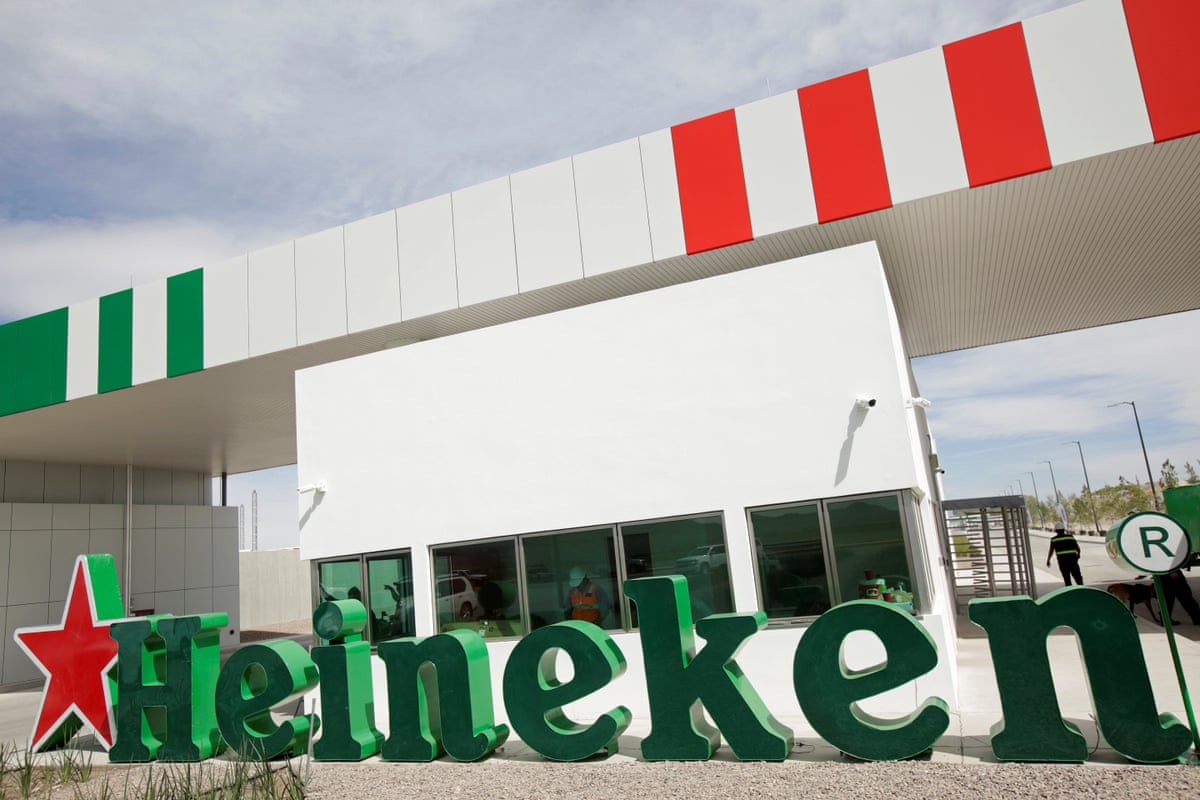
Heineken announced plans to reduce its global workforce by up to 6,000 jobs and lowered its profit growth forecast for 2026 compared to last year. The Dutch brewer, the world’s second-largest by market value, is facing weak demand for beer alongside other companies in the sector.
The company, which produces brands including Heineken, Tiger, and Amstel, intends to cut between 5,000 and 6,000 positions over the next two years, representing nearly 7% of its 87,000 employees.
Beer sales industry-wide have been challenged by stretched consumer finances, geopolitical instability, and adverse weather conditions. In some markets, consumption has declined due to health concerns related to alcohol and the growing popularity of weight loss medications such as Wegovy and Mounjaro, which influence dietary and lifestyle choices.
Heineken’s Chief Financial Officer Harold van den Broek explained:
"We really do this to strengthen our operations and to be able to invest in growth."
Some job reductions will occur in Europe and other non-priority markets with limited growth prospects. Additional cuts will stem from previously announced initiatives targeting Heineken’s supply network, head office, and regional business divisions.
The company is currently seeking a new chief executive following the unexpected resignation of Dolf van den Brink in January.
Heineken anticipates slower profit growth of 2% to 6% this year, compared to the 4% to 8% growth forecast for 2025. The brewer reported a better-than-expected 4.4% increase in organic operating profits last year.