

Call for Agreement to Reopen Trade Routes
The chief executive of Danish shipping giant Maersk has emphasized the necessity for the United States, Israel, and Iran to reach "some kind of deal" to reinstate global trade routes in the Middle East.
"Ultimately we need to get back to something where freedom of navigation and peaceful navigation is restored,"Vincent Clerc told the BBC.
Impact of Conflict on Shipping and Global Economy
The ongoing war involving Iran, Israel, and the US has brought two critical shipping routes to near standstill, causing significant disruption to the global economy.
"The main concern is the safety of our crews, is the safety of our assets,"Clerc said during an exclusive interview.
He highlighted the persistent threat of drone strikes and the absence of any truce between the conflicting parties, stating,
"It is very hard for us to put our colleagues and our ship in harm's way."
Seafarer Casualties and International Response
According to the United Nations' International Maritime Organization (IMO), at least seven seafarers have lost their lives in the Strait of Hormuz since the conflict began, with several others injured.
In a speech to an IMO committee on Monday, Secretary General Arsenio Dominguez remarked,
"These seafarers are simply carrying out their duties and performing an essential service to the global community, ensuring the continued flow of goods and energy, and they must be protected from the consequences of broader geopolitical tensions."
Iran's Position and Strait of Hormuz Blockade
Iranian government spokesperson Fatemeh Mohajerani justified the blockade by stating the country must maximize "all resources," including control over the Strait of Hormuz, while in a state of war.
Prior to the conflict, approximately 20% of global oil supplies passed through the Strait of Hormuz, which is now effectively closed due to Iran's threats targeting shipping vessels.

Shipping Routes Avoided Due to Security Threats
Simultaneously, major global shipping lines are avoiding the Red Sea route due to security threats, leading to longer voyages around the Cape of Good Hope.
Clerc explained that these longer routes, combined with rising oil prices, have increased shipping costs, contributing to inflationary pressures worldwide.
"We have traditional contracting mechanisms that pass on this fuel fluctuation, whether they go up or they go down, onto the customers. So what it means is that ultimately, in this case, these increases will pass to our customers and will pass on to the consumers."
The additional expense amounts to roughly $200 per standard 20-foot shipping container, representing a 15% to 20% increase in freight costs, Clerc added.
Other leading shipping companies, including MSC and Hapag-Lloyd, have also raised charges due to Iran-related service interruptions.
Disruption to Maersk and Regional Food Supply
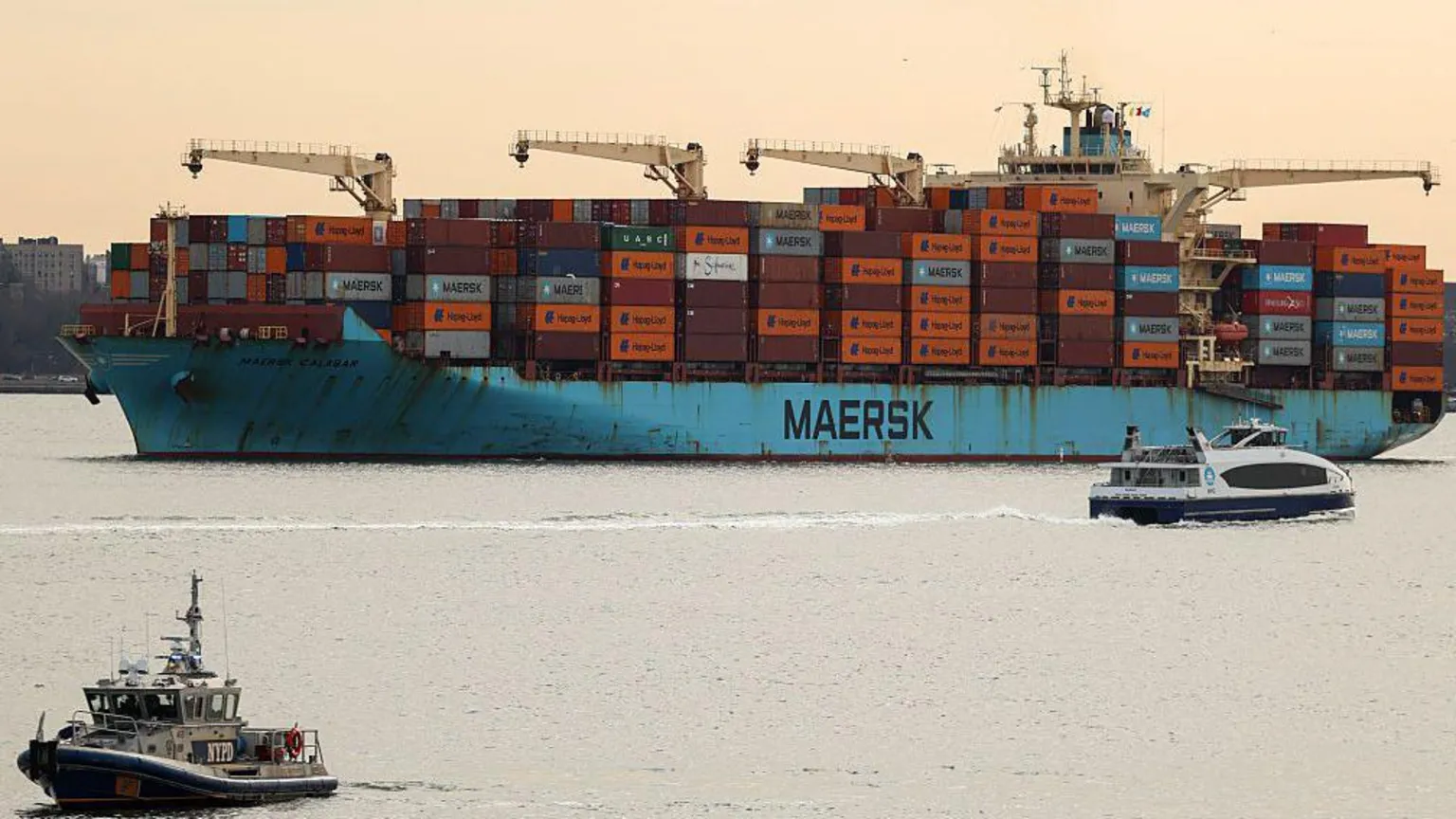
The conflict has profoundly impacted Maersk, the world's second-largest shipping company, with many customers experiencing irregular deliveries.

Clerc warned that this disruption is "extremely disruptive" in a region heavily dependent on imported food.
He noted the logistical challenges involved in ensuring food continues to be available on supermarket shelves rather than spoiling while delayed on ships or in ports.
When asked about concerns over product shortages, Clerc responded,
"We've seen a fantastic reaction"with land bridges and trucking efforts to maintain supply chains.
However, he acknowledged that land transport cannot match the volume capacity of sea freight, and while critical goods can still be moved, many exports like petrochemicals will have to "take the back seat for a while."
Potential Naval Escorts and Security Measures
Governments such as the United States and France have proposed naval escorts as a potential solution to reopen the waterways.
Clerc indicated that effective protection could offer "at least a temporary reprieve" to resume shipping operations but emphasized his unwillingness to endanger staff.
This approach appears to be welcomed by global energy markets and could provide relief to the global economy.
For instance, when US Energy Secretary Chris Wright posted on social media about the US Navy successfully escorting an oil tanker through the Strait of Hormuz, oil prices dropped sharply.
However, prices rose again after the post was removed and the White House clarified that no tankers had been escorted out of the strait.
Return to Red Sea Route and Ongoing Vulnerabilities
Only a few weeks prior, major shipping lines including Maersk began a phased return to the Red Sea route after suspending it for two years due to threats of Houthi attacks linked to the Hamas-Israel conflict.
Despite this, ships in the Red Sea or the Strait of Hormuz remain vulnerable amid current tensions.
Data from logistics firm KN Seaexplorer indicated that 132 ships were still stranded in the Gulf as of Monday.
The exact number is difficult to verify, as some vessels have reportedly turned off their transponders to conceal their locations.
Challenges of Naval Protection and Need for a Deal
Clerc explained the challenges of naval protection in the narrow strait, stating,
"You're very close from the Iranian coastline, so you don't have a lot of time to react, so you would need a significant presence from the Navy to be able to provide a shield all the way through."
He expressed skepticism about naval escorts as a permanent solution due to the high volume of traffic and the narrowness of the Strait.
Ultimately, Clerc believes that only "some kind of deal" can restore freedom of the seas, which is essential for the health of the global economy.


