

Global Reliance on Gulf Energy Highlighted by US-Israel-Iran Conflict
The ongoing conflict involving the US, Israel, and Iran has starkly revealed the world's heavy dependence on energy resources from the Gulf region.
Since hostilities commenced, oil prices have surged significantly, currently trading over 33% higher at $100 per barrel. This increase is driven by air strikes targeting shipping and energy infrastructure, alongside the effective closure of the Strait of Hormuz—a critical maritime route responsible for transporting one-fifth of the world's oil supplies.
Nowhere is the impact of this energy crisis more pronounced than in Asia. In the previous year, nearly 90% of all oil and gas transiting the Strait of Hormuz was destined for Asian markets.
Energy from the Gulf is essential for everyday life, powering heating systems, vehicles, and electricity generation. It also underpins the extensive manufacturing sectors across the region.
South East Asia, in particular, faces significant exposure to the Persian Gulf's supply disruptions. Even oil-producing countries like Malaysia and Indonesia have seen a decline in domestic production coupled with increased imports over the last decade.
The region's vulnerability is also linked to the specific characteristics of Middle Eastern crude oil and the refining capabilities of countries in South East Asia.
"Middle Eastern crude is generally 'heavy sour' or 'medium sour'," explains Jane Nakano, senior fellow in the Energy Security and Climate Change Program at the Center for Strategic and International Studies.
According to Nakano, refineries in South East Asia are designed to process this type of crude oil, making a switch to alternative suppliers, such as the United States, complex and costly.
"It would take significant investment to alter refinery specifications," she adds.
This situation places many nations in a difficult position. For example, the Philippines sources approximately 95% of its crude oil from the Middle East. In response to the crisis, the Philippine president has instructed public sector workers to adopt a four-day workweek to conserve fuel.
Governments across the region are encouraging remote work and implementing other fuel-saving measures. Thailand's energy minister recently announced that air conditioners in public offices will be set to a higher temperature of 26°C to reduce energy consumption.
South East Asia's dependence on food imports further exacerbates the situation. Singapore imports 90% of its food, while Indonesia relies entirely on external sources for wheat.
Consequently, rising transportation costs have a direct effect on food prices. Last week, jet fuel prices increased by nearly 60%.
Petrol Price Caps and Rising Costs
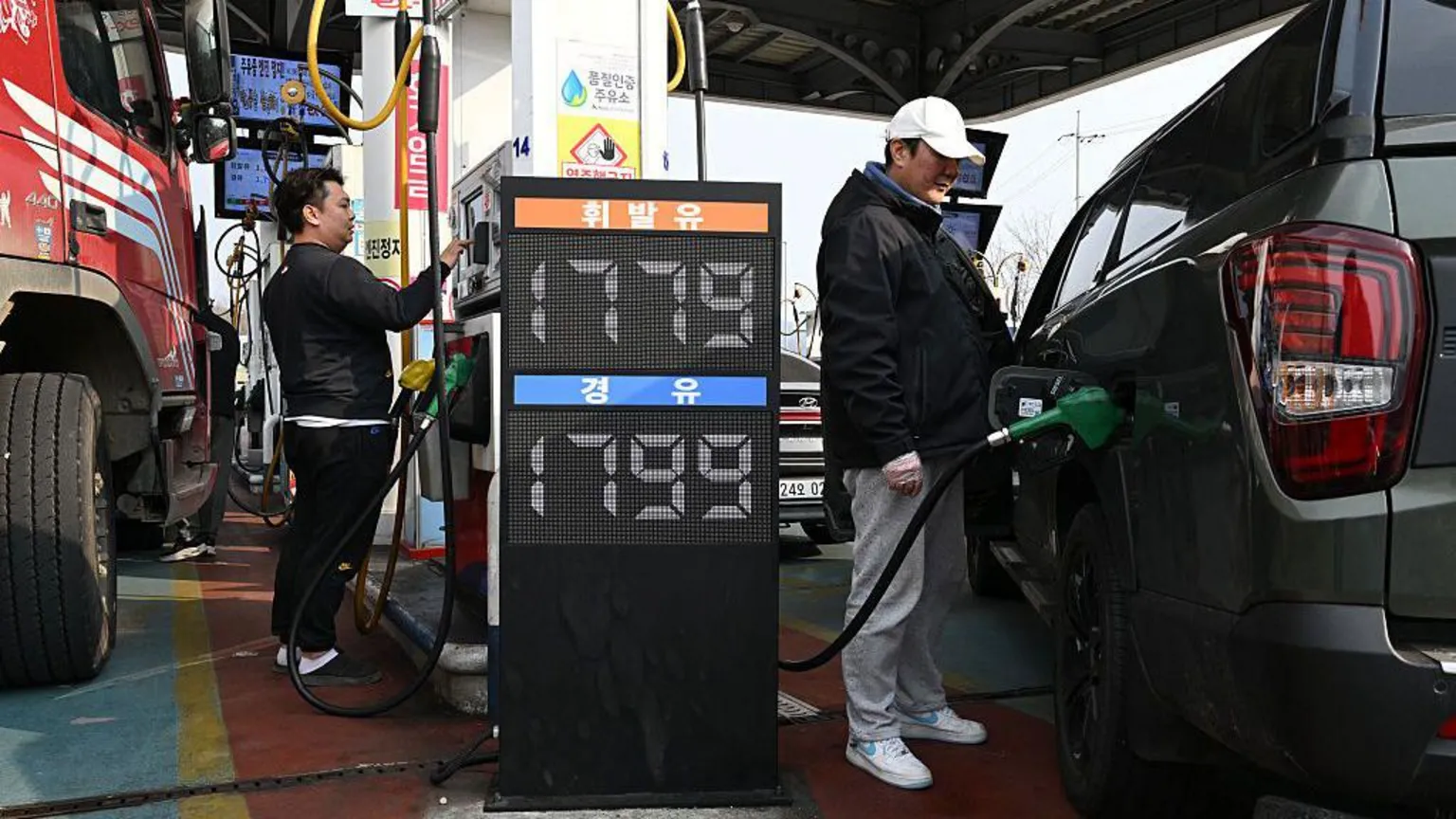
Vietnam is experiencing significant strain, with diesel prices rising nearly 60% since the previous month. In some urban areas, long queues of moped riders have formed at petrol stations amid panic buying. Similar scenes have been reported in Bangladesh.
Globally, fuel prices at the pump have increased, though the rise is less severe outside Asia. In the United States, average petrol prices have increased by 23% over the past month, with diesel prices up by approximately one-third. The United Kingdom has seen a 9% increase in diesel prices.
Governments are actively monitoring the situation. South Korea has imposed a temporary fuel price cap to alleviate public concern over rising oil costs.

Japan announced subsidies for oil wholesalers aimed at containing retail petrol prices.
In France, TotalEnergies declared it would cap petrol and diesel prices at its service stations from Friday until the end of the month, as reported by .
The United Kingdom is reviewing a planned fuel duty increase scheduled for September.
Global Gas Market Impact
China, Asia's largest economy, is comparatively well-positioned to manage the crisis. It has developed one of the world's largest oil reserves, sufficient for several months of consumption. Additionally, China unofficially imports millions of barrels of Iranian oil, despite US sanctions.
The impact of rising petrol prices is mitigated in China, where electric vehicles constitute one-third of new car sales.
China's electricity generation is less dependent on oil, relying predominantly on coal.
Japan and South Korea, other major Asian economies, have agreed to release millions of barrels from their national reserves in accordance with an International Energy Agency (IEA) agreement announced on Wednesday.
However, both countries have increased their dependence on Middle Eastern energy after reducing purchases of Russian oil and gas following the 2022 invasion of Ukraine.
The Ukraine conflict has also reshaped Europe's gas supply sources, prompting the UK and EU to reduce reliance on Russian gas. Currently, most liquefied natural gas (LNG) for these regions comes from Norway and the United States.
The EU receives approximately 10% of its gas directly from Qatar, while the UK obtains about 2%, according to Capital Economics.
Although European countries are less exposed to reductions in Gulf gas supplies—QatarEnergy, a leading global exporter, halted production last week following military attacks on its facilities—they are not immune to the consequences.
"Asian customers who are no longer getting that gas are going elsewhere and pushing up the price of global gas prices," says David Oxley, chief climate and commodities economist at Capital Economics.
The United States stands out as an exception. It has increased fracking activities in recent years, boosting domestic gas production and rendering it "the most insulated from this shock," according to Oxley.
Nevertheless, the US faces limitations in gas exports due to the high costs and lengthy timelines required to expand infrastructure.
While new capacity is continually being developed—contributing to a less severe rise in gas prices compared to 2002—it is insufficient in the short term to compensate for the loss of Gulf supplies.
Additional reporting by Osmond Chia in Singapore


