

Luxury Bakeries Thrive Amid Cost of Living Crisis
During a period marked by a cost of living crisis, high-priced patisserie has surged in popularity across the UK, extending beyond London’s borders. Our reporter explores whether a tart priced at £45 can justify its cost through a detailed tasting journey.
Once, on a quiet residential corner of Hackney, east London, a vanilla cream slice or a neon-pink Tottenham cake could be purchased for about £1. The Percy Ingle bakery that served the community for nearly five decades has since closed, replaced by establishments like Fika, where a cinnamon bun costs £4.20 and a pistachio croissant nearly £5.
Compared to other bakeries, Fika’s prices are relatively moderate. For instance, Copains, a Parisian bakery that opened its first UK location in central London late last year, charges £12.50 for a large babka and £11.90 for an éclair. Harrods’ food hall offers a stuffed savory croissant adorned with gold leaf for £12. At Cedric Grolet, inside the luxury Berkeley hotel, a hazelnut cookie costs £25. The era of £10-plus pastries has clearly arrived.
These luxury desserts have gained viral attention on social media, drawing long queues outside bakeries that capitalize on the platform to showcase their visually appealing products. Such bakeries are typically located in major cities including London, New York—where a roasted pear danish costs $12 (£9)—and Paris, where a pecan tart at a notable bakery is €12 (£10.40) and a box of eight macarons €27.
Despite high prices, upscale bakeries appear to be thriving in the UK. Research from September indicates a 34% increase in independent bakeries over the past five years, with the Midlands, East Anglia, and northern England experiencing the fastest growth. Emma Bell, a business professor at the Stockholm School of Economics, attributes this to a global trend away from cheap, ultra-processed foods toward artisanal craft-making, with consumers willing to invest in unique, indulgent pastries.
Beyond London, bakeries such as Pump Street Bakery in Suffolk have attracted international visitors seeking premium pastries, even at premium prices. For example, Pump Street Bakery charges £25 for six mince pies, which equates to over £4 each.
To assess whether these prices and queues are justified, I embarked on a tasting tour of London’s luxury bakeries, including several viral hotspots.
Stop One: The Near-£10 Pastry
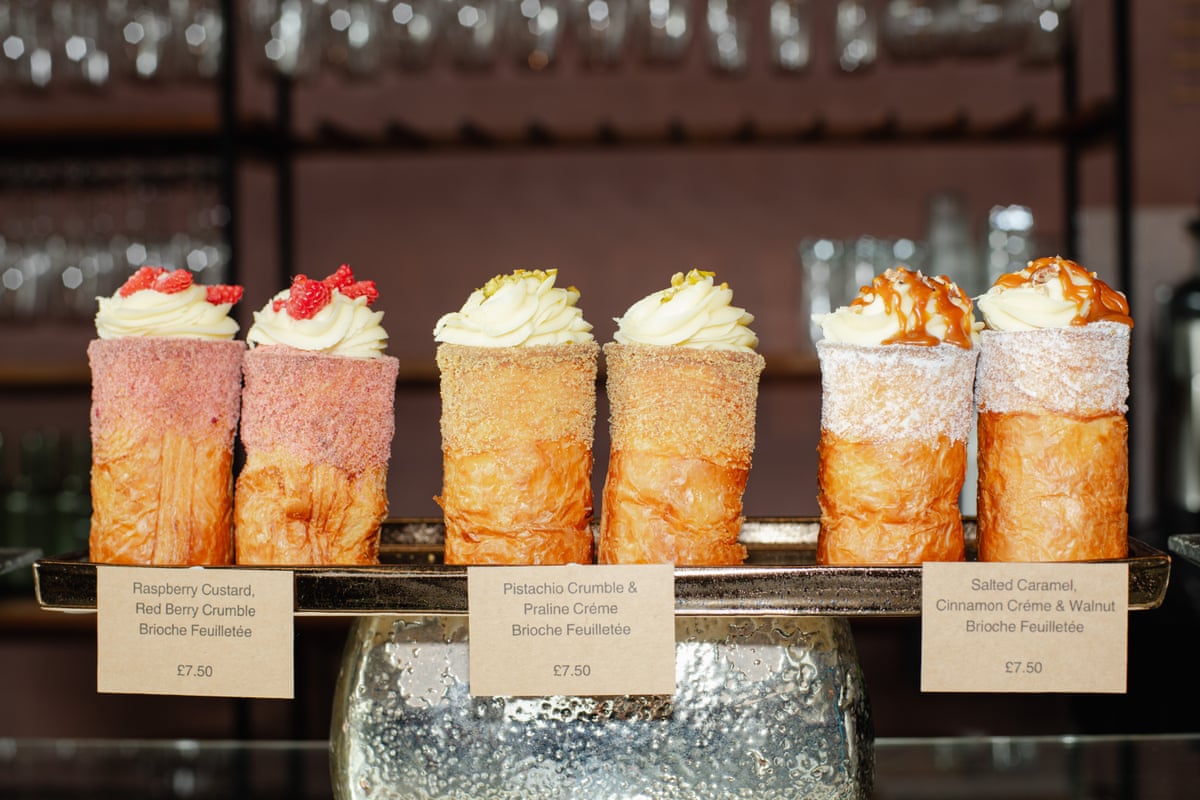
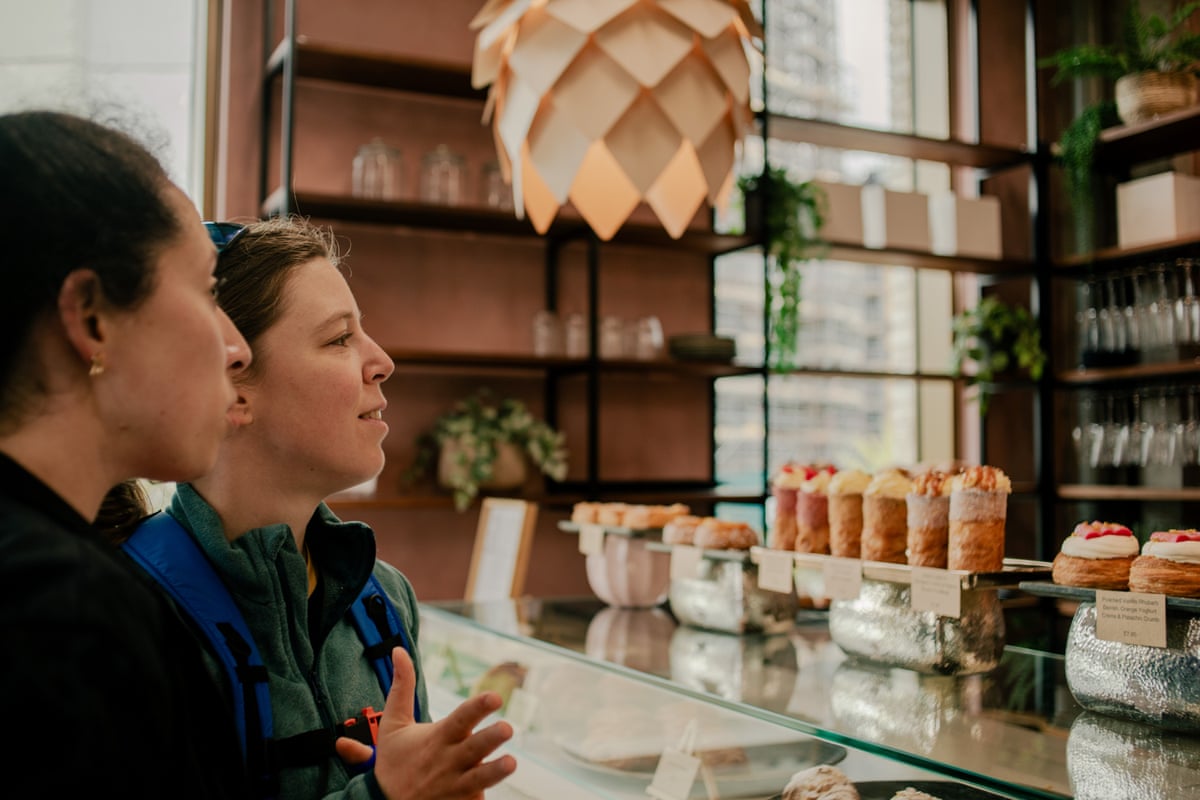
My first visit was to Yeast in Broadway Market, east London, where pastries include a pistachio crumble and praline crème brioche feuilleté (£7.50) and a poached vanilla rhubarb danish (£7.95). Ben Keane, who runs the bakery with his wife Angela Chan, openly acknowledges the high prices.
“We know we’re not cheap, but we use the best-quality ingredients,”
he said. On a busy Sunday morning, the café was packed.
I selected a tomato, mozzarella, and hot-honey swirl (£7.25), a limited-edition pineapple and coconut danish filled with custard (£7.95), and a chocolate and hazelnut kouign-amann (£3.95). Starting with the savory option, I found it delicious and ended up eating the entire pastry despite planning to take only a small bite. The pineapple danish was also very enjoyable, with a firm, fresh topping and subtly sweet custard filling. The standout was the kouign-amann, a traditional Breton delicacy translating to “butter cake.” Each bite delivered the rich flavor of browned butter and sugar, with the pastry serving as a perfect vessel. This is not something available at supermarkets like Asda.
Since supermarkets are my usual patisserie source, I considered customer opinions to gauge quality. Alice, 31, a semi-regular customer, had just finished an apricot and apple crumble danish.
“They’re just really tasty,”
she said. Dining with Baula, 29, and Emily, 30, who was visiting from south Wales, the group spent £37 on pastries and coffees, including a danish, a chocolate ganache brioche feuilleté, a pain au chocolat, and a kouign-amann.
“These are amazing pastries. You don’t mind spending a bit more when it’s independent,”
Alice added, noting she avoids chain bakeries. Emily, despite noting that in Wales she could buy coffee and cake for less than the price of a single pastry here, was impressed.
“I can make a sandwich at home; I can’t make this at home,”
Alice said.
Keane explained that Yeast uses flour and butter imported from France, including a special dry butter that has more than doubled in price since he began in 2011, when it cost £4.50 per kilogram. Other expenses such as rent, business rates, and VAT have also increased significantly.

He emphasized that Yeast’s reputation has grown organically, primarily through word of mouth, although some pastries have gone viral, causing temporary spikes in demand.
“We don’t want to be a faddy place. Now, it just seems to be: ‘What’s the next big thing?’ But the main focus for me is to make the perfect croissant every day.”
Stop Two: The £10-Plus Pastry
Next, I visited Copains, a bakery where all pastries are gluten-free. Upon entering, I was greeted by a staff member with extensive knowledge of the products. Copains, with 26 branches across Paris and locations in Bordeaux, Lyon, and Brussels, opened its first London shop in Covent Garden in November and a second in Islington this month. Robert Szucs, the general manager, described it as Disneyland for people with dietary restrictions.
“There are a lot of people who need this,”
he said, adding that three or four customers daily become emotional upon learning they can indulge in nearly anything in the store.
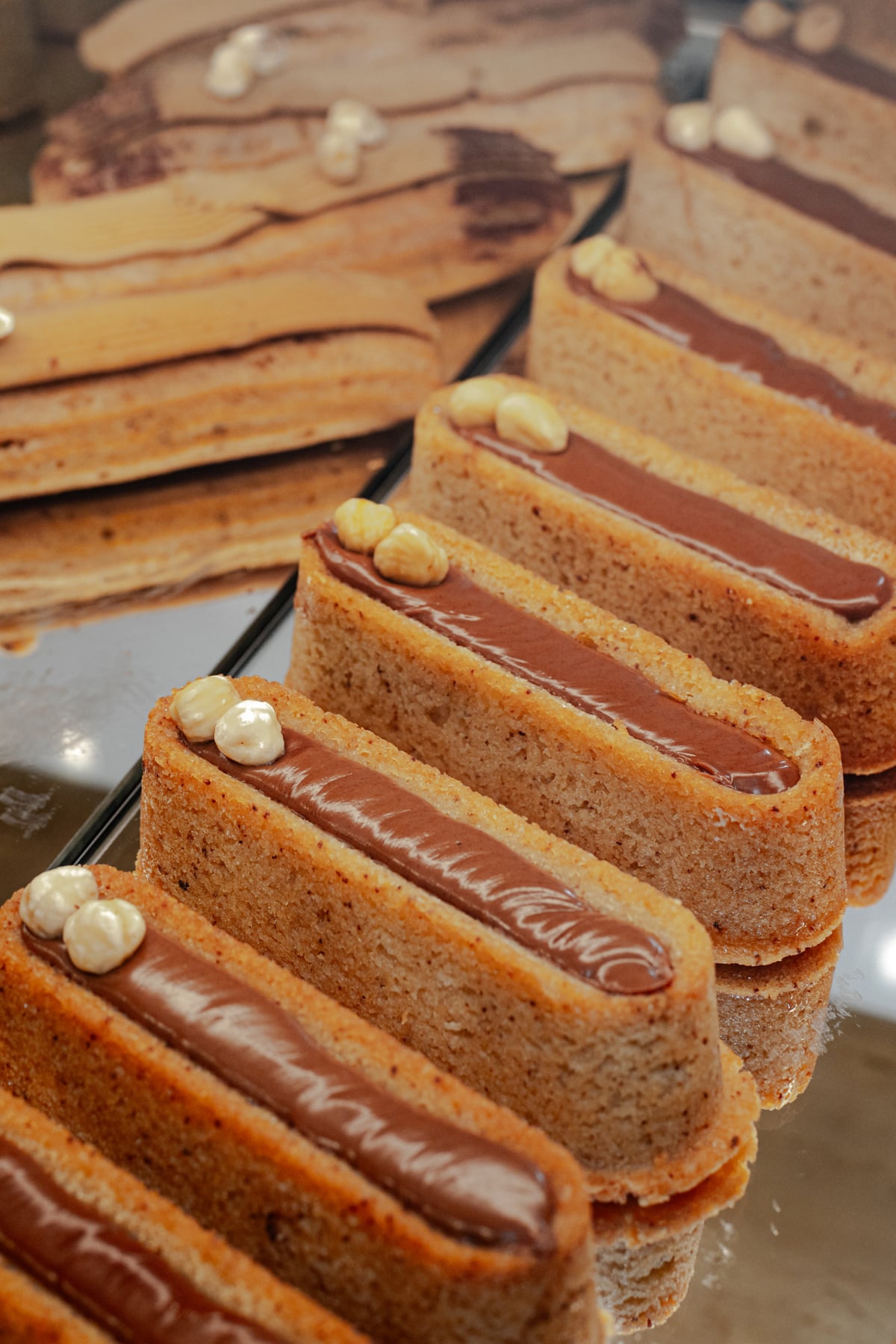
I chose a New York roll—a large, firm croissant filled with hazelnut spread and topped with chocolate and nuts (£12.90), a large chocolate babka (£12.50), and a coffee éclair (£11.90). The New York roll was substantial and dense but impressive for a gluten-free pastry, which often fails to replicate traditional textures and flavors. The babka was glossy and rich in chocolate without being overly sweet, providing a welcome balance during my sugar-heavy tasting day. The éclair was smaller and thinner, with each bite costing approximately £3. It was pleasant, particularly the coffee cream, though the price felt steep.
Copains is not the only gluten-free bakery in London; for example, Libby’s Bakery in Notting Hill sells a pack of four pastries for £12. Szucs highlighted that Copains uses only organic, high-quality ingredients such as chestnut and rice flours, and that all items are handmade and freshly baked each morning. He rejected the notion that prices exclude some customers, pointing out that a chocolate brioche costs £3.50 and croissants start at £4.90.
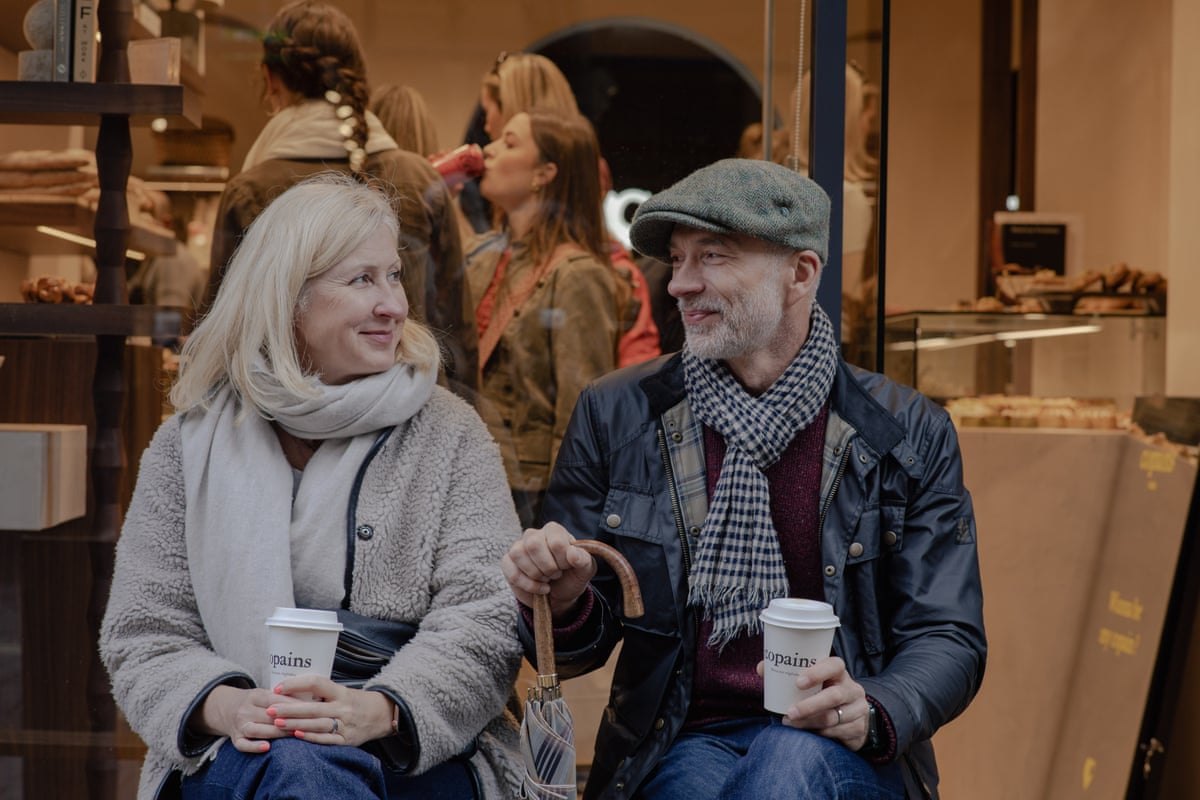
Customer reactions varied. One rated the chocolate swiss bread (£5.50) six out of ten, while Vilija, 51, said she “just loved” her chocolate pistachio croissant. Her partner, Rimsky, also 51, enjoyed his raisin twist.
“I liked that it wasn’t that sweet,”
he said. Neither has dietary restrictions and visited spontaneously. They spent £29 on pastries and two coffees.
“I was a little bit shocked, but as soon as I tasted it I thought it was worth it,”
Vilija remarked.
Stop Three: The £20-Plus Pastry
The 40-minute walk from Copains to my final destination was a prudent choice given the volume of sugar and pastry consumed. Passing Arôme Bakery, which had a long queue despite pastries priced at £7 or £8, I continued to Cedric Grolet, another Parisian bakery with a strong online following. The young baker, who has 9.5 million TikTok followers, has become a culinary celebrity.
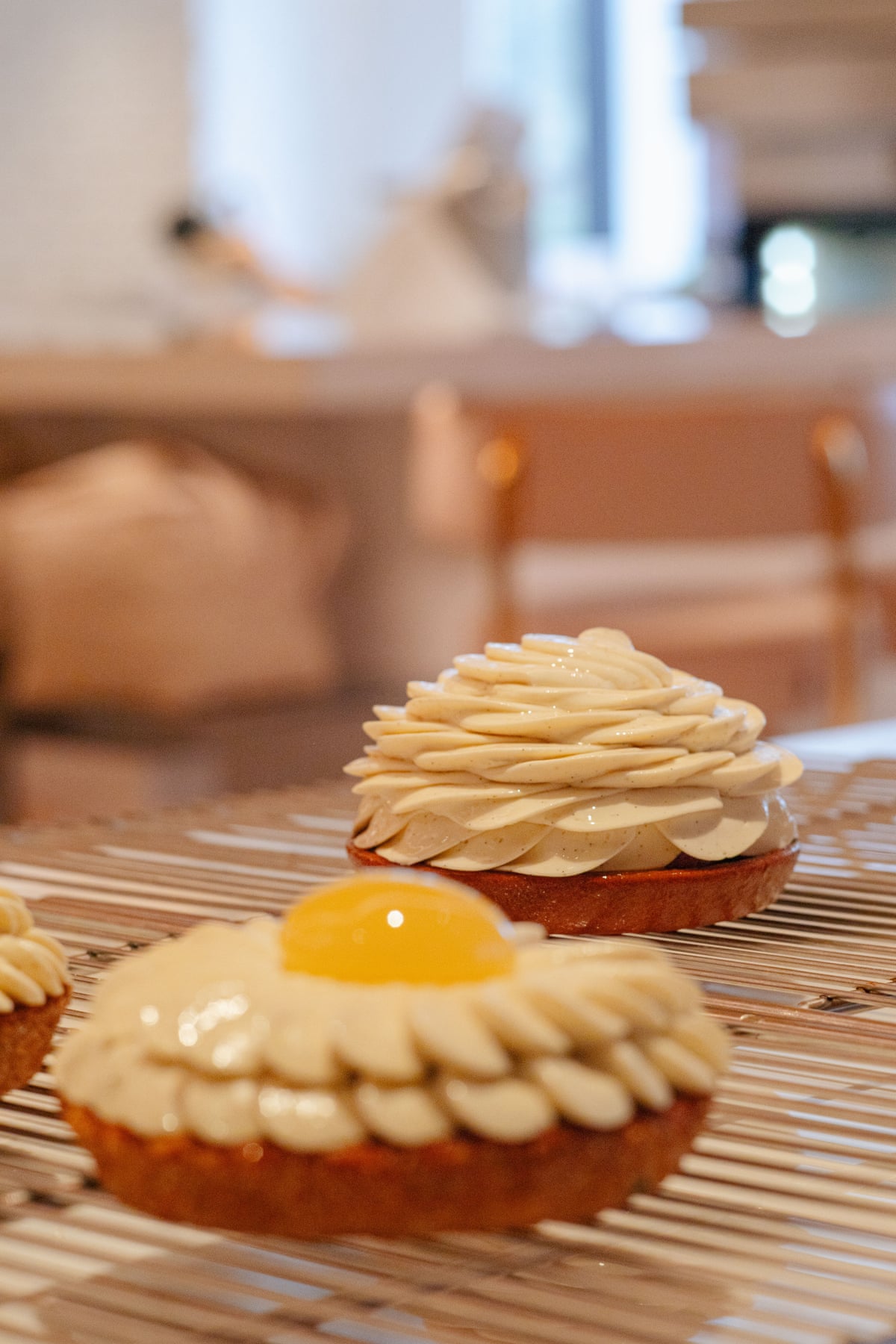
I initially intended to purchase the £25 hazelnut cookie but was persuaded by a server to try the £45 “vanilla flower,” a large, elaborate tart described as one of the bakery’s most popular items. I left with both pastries.
Though initially skeptical of the high prices, my first bite of the hazelnut cookie—sized enough for two—was impressive. The soft dough was swirled with milk chocolate and caramelized hazelnuts, resting on a caramel base with praline adding a crunchy texture. Despite intending to take only a bite, I found myself returning for more.
The vanilla flower tart was equally delightful. The crunchy pastry base was heavenly, complemented by a creamy, sweet vanilla ganache topping. However, the intense sweetness left me craving something savory to cleanse my palate. It was time to conclude my tasting journey.
Industry Insights and Market Trends
Professor Emma Bell, who conducted research into the growth of independent bakeries across the UK since the Covid-19 pandemic, identified the pandemic as a turning point, noting that people had more time and that high streets became destinations.
“While many have since faced financial pressures, including business rates, rising energy and ingredient costs and labour shortages, sweet treats are usually higher-margin products,”
she explained. Pastries also serve as a customer draw, encouraging shoppers to enter stores and potentially purchase other items.
While upscale bakeries are expanding, lower-cost bakeries face challenges. Percy Ingle, once dominant in London and Essex with over 50 shops, closed in 2020. Wenzel’s, another budget chain, recently shuttered several stores and reported losses last year. Bell noted that high-cost and low-cost bakeries operate in different markets, with lower-end bakeries losing customers to inexpensive supermarket options.
After this indulgent crawl, I find myself drawn to high-priced pastries. Considering rising costs and other products I might spend a tenner on, a delicious, filling bake seems justifiable. However, there may be a middle ground. One-bite desserts are gaining popularity, possibly due to weight-loss trends or because many pastries are too large for a single serving. For example, Town restaurant in central London offers buttermilk pudding with rhubarb in two sizes: a mini version (£6) and a standard size (£12). Perhaps we can enjoy quality pastries without excess.


