Donald Trump once predicted the US-Israeli war in Iran would last no longer than six weeks. It has now entered its third month.
The conflict has triggered a global energy shock comparable to the oil crises of the 1970s, increasing prices for fuel, groceries, and other essentials.
Despite adding pressure on already strained American consumers, the latest GDP figures released this week indicated that the economy continued to grow in the first quarter of 2026.
As the US economy showed resilience in early 2026, the BBC examines key economic indicators ahead of the midterm elections in November, with no resolution in sight for the ongoing war.
Economic growth
In the lead-up to the midterms, Trump is expected to highlight Thursday's growth data to support his economic policies.
Official statistics revealed that the economy expanded by 2% on an annualised basis in the first quarter of 2026, marking a notable recovery following a slowdown at the end of 2025.
This growth occurred despite consumer pressures from US tariffs, which raised prices for American shoppers, and the renewed energy shock caused by the Iran conflict.
Economists noted that the impact on consumer spending was less severe than anticipated, with consumption increasing by 1.6% on an annualised basis. They also credited the overall growth to substantial investments by technology companies in artificial intelligence (AI) deployment.
James Knightley, chief international economist at ING, said that as consumer spending cools, "investment linked to tech and AI has clearly become the main engine of growth in the US".
Cost of living
The November elections are highly competitive, and the Republican party's success will largely hinge on the familiar political mantra: "It's the economy, stupid."
However, while headline growth figures are encouraging, American voters are more likely to base their decisions on the cost of living.
US strikes on Iran and the subsequent closure of the Strait of Hormuz have driven oil prices upward. Brent crude, a key oil benchmark, reached a four-year high of $126 per barrel on Thursday before retreating to $111. Prior to the conflict's outbreak at the end of February, prices were approximately $73 per barrel.

This surge resulted in Americans paying an average of $4.30 (£3.17) per gallon of fuel by the end of April, according to American Automobile Association data, compared with under $3 in February.
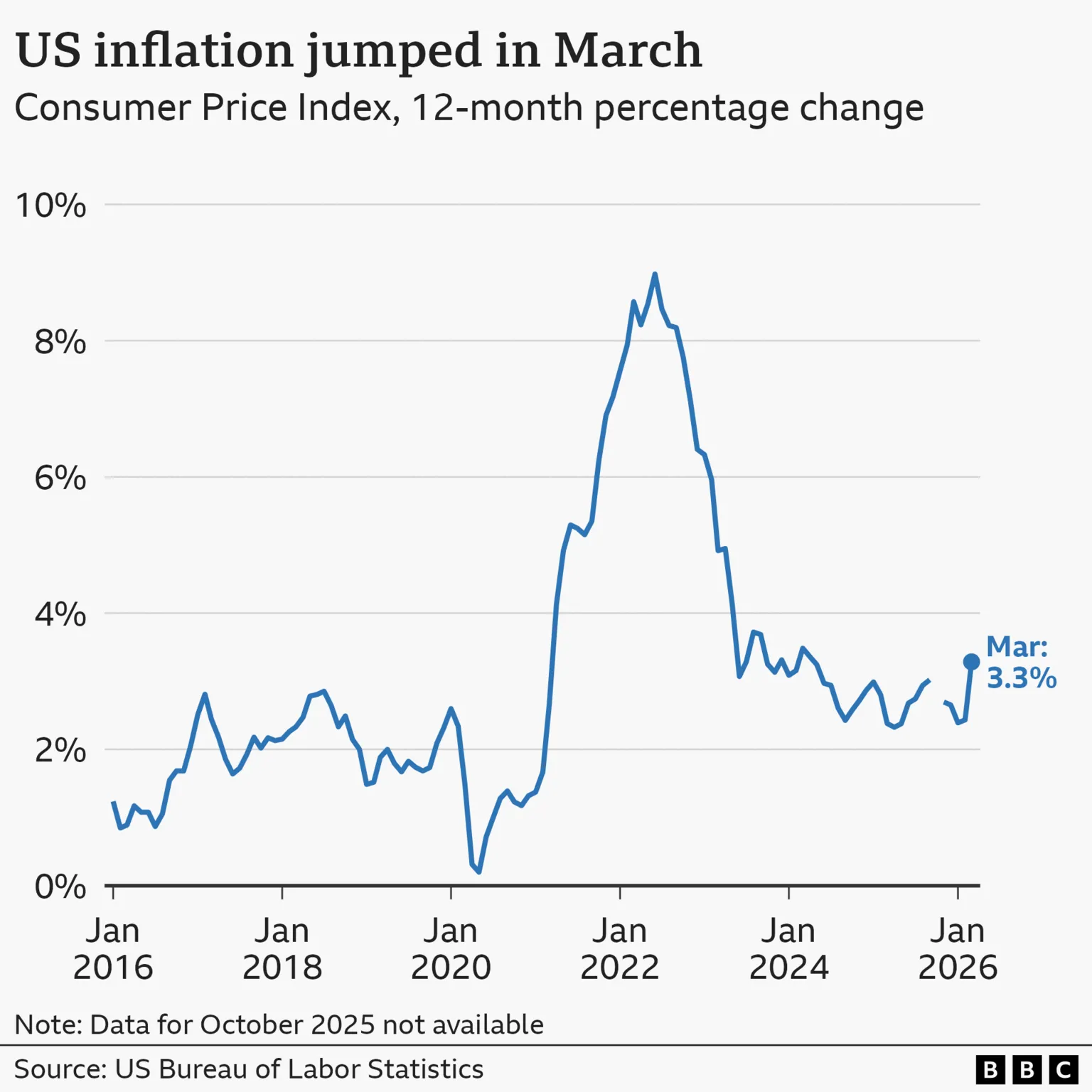
The fuel price increase contributed to a sharp rise in inflation, with March's annual inflation rate reaching 3.3%, a near two-year peak and a significant increase from February's 2.4%.
Interest rates
The Iran conflict, particularly the March inflation data, eliminated expectations of an imminent interest rate cut by the Federal Reserve.
The central bank maintained its base interest rate at 3.5% to 3.75% on Wednesday, a level that influences mortgage and borrowing costs for Americans. Before the war, economists had anticipated a series of rate reductions.
Since US strikes on Iran began, the average interest rate for a 30-year mortgage has increased from 5.98% to 6.3%, according to Freddie Mac data.
Samuel Tombs, chief US economist at Pantheon Macroeconomics, stated that higher oil prices and expectations that the US will sustain its blockade of Iranian ports long-term could delay rate cuts until 2027.
The stock market
Despite the geopolitical turmoil, Americans invested in the stock market have experienced gains during the conflict.
Major US indices—the S&P 500, Dow Jones Industrial Average, and Nasdaq Composite—have recovered losses incurred early in the campaign and continued their upward trends.
The Nasdaq has increased approximately 10% since the conflict began, the S&P 500 is about 5% higher, and the Dow has risen just over 1%.
These gains benefit investors and also enhance the value of pension funds tied to stocks, such as 401(k) plans.
With Republicans poised to lose control of the House and potentially the Senate, the November elections will heavily depend on the economic conditions when voters cast their ballots.
While positive GDP growth and rising stock markets provide some reassurance to Republican strategists, the escalating cost of living remains a significant concern.
The extent of Trump's influence during his remaining presidency will largely depend on how the Iran conflict evolves, whether the Strait of Hormuz reopens, and if these developments translate into lower fuel and grocery prices for American consumers.