

Oil supply shock
The impact of the US and Israel's war in Iran is beginning to affect people worldwide regardless of location.
As the conflict obstructs oil exports from the Gulf region and producers reduce output, the resulting supply shock has driven oil prices toward $85 per barrel. This surge has unsettled financial markets, increased fuel costs, and raised concerns about a broader economic downturn.
The war serves as a stark reminder of the global reliance on Middle Eastern energy supplies, echoing supply disruptions experienced in the 1950s and 1970s. However, analysts suggest the current impact is significantly greater.
Approximately 20% of the world's crude oil passes through the Strait of Hormuz, where the conflict has halted maritime traffic.
Producers outside the region, including the US, Brazil, and Norway, have limited capacity to increase production to offset the shortfall.
While local oil pipelines offer some alternative routes, their capacity is insufficient, compelling regional producers to announce output cuts. According to , Iraq's oil production has decreased by over 60%, with Kuwait and the United Arab Emirates also scaling back.
The energy disruption extends beyond oil; about 20% of global natural gas supplies have been reduced following Qatar's state energy company halting production due to military attacks.
With no straightforward solutions to compensate for these deficits, JP Morgan analysts anticipate "visible shortages" in Asia and Europe within a week.
In Asia, which heavily depends on energy imports, some governments have implemented price caps and rationing measures. For instance, universities in Bangladesh have closed early for the Eid al-Fitr holidays, as reported by state media.
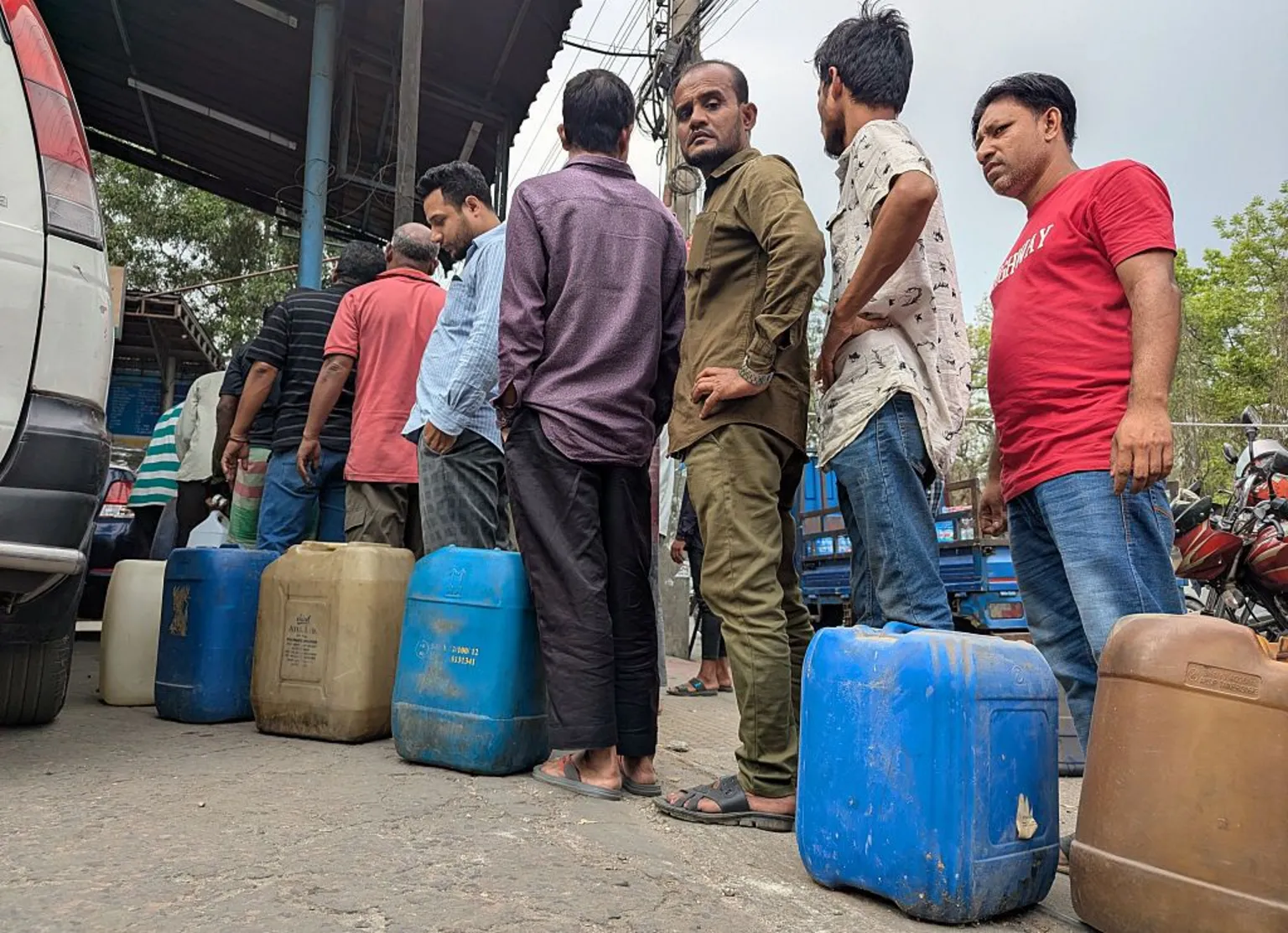
In the UK, Chancellor Rachel Reeves has cautioned about the risk of an inflationary shock.
Some nations have considered releasing oil reserves to alleviate the crisis, but experts suggest such measures would have limited effect. Hunter Kornfeind, senior macro energy analyst at Rapid Energy Group, described the scale of any reserve release as "peanuts" compared to demand.
"This is essentially the biggest supply shock at least in modern global oil market history," Kornfeind said.
"We're talking apples to oranges in terms of the need."
Higher energy prices
The immediate consequence of the supply shock is increased energy prices.
Both Brent crude and the US benchmark West Texas Intermediate have surged since the conflict began, reaching nearly $120 per barrel on Monday before retreating to just under $85 per barrel.
These price increases are impacting costs for businesses and households.
In the UK and Europe, natural gas prices have nearly doubled since the onset of the war in Iran.
Even in the US, a major oil and gas producer typically insulated from global price swings, pump prices are nearing $3.50 per gallon, up from approximately $2.90 a month ago, returning to levels last seen in 2024.

Goldman Sachs estimated last week that a temporary rise in oil prices to $100 per barrel could reduce global economic growth by 0.4 percentage points.
Should the conflict persist beyond the end of the month, analysts warn that global oil prices could surpass the 2022 peaks experienced after Russia's invasion of Ukraine, with some scenarios projecting prices as high as $150 per barrel.
"The knock-on impact for the economy would be pretty drastic," Kornfeind said, "as higher costs force households and businesses to reduce other spending and the wider economy slows."
Business impact, from tech to farmers
Analysts are closely monitoring potential effects on chip manufacturing, a sector critical to products ranging from automobiles to smartphones, especially since Taiwan, a major production hub, heavily relies on energy imports.
In the US, concerns have been raised that rising energy costs could hinder technology companies expanding their artificial intelligence (AI) infrastructure, a significant driver of economic growth.
The conflict's impact extends beyond energy commodities.
The Middle East is a key supplier of aluminium, sulphur (used in processing metals such as copper), and fertiliser components including urea.
As prices for these commodities rise, the increased costs may translate into higher prices for food and manufactured goods.
In the US, approximately 25% of fertiliser imports occur during March and April, coinciding with the planting season, according to the American Farm Bureau Federation.
"It could not come at a worse time," said farmer Harry Ott, who cultivates cotton, corn, and soybeans in South Carolina.
He contacted his fertiliser supplier last week, intending to begin application on his fields, only to learn that the supplier was delaying sales and deliveries pending a clearer understanding of the war's impact.

The supplier has since announced a price increase, which Ott fears will raise his fertiliser expenses by about $100 per acre, potentially eliminating any profit from this year's crop.
"These are trying times and what we are going through now on fertiliser ... was totally unexpected," Ott said during a briefing for reporters hosted by the Farm Bureau. "Nobody's balance sheet had room to make these adjustments."
Political pressure
Analysts identify the greatest economic risks in Asia and Europe, regions heavily dependent on energy imports, a concern reflected in stock market performance.
For example, since the war began, Japan and South Korea's main stock indexes have declined by approximately 10% and 15%, respectively, while Germany's Dax has dropped over 7%.
In contrast, the US S&P 500 has fallen only 1.2%.
With cost-of-living issues prominent ahead of the November congressional elections, analysts warn the situation could pose a political challenge for US President Donald Trump if rising prices begin to affect consumers.
The White House has issued mixed messages regarding its regional strategy, casting doubt on whether the president is prepared for a prolonged conflict.
Even if Trump ends the war, analysts caution that concerns about ongoing instability may keep prices elevated.
"Much as the US and Israel may declare operations over and complete, the Iranians may not see it that way," warned Paul Stankey of Stankey Research. "That may mean this situation continues long beyond the declaration of hostilities by the Trump administration."


