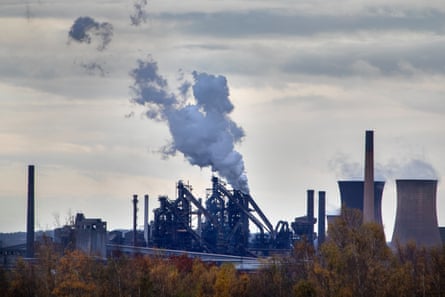
Ongoing Costs and Uncertain Future at British Steel's Scunthorpe Site
British Steel was losing £700,000 daily last year when its Chinese owner Jingye announced plans to close the Scunthorpe steelworks. After Jingye declined support to purchase raw materials, the UK government intervened to support the plant.
However, the crisis has continued. The government now spends over £1.2 million daily to sustain British Steel's operations. The latest £359 million cost reported to parliament last month may only represent the beginning of these expenses.
Nearly a year later, the future of the blast furnaces and rolling mills at the North Lincolnshire site, along with the 4,000 workers who convert iron ore into long steels used in construction and infrastructure, remains uncertain. Meanwhile, the government continues to cover increasing losses.
“In the short term, they are going to cost, so that £350m number is going to get bigger,” said Jon Carruthers-Green, a steel market analyst at MEPS International. “If you want to keep blast furnaces, if you want to keep rail supply, then it’s going to come at a cost.”
Decline of UK Steel Production and Industry Challenges
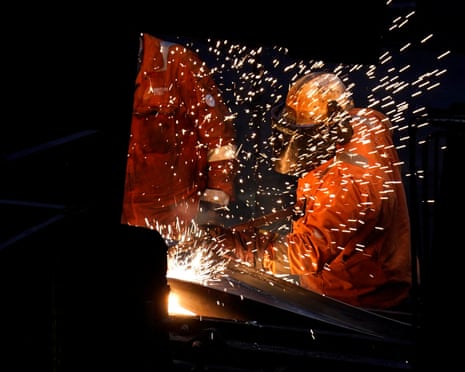
The UK steel industry has experienced a significant decline. In 1970, the country produced 28 million tonnes of steel, which dropped to 4 million tonnes in 2024, and further declined to 2.5 million tonnes last year—the lowest output since the Victorian era.
This decrease is largely due to the transition from traditional, polluting blast furnaces to cleaner, more efficient electric arc furnaces (EAFs). The government’s official receiver also controls the arc furnaces at Speciality Steel UK (SSUK) in South Yorkshire following its administration last year, while seeking solutions for British Steel.
“It’s a heck of a thing to take on – which they knew,” said a government insider. “There’s no easy answers here.”
Jingye Ownership and Compensation Demands
The initial challenge involves Jingye, which acquired British Steel out of receivership in 2020. Although Jingye remains the legal owner, it does not have operational control.
Jingye is reportedly seeking up to £1 billion in compensation to relinquish ownership, a figure considered unlikely for a loss-making facility.
Under Jingye’s ownership, British Steel has received substantial government financial support, including a previously undisclosed £120 million grant in December 2022. Government documents stated this funding was provided “to avoid a major economic shock to the Scunthorpe area, safeguarding jobs and securing a major investment for the UK.”
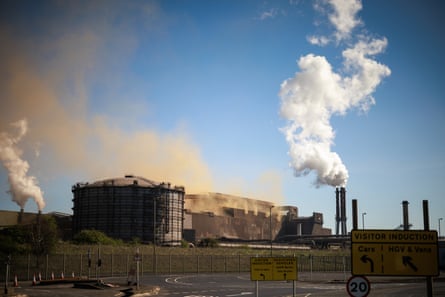
Jingye did not respond to requests for comment.
Government officials are cautious about expropriating the company. A recent government assessment noted that a more interventionist approach could deter foreign investors and provoke diplomatic criticism if perceived as market distortion.
Following a recent meeting, little progress was evident. Even if Jingye agrees to sell, multiple steps remain before the government can achieve its goal of securing a new owner to continue production at Scunthorpe.

Potential Integration with Speciality Steel UK
The future of SSUK, formerly part of the same group, may be linked to British Steel’s fate. Officials reportedly prefer a single buyer for both entities.
This arrangement could allow SSUK, potentially after investing in new casting equipment for long products, to supply steel to Scunthorpe’s rolling mills. Concurrently, the blast furnaces could be closed and replaced by EAFs on the same site. Industry experts suggest that transitioning to electric furnaces would benefit British Steel, as construction increasingly demands steel with lower carbon emissions.
Several hundred jobs could be retained in the rolling mills during this transition. However, unions oppose the idea of resolving SSUK’s issues at the expense of Scunthorpe jobs. Job losses in Scunthorpe would be politically sensitive, especially following Nigel Farage’s Reform party’s performance in the area last year.
“It is essential that we maintain steelmaking in Scunthorpe,” said Alasdair McDiarmid, assistant general secretary of the Community steelworkers’ union. “Almost one year on, we need a resolution on the issue of ownership and clarity on the long-term future of the works. Our members on site have tolerated more than enough uncertainty, and want to see a cogent strategy in place for the business.”
In the long term, workforce numbers are expected to decline. Building an electric arc furnace and connecting it to the electricity grid could take years. EAFs require significantly fewer workers, prompting unions to advocate for government investment in other areas of the business.
British Steel declined to comment.
Challenges in Maintaining ‘Virgin’ Steel Production
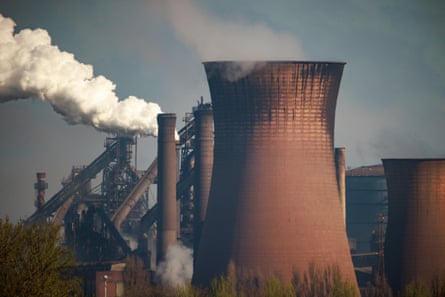
Several industry executives suggest the government may need to reconsider its commitment to preserving the ability to produce “virgin” steel from iron ore. Blast furnaces use coal to reduce iron ore to iron, while EAFs rely on scrap steel or pre-made iron, which would require additional UK production capacity.
The government remains committed to maintaining iron-making capabilities, citing strategic concerns. The impact assessment stated, “In a time of trade wars or conflict, reliance on foreign (potentially adversarial) suppliers is a strategic liability.”
“If we’ve got to import everything we can be held to ransom,” said David Murray, a veteran metals executive. British Steel “does need to be protected and we need to accept the cost of that.”
Cameron Pleydell-Pearce, professor of materials science and engineering at Swansea University, noted that EAFs could enhance UK production resilience due to abundant scrap metal availability. However, he emphasized the need for a technology-agnostic approach, including exploring newer iron ore reduction methods.
A government spokesperson stated: “This government is determined to support British steelmaking and our steel communities now and for generations to come, and last year we saved British Steel from collapse, protecting thousands of jobs. We are continuing discussions with Jingye to find a pragmatic, realistic solution for the long-term future of the site and will publish a steel strategy this year setting out how we can achieve a sustainable future for the sector.”
Prospects for New Ownership and Government Involvement
Regardless of the chosen path, a swift resolution to the Jingye ownership issue is not anticipated, nor is the identification of a long-term owner. Interest from a US-based potential buyer, who could combine Scunthorpe’s operations with a plant in Italy, surprised the government due to the buyer’s limited steel industry experience. Industry sources questioned the benefits of such a combination.
Officials privately report significant, though early, interest from other parties.
“A global steelmaker might [buy it], but they’d want to take on the finished article,” said Murray, noting that substantial government support would be necessary. “They wouldn’t take it on as it is now.”
This suggests the government may retain control of British Steel for an extended period. A source close to the situation estimated it could take four to five years before the company returns to private ownership.