

European stock markets hit record high
European stock markets reached a record high at the start of trading, buoyed by optimism following the US-Iran peace agreement. The pan-European Stoxx 600 index rose by 0.9% to 639 points, surpassing the previous record set just before the onset of the Iran war. Shares advanced across major cities including London, Frankfurt, Paris, Madrid, and Milan.
The rally was led by mining and travel sectors, while oil company shares declined.
This follows a significant surge in Japan’s Nikkei index, which increased by 5% amid expectations that the Strait of Hormuz will reopen within days.
Senior equity analyst at Hargreaves Lansdown, commented: "The move has given investors a clear reason to dial back some of the geopolitical risk premium that has hung over markets, especially as the Strait of Hormuz is expected to reopen and oil prices move sharply lower.
Energy prices have been one of the clearest transmission channels from Middle East tensions into inflation, bond yields and equity sentiment, and there is likely to be a concerted effort to get prices down even further once this deal is finalised.
There are still details to be ironed out before markets can fully trust the agreement, but for now the direction of travel is clear: lower oil, calmer nerves and a renewed appetite for risk."
The rise in energy prices earlier this year contributed to the European Union recording a goods trade deficit in April.
Eurostat reported that the EU had a trade in goods deficit of €7.1 billion in April, compared to a surplus of €2.3 billion in March and a surplus of €7.3 billion in April 2025.
This shift reflects a deterioration of €14.4 billion year-on-year, primarily driven by an increase in the energy deficit and a reduced surplus in the machinery and vehicles product group.
Oil was the worst-performing major asset this morning, as illustrated by the following chart from XM.
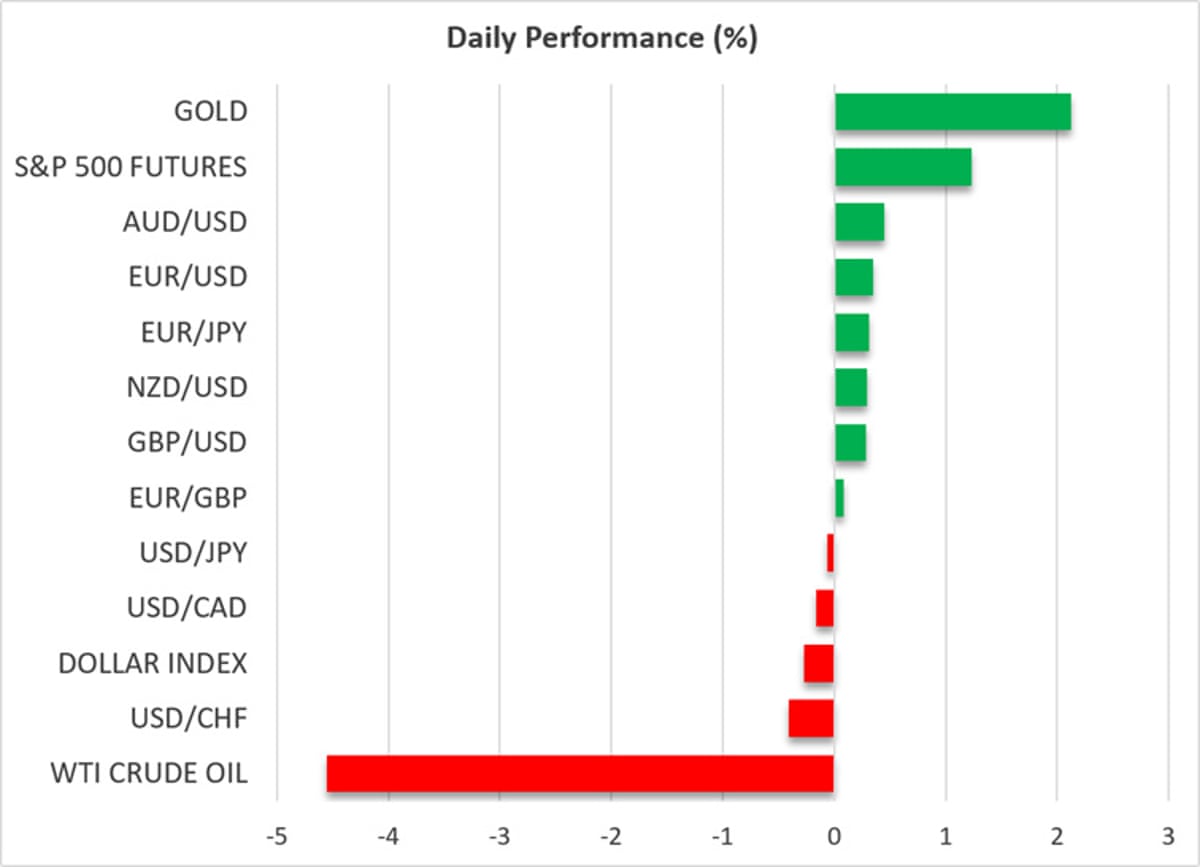
What Humpty Dumpty can teach us about oil prices....
Looking ahead, oil prices for delivery in a year have declined today but remain elevated compared to pre-Iran war levels.
The price of Brent crude for June 2027 delivery fell approximately 2% to $76.89 per barrel today. This is down from $82 per barrel a month ago but still significantly higher than the pre-war price of around $66 per barrel.
Kit Juckes, economist at French bank Société Générale, stated: "Many important lessons were learnt through nursery rhymes and the fact that you can’t put an egg back together after a fall is one of them….
The forward market remains concerned that getting supplies back to pre-war levels will take a long time."
German shipping company Hapag-Lloyd welcomed the US-Iran peace agreement.
Hapag-Lloyd described the news as encouraging and expressed anticipation for the cessation of military actions in the region.
"We hope that vessels will be able to cross the Strait of Hormuz this week."
Sentosa Ship Brokers analysts forecast a cautious resumption of travel through the Strait of Hormuz.
"The market is clearly pricing in a return to business as usual, but after months of disruption, (ship) owners and charterers alike will likely remain cautious until ships are consistently moving freely through Hormuz once again."
Wall Street is expected to open the new week with gains.

Pre-market trading shows the Dow Jones Industrial Average up 0.9%, the S&P 500 rising 1.2%, and the Nasdaq futures increasing by 2.2%, potentially leading the rally.
Lale Akoner, global market analyst at eToro, said: "Markets got a dose of relief after the US and Iran agreed to halt hostilities and move toward reopening the Strait of Hormuz, one of the world’s most important oil shipping routes.
For markets, the story is less about geopolitics and more about inflation. Lower oil prices could ease pressure on consumer prices, reducing one of the key risks facing central banks. The caveat is that markets are pricing in a lasting improvement in the situation. Any renewed tensions in the Middle East could quickly reverse some of the recent moves, particularly in energy markets.
Investors should view this as a positive development for risk assets, but not necessarily a game changer. Lower oil prices and easing inflation concerns are supportive for equities and bonds, yet the bigger drivers remain economic growth, inflation trends and central bank policy. This week’s Fed meeting is likely to matter more for markets than the headline itself."
Peace deal should keep mortgage rates down
Mortgage borrowers may find relief following the peace deal in Iran, according to Adam French, head of consumer finance at a financial institution.
"While we are far from being out of the woods yet, a lasting peace deal should dramatically reduce the risk of the Bank of England’s worst-case scenario for inflation and interest rates becoming a reality.
Under that scenario, Base Rate could have risen to 5.25%, potentially pushing typical rates on new mortgages towards 6.75%. Instead, today’s news means mortgages rates, which have already been slowly falling for several weeks, have likely already passed their peak – at least until the next unwelcome crisis.
Borrowers can be optimistic but with a word of caution, as inflation and economic data will continue to influence the outlook. However, a lasting peace should remove one of the biggest risks to mortgage costs and may help restore a more stable environment for hard-pressed remortgage borrowers and prospective buyers."
Even prior to this morning’s decline in UK bond yields, average mortgage rates had dipped slightly.
The average two-year fixed residential mortgage rate today is 5.61%, down from 5.62% the previous working day.
The average five-year fixed residential mortgage rate today is 5.58%, down from 5.59% the previous working day.
Why it may take months for oil flows to return to normal
Despite President Donald Trump's enthusiastic declaration: "Ships of the World, start your engines. Let the oil flow!" the restoration of oil flows through the Strait of Hormuz to pre-war levels will require time.
Several factors contribute to this delay: many oil tankers are currently positioned away from the strait due to its prolonged closure; some production and refining facilities have sustained damage or were temporarily shut down after storage capacities were filled; and insurers remain cautious about the potential for renewed conflict, affecting insurance costs.
Group chief economist at Capital Economics explained: "Even if ships now have safe passage, tankers are in the wrong place, oil production/refining facilities need to get up to full capacity, and questions over the cost and availability of insurance for ships traversing the Strait will remain.
Our current working assumption is that approximately 80% of energy flows will resume by the end of Q3. Natural gas flows will be slower to return, following the damage to Qatari facilities earlier in the conflict, which according to local officials has put 17% of production offline for two to three years."
US crude drops below $80
US crude oil prices have fallen to their lowest level since the second week of the Iran war.
The price of West Texas Intermediate (WTI) light sweet crude dropped by 6% today to $79.72 per barrel, marking the first time since 10 March that prices have fallen below $80 per barrel.
This decline could contribute to lower US gasoline prices, which had risen following the conflict, thereby potentially improving consumer confidence.
UK bond yields fall
The relief rally has also increased government bond prices, resulting in lower borrowing costs.
The yield on 10-year UK government debt decreased by 6.5 basis points (0.065 percentage points) to 4.775%, while two-year bond yields fell by 8 basis points to 4.16%.
Lower bond yields indicate reduced costs for issuing new government debt, providing relief to the UK Treasury after the Iran war had elevated borrowing expenses.
Copper mining company Antofagasta emerged as the top riser on the FTSE 100, gaining nearly 8%.
Traders are concluding that the resolution of the Iran war will stimulate the global economy, increasing demand for raw materials such as copper.


