Introduction: China grows at one of lowest rates on record; Thames Water has funds to survive to year end
Good morning, and welcome to our rolling coverage of business, the financial markets and the world economy.
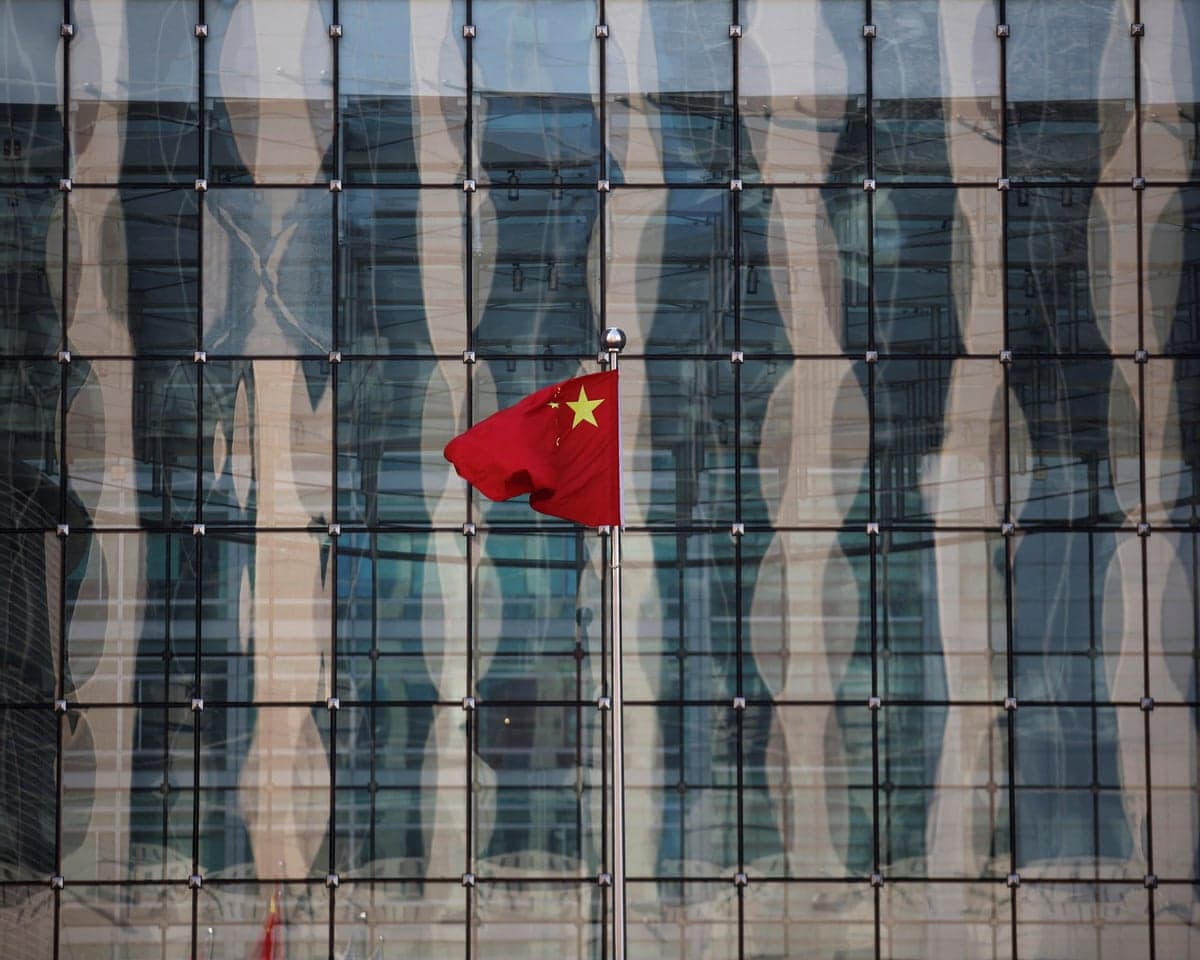
China grew 4.3% in the quarter to 30 June, marking one of the slowest growth rates on record, as weak domestic demand outweighed a surge in exports.
Growth decelerated from the first quarter rate of 5%, representing the lowest quarterly growth in three and a half years. The figure was below economists' forecasts and fell short of Beijing’s target range of 4.5% to 5%.
Thames Water said this morning that it has sufficient funding to survive until the end of this year. The company continues to collaborate with creditors, regulators, and the government on a rescue recapitalisation plan, which remains the only option to avoid temporary nationalisation.
According to its latest statements, Thames Water has £515 million in cash reserves.
The company, serving 16 million customers across London and southern England, has become emblematic of challenges in Britain’s privatised water sector. It has faced criticism for polluting rivers and the sea with sewage due to ageing infrastructure and is burdened by a significant debt load. Its debts increased by £1.7 million from the previous year, reaching £18.5 billion.
Andy Burnham, anticipated to become the UK’s new prime minister on Monday, has expressed his belief that public ownership is the best solution for Thames Water. The government was already considering placing Thames Water under its Special Administration Regime, a form of temporary public ownership.
Despite these challenges, Thames Water reported improvements in its performance. Sewage pollution decreased by 18% in the 12 months ending March, and its underlying profit after tax surged to £203.9 million, up from £12.6 million the previous year.

"While operationally the business is improving, we are also working with our creditors, regulators and government to complete our recapitalisation."
In financial markets, oil prices increased modestly after the US abandoned plans to impose a 20% tariff on cargo transiting through the Strait of Hormuz. However, former President Donald Trump escalated tensions by threatening to expand US strikes on Iran next week to include power plants and bridges if Tehran does not agree to a deal.
Brent crude rose 0.7% to $85.3 per barrel, following a peak above $86 per barrel on Tuesday amid escalating Middle East tensions.
Asian stock markets mostly advanced and government bonds steadied after a larger-than-expected cooling in US inflation on Tuesday led markets to reduce expectations for interest rate hikes.
Japan’s Nikkei increased by 1.5%, Hong Kong’s Hang Seng climbed 1.4%, and South Korea’s Kospi rebounded 6.2% after earlier losses during the week.
Bond yields and the US dollar declined amid relief over the inflation data. The pound appreciated 0.45% against the dollar, and the euro traded above $1.14. Two-year US Treasury bonds, which are particularly sensitive to rate expectations, fell 9 basis points to 4.2% from Tuesday’s 17-month high near 4.3%.
Nonetheless, US Federal Reserve chair Kevin Warsh told Congress on Tuesday that a single data point is insufficient to declare victory over inflation.
Adding to market optimism, Netherlands-based ASML, Europe’s most valuable company and the world’s largest supplier of chip-making equipment, exceeded revenue forecasts.
Upcoming Economic Events
- 10am BST: Eurozone industrial production for May
- 1.30pm BST: US producer prices for June
- 2.45pm BST: Bank of Canada interest rate decision
- 3pm BST: US Federal Reserve chair Kevin Warsh Congress testimony