

AI Growth May Increase Inequality, Warns BlackRock CEO
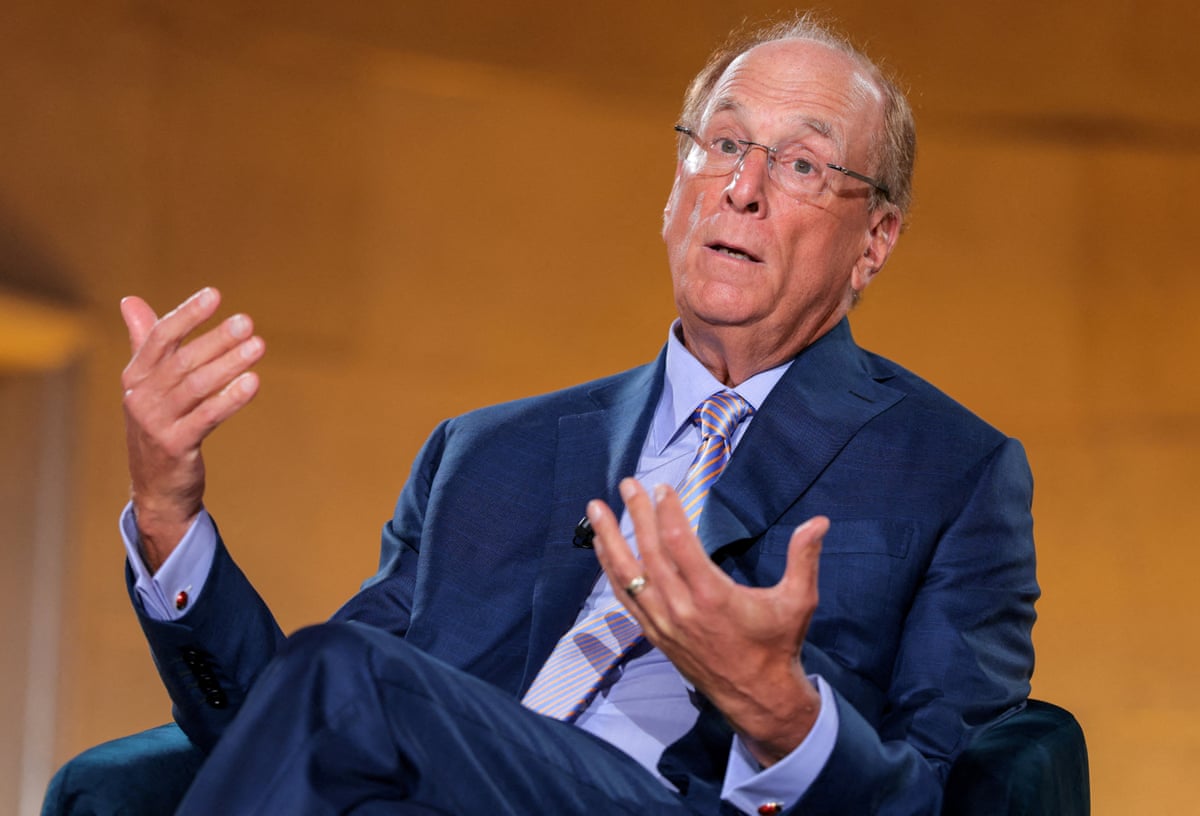
Larry Fink, chief executive of the $14tn asset manager BlackRock, has cautioned that the rapid expansion of artificial intelligence (AI) could exacerbate economic inequality. He highlighted that only a select few companies and investors are likely to benefit financially from the technology's growth.
Speaking on Monday, Fink emphasized the risks associated with AI's exponential development, which has attracted substantial investment and become a key factor in strategic competition between global powers such as the United States and China.
“The massive wealth created over the past several generations flowed mostly to people who already owned financial assets,” Fink said. “And now AI threatens to repeat that pattern at an even larger scale.”
He expressed concern that the AI boom could accelerate a trend where leading companies pull further ahead while others struggle to keep up.
AI-focused technology stocks have experienced significant gains in recent years. For example, Nvidia, a leading chipmaker in the sector, is currently valued at $4.3tn.
Fink noted that companies possessing the necessary data, infrastructure, and funding to deploy AI at scale
“are positioned to benefit disproportionately”. He warned this dynamic could deepen the divide between wealthy and less affluent populations.
Historical Patterns and Participation in AI Gains
Fink reflected on historical trends, stating that transformative technologies typically generate substantial value, much of which accrues to the companies that develop and implement them, as well as to their investors.
“History suggests that transformative technologies create enormous value – and much of that value accrues to the companies that build and deploy them, and to the investors who own them,”Fink said.
“That is not unusual, and none of this is inherently problematic.”
However, he raised a broader concern about who benefits from these gains.

“The broader question is who participates in the gains,”Fink warned.
“When market capitalisation rises but ownership remains narrow, prosperity can feel increasingly distant to those on the outside.”
Context of Fink’s Comments and Executive Compensation
Fink’s remarks come weeks before BlackRock is expected to disclose his compensation for 2025. The previous year, he received $30.8m, a figure that drew concern from some shareholders, with only 67% approving the package last spring.
“One thing is clear,”the BlackRock CEO added.
“AI will create significant economic value. Ensuring that participation in that growth expands alongside it is both the challenge and the opportunity.”
Concerns Over an AI Investment Bubble
Alongside optimism, there are increasing worries about a potential AI investment bubble. Some experts have noted that the rapid growth of the AI industry resembles conditions that previously led to market corrections.
In October, the International Monetary Fund (IMF) warned of rising risks of a
“sudden correction”in global markets linked to soaring valuations of leading AI technology companies.
There has also been heightened scrutiny of investment practices within the AI sector, including circular investments among major AI companies. For instance, Nvidia has invested in firms that subsequently purchase Nvidia chips, raising concerns about the industry's stability.
While Fink did not propose specific solutions to the inequality issues posed by AI, he encouraged broader participation in stock market investments as a means to build wealth, rather than relying primarily on home ownership.
Addressing Wealth Building Challenges
Fink pointed out that rising housing costs and stricter lending standards have made home ownership more difficult. Additionally, taxes, insurance, and maintenance expenses have reduced returns for those who do own homes.
“It’s hard not to empathise with people dealing with this,”Fink said.
“If you no longer believe your job is a path to success, believe that you can’t afford a home, or believe that even if you can, it won’t build a lot of wealth, then the economy doesn’t feel like it’s working for you. No country can prosper if that’s how its citizens feel.”
Instead, Fink suggested that individuals should consider financial markets as a way to grow their wealth.
“If prosperity is increasingly being created in the capital markets, part of the answer is to make sure more people are invested in them,”he said.
“That doesn’t diminish the real challenges around housing affordability or the fact that earnings for many households have not kept pace with asset values,”Fink added.
“It simply means a critical part of the solution is bringing more people into the capital markets – so they can share in the growth already taking place, not just watch it from the sidelines.”


