

Bank expects home price reduction from budget to be more than twice government forecast
Contentious tax changes are projected to have a greater negative impact on home prices than the government anticipated in the budget, according to analysis by Australia’s largest lender, as reported by Australian Associated Press.
Commonwealth Bank senior economists Trent Saunders and Ashwin Clarke determined that winding back negative gearing and the capital gains discount for established properties will reduce home prices by 5%, compared with the Treasury’s forecast of a 2% decline.
A property market slowdown was already underway before the budget, influenced by global uncertainty and rising interest rates.
However, the economists noted that the rapid market response to the tax changes suggests the near-term impact will be more severe than expected, as detailed in a research note released on Wednesday.
“We now expect national dwelling prices to be flat over 2026, down from a forecast of three per cent at budget and five per cent in March.”
Despite Australian Bureau of Statistics data indicating a slowdown in economic growth during the March quarter, analysts still anticipate the Reserve Bank will raise interest rates once more in August.
Treasurer Jim Chalmers’ budget bill is scheduled for debate and a vote in the House today, which he describes as a “really simple choice” for the Coalition.
The government has structured the bill to create a political wedge by combining tax changes to capital gains tax (CGT) and negative gearing with tax cuts for workers.
Chalmers conducted a brief media interaction at the House of Representatives entrance outside parliament.
A note on parliamentary protocol: the "doors" refer to the area where media set up to interview politicians as they enter, typically backbenchers. Ministers often use a separate entrance to avoid cameras, so Chalmers’ choice to engage here indicates a deliberate media strategy.
“Really simple choice in the parliament today: Labor lower taxes on workers, a fair go for first home buyers. The Coalition opposing both of those things.”
Regarding criticisms about discretionary powers in the legislation allowing Chalmers to amend rules, the treasurer dismissed concerns as a “beat-up.”
“Yet another beat-up about the sensible, commonsense tax reforms at the core of the budget. Not unusual, as I said, for definitions to be settled this way, and the parliament can disallow them if they want.”
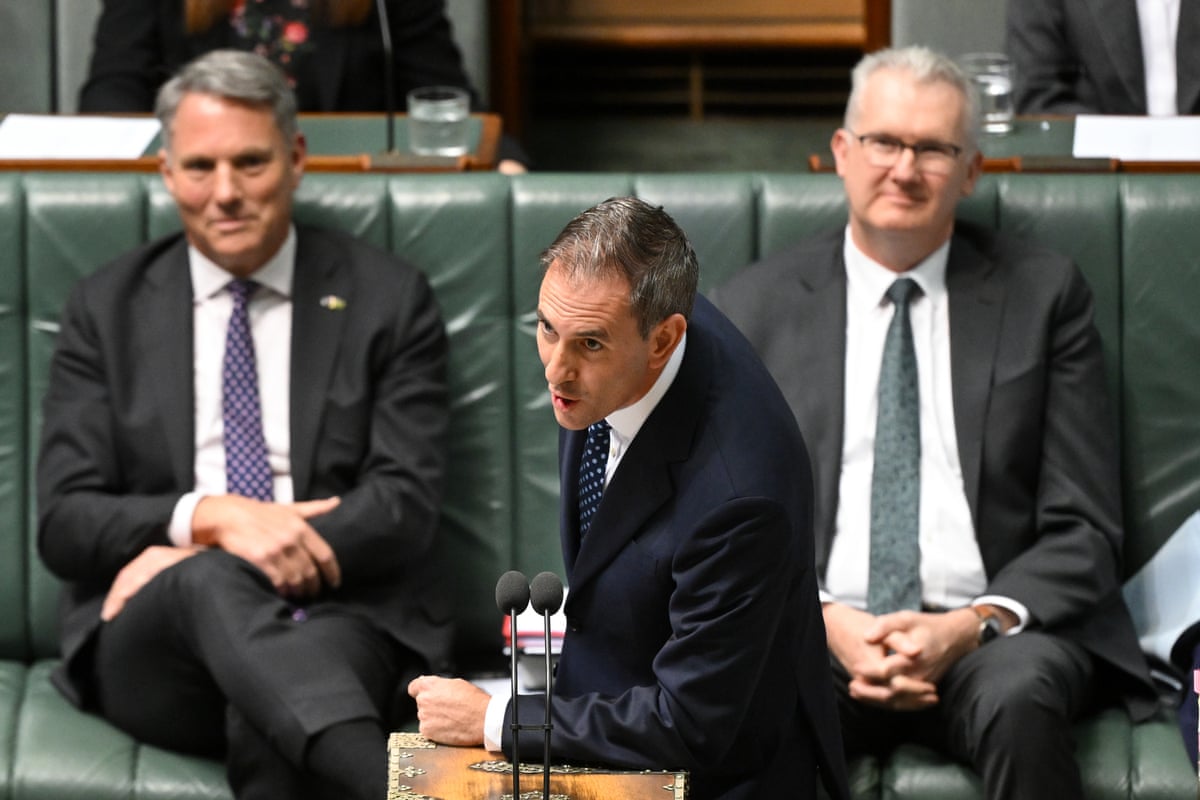
Farrell rebukes Trump administration’s latest tariffs
Trade Minister Don Farrell has challenged the Trump administration’s recent sanctions, asserting to his US counterpart that the targeting of Australian imports is unjustified.
Australia is among dozens of countries facing a proposed 12.5% trade tariff from the US government, which alleges these countries have failed to prevent imports of goods produced with slave labor.
Farrell is in Paris leading Australia’s delegation at the OECD Ministerial Council Meeting and met with US Trade Representative Jamieson Greer.
During discussions, Farrell emphasized Australia’s position that the tariffs are unwarranted, highlighting the country’s robust legislative framework and world-leading approach to addressing modern slavery.
These tariffs would replace the US’s global 10% temporary import surcharge when it expires on 24 July.
Australia understands that the latest announcement is a proposal, not a final determination.
Key Australian exports previously exempt from tariffs, such as beef and gold, remain exempt under the proposed tariffs.
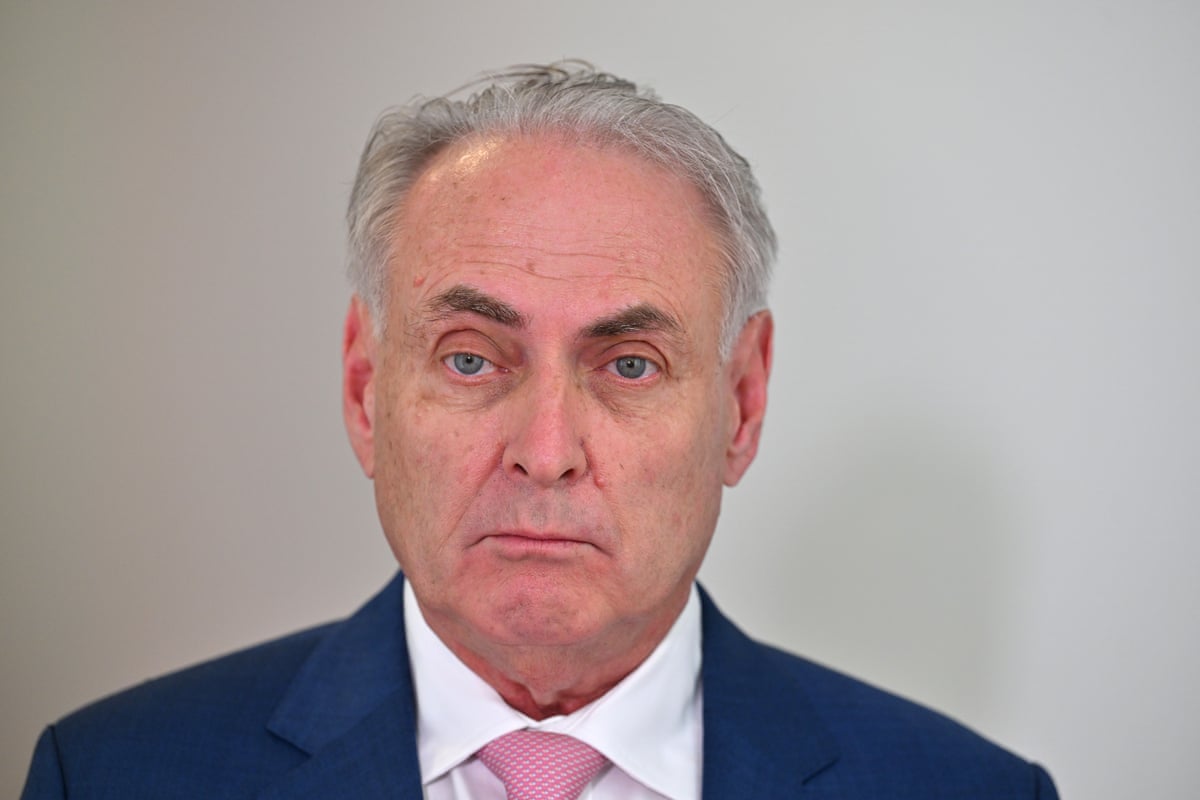
Coalition and One Nation ‘moulding into one point of view’, says Albanese
Prime Minister Anthony Albanese does not foresee a radical shift in the Labor Party to counter the rising influence of One Nation, despite new polling indicating increased support for the minor right-wing party among women and urban voters, according to Nine Newspapers.
Albanese claims that the Liberals, Nationals, and One Nation are “openly discussing being a rightwing partnership.” While speculation exists, members of each party deny formal alliances.
Labor MPs have recently stated it is the government’s responsibility to address the impact of Pauline Hanson and One Nation’s policies on the cost of living.
Albanese offered a broader perspective:
“The Liberals, the Nationals and One Nation are openly discussing being a rightwing partnership. Increasingly, we see them mould into one point of view.
For the Labor party, we will always give voters respect and we’ll always look towards how we can deliver higher wages, how we can decrease their income taxes, how we can be a party of reform.”
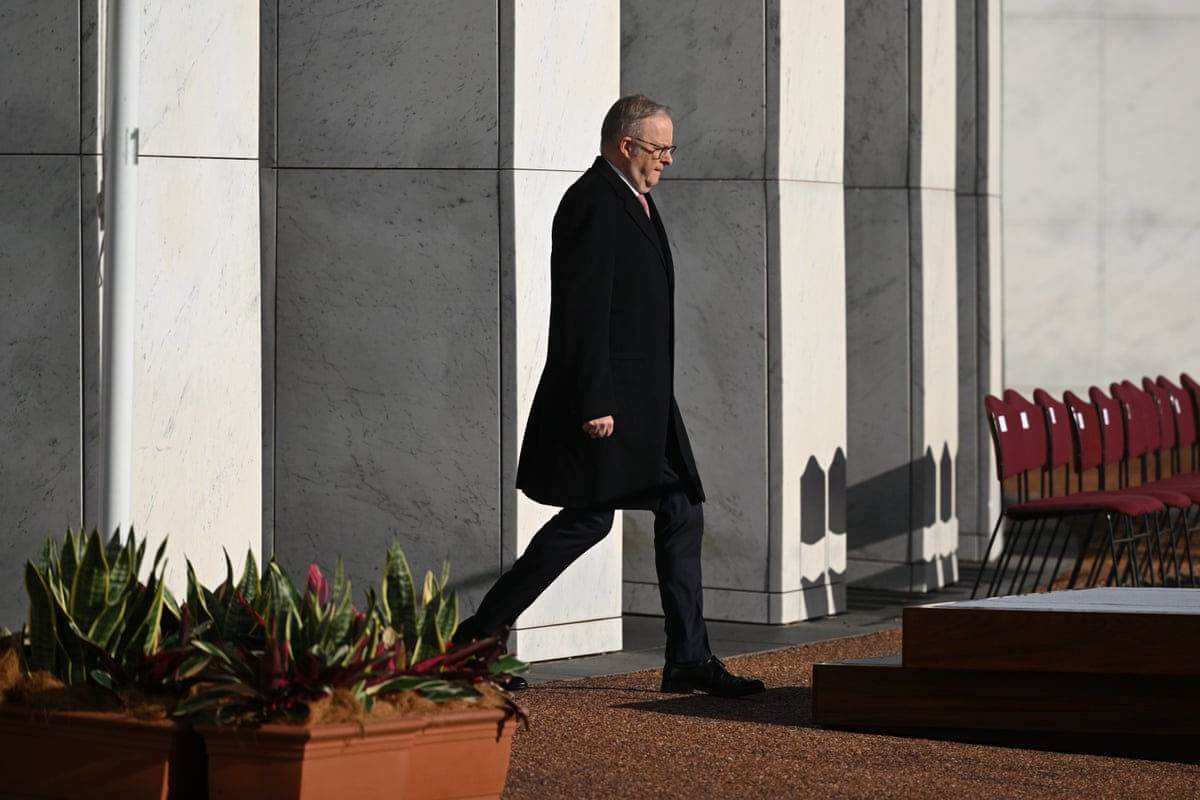
Australian dream shouldn’t only be in history books, says Albanese
Albanese stated that Angus Taylor and his Coalition colleagues will face a clear choice today to support or oppose tax cuts, as they did with Labor’s tax cuts before the last election.
He has encountered challenges promoting Labor’s budget both inside and outside parliament, despite positioning it as transformative for young people seeking to enter the housing market.

Albanese noted that the Senate inquiry examining the legislation will soon report, and the government will consider its findings.
“We are engaging respectfully, as we always do, right across the parliament. My door is always open, as is the door of the treasurer and our Senate team. Of course, we will have the inquiry before the Senate sits in a few weeks’ time. That will be an opportunity as well for people to put forward their views, and we welcome that.
I don’t want the Australian dream to be something that is written about in history books of owning your own home. I want everyone to have that opportunity, aspiration.”
‘Ideological disagreement’ with the US on tariffs: Albanese
Albanese described the new US tariffs on Australian goods announced recently as “unwarranted” and reiterated the government’s clear stance on the matter.
Speaking on ABC’s AM program, he said no prior notice was given and emphasized Australia’s comprehensive legislation addressing forced labor and modern slavery.
He also noted that Australia is among 54 countries included in the US’s tariff list.
“It seems there is an ideological disagreement where the United States administration has broken with what was decades-long understanding that tariffs are not positive for the country that is imposing them, that they increase the costs of goods and services in the country that is applying them to its consumers, and that free trade is in the interest of the global economy.
We continue to use every opportunity that we have to advocate that US tariffs imposed in Australia are unwarranted.”
Watt ‘confident’ tax legislation will pass parliament
Environment Minister Murray Watt expressed confidence that the government’s budget bill will receive support from the crossbench after passing the House, likely today according to Labor’s timeline.
Watt, a member of the upper house where the government lacks a majority and requires at least the Greens’ support, spoke on the Today show alongside Nationals frontbencher Bridget McKenzie.
He remarked that it is “not unusual” for parties to hold differing positions before legislation is passed:
“We’re confident, at the end of the day that the crossbench will see that our budget and legislation is about tax cut to every single working Australian.”
McKenzie expressed serious concerns regarding the discretionary powers granted to the treasurer in the legislation.
“It screams that they’re a bit like not letting us know what their plans were heading into the budget with the taxes they were going to impose that they don’t want to bring that to the parliament. And so they’re leaving that in Jim Chalmers’ back pocket for him to change at a later date …
The fact that you’re thinking that crashing the housing market is the solution to the housing [crisis].”
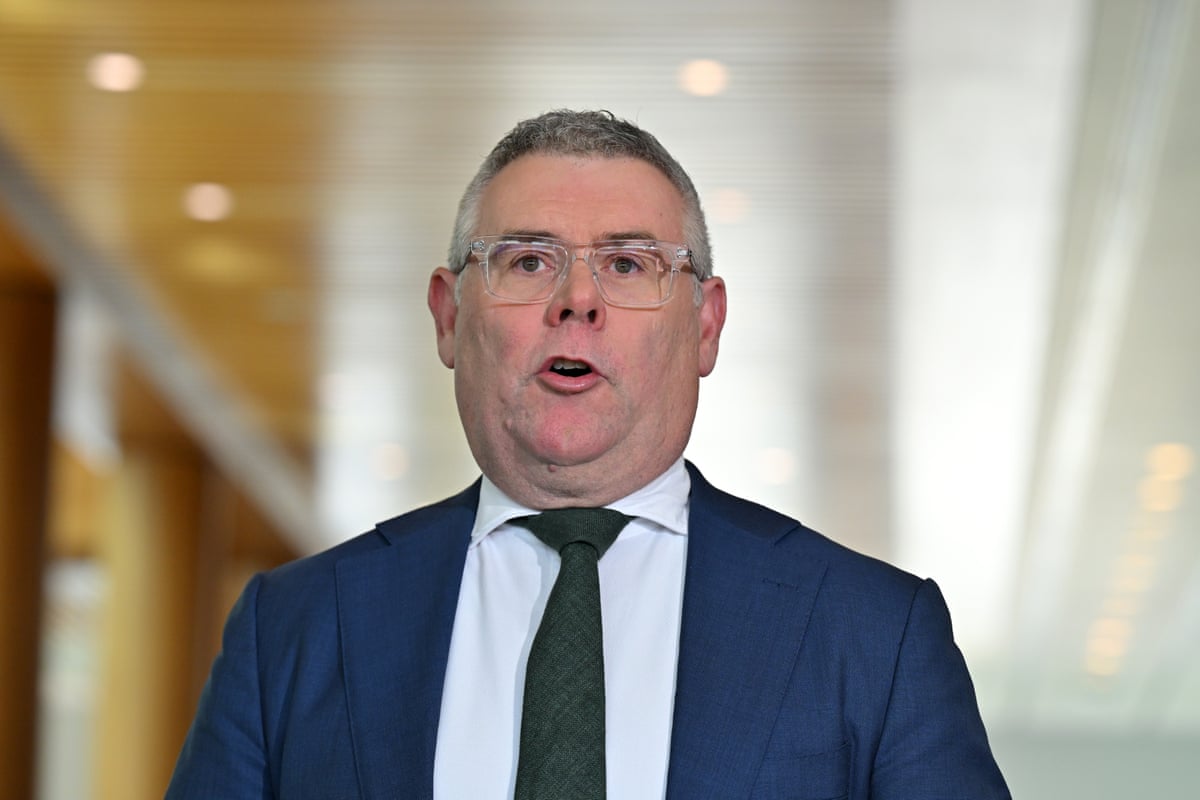
Good morning, Krishani Dhanji here with you for the final day of the sitting fortnight, thanks to Martin Farrer for getting us started.
The government expects its contentious budget legislation to pass through the House today – a reasonable assumption given their large majority – though numerous amendments and divisions from the opposition and crossbench are anticipated to prolong the vote.
The government will face a more challenging task securing Greens support when the legislation reaches the Senate, as the Greens have expressed concerns about the government’s provisions in the bill.
We will also monitor estimates today and provide updates as they come.
I have my coffee ready; I hope you do too. Let’s get started!
Youngest convicted murderer sent back to prison
Australia’s youngest convicted murderer has been sentenced to additional time in custody after a judge found he showed complete disregard for his release conditions, Australian Associated Press reports.
The man, identified only as SLD for legal reasons, has spent nearly two-thirds of his life in prison following the abduction and fatal stabbing of his three-year-old neighbour, Courtney Morley-Clarke, on the Central Coast in 2001 when he was 13 years old.
The now 39-year-old pleaded guilty to five counts of breaching his supervisory orders and two charges related to child abuse material.
He will be eligible for parole in March 2028.
Judge Johnson, presiding in Campbelltown District Court yesterday, stated:
“The reality is that … he cannot last long in the community without breaching the terms of his extended supervision order.”
The sentence includes a mandatory minimum of four years’ imprisonment for a repeat child sexual offence, the first being the 2002 murder.
The judge also noted that since the age of 13, the defendant has spent all but four months incarcerated.
Good morning and welcome to our live politics blog. I’m Martin Farrer with the top overnight stories, followed by Krishani Dhanji with the main updates.
Australia’s youngest convicted murderer has been returned to jail after a judge found he completely disregarded his release conditions. The man, known only as SLD, fatally stabbed his three-year-old neighbour Courtney Morley-Clarke on the Central Coast in 2001. More details will follow.
Additionally, expect ongoing debate today regarding the government’s proposed changes to capital gains tax and negative gearing. The Commonwealth Bank forecasts these changes will reduce house prices by 5%, more than double the Treasury’s estimate.


