Bank of England Expected to Hold Interest Rates
Policymakers at the Bank of England (BoE) are anticipated to maintain the current interest rates as they closely monitor developments in the Middle East. The Monetary Policy Committee (MPC) is widely expected by analysts to keep the benchmark rate steady at 3.75% for a fourth consecutive meeting.
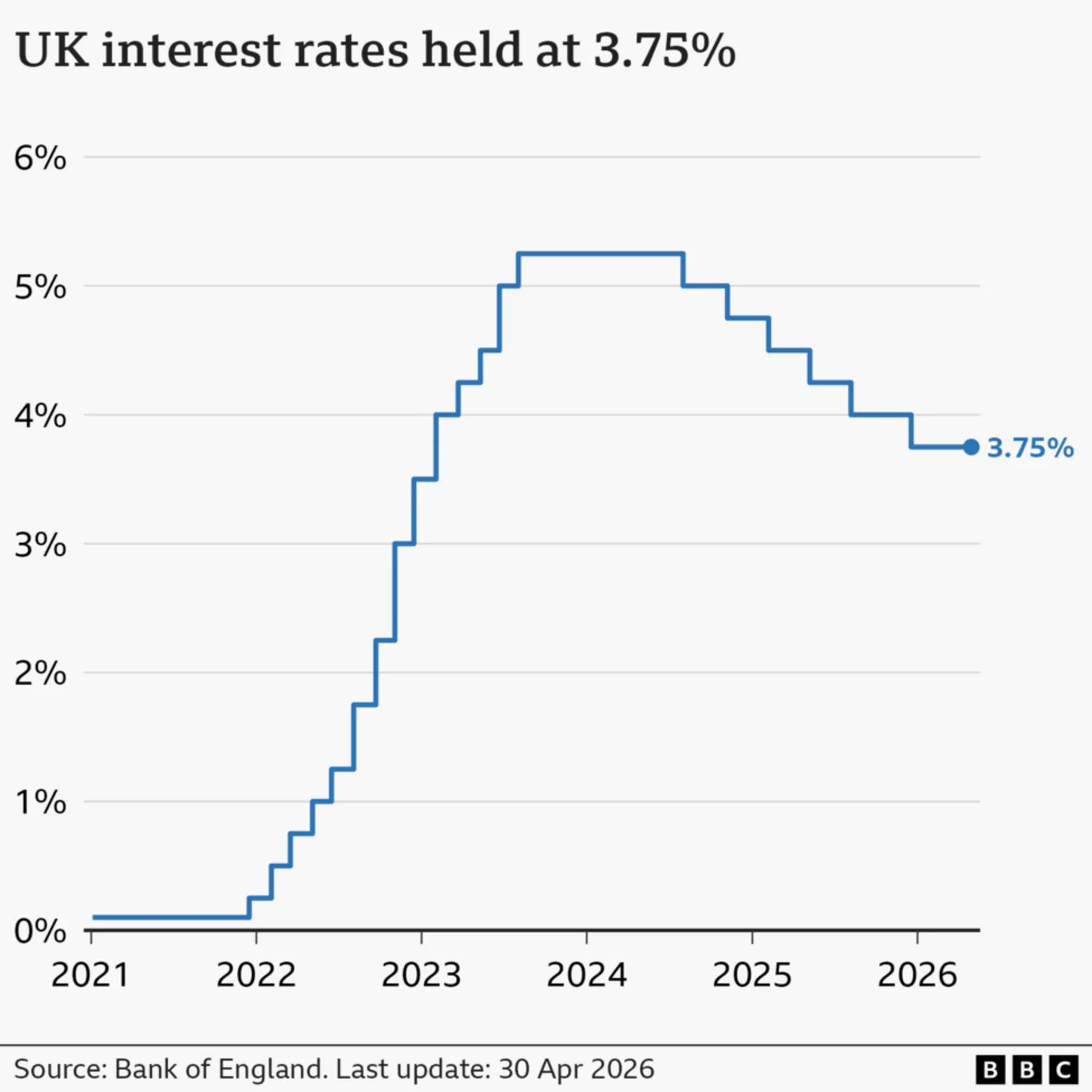
Interest rates serve as the primary mechanism to manage inflation, which measures the rate at which prices increase over time. Although the UK inflation rate remains above the target, it has not escalated to the levels many had feared despite the economic disruptions caused globally by the US-Israel conflict with Iran.
Inflation Data and Economic Indicators
Official statistics released on Wednesday indicated that inflation held steady at 2.8% in the year leading to May, with the rate of food price increases slowing to a 17-month low. The Office for National Statistics (ONS) reported that transport costs experienced the fastest rise over the year to May, while price increases for meat, dairy, and vegetables moderated.
This inflation figure, which was lower than anticipated, has reinforced expectations that policymakers will not raise interest rates at the upcoming announcement scheduled for 12:00 BST on Thursday.
Monetary Policy Committee's Previous Signals
During its last meeting in April, the MPC indicated that interest rates might increase later in the year as part of efforts to control inflation following a "significant energy price shock" attributed to the Iran conflict. However, the prospect of a US-Iran peace agreement has alleviated some of these concerns.
Impact of US-Iran Peace Deal
US President Donald Trump announced on Wednesday that a peace deal with Iran had been signed, which is expected to facilitate the reopening of the Strait of Hormuz. This development has led to a decline in oil prices, nearing their lowest levels since the conflict began, as traders anticipate the resumption of unobstructed shipping through this crucial waterway that normally transports one-fifth of the world’s oil and gas supplies.

Analysts suggest that the peace agreement could slow the rise in energy and fuel prices, reducing the likelihood of the most severe inflation scenarios.
Ongoing Inflationary Pressures
Despite these positive developments, analysts caution that price increases are still expected to accelerate in the UK due to the delayed effects of higher wholesale energy costs on domestic gas and electricity prices. Millions of UK households’ energy bills are regulated by Ofgem’s price cap, which is set to increase by 13% in July.
"UK inflation is expected to increase over the summer after the next Ofgem price cap in July, when we will likely arrive at peak inflation, so for now [inflation] data looks like the calm before the storm," said Victoria Scholar, head of investment for Interactive Investor.
Some analysts predict that there will be no further increases in the benchmark interest rate for the remainder of the year, although the situation remains highly uncertain.
Comparative Central Bank Actions
Last week, the European Central Bank raised its interest rate for the first time in nearly three years, citing that the conflict was "generating inflation pressures." In contrast, the BoE is expected to maintain its current rate.
Interest Rates and Mortgage Impact
The BoE’s base rate determines the interest it charges other banks and building societies for borrowing, which in turn influences the rates these institutions offer to customers for mortgages and savings. As of 17 June, the average rate on a new two-year fixed mortgage deal was 5.60%, up from 4.83% at the beginning of March when the Iran conflict started, according to financial information service Moneyfacts.
For those seeking a five-year fixed mortgage deal, the average rate was 5.57%, an increase from 4.95% over the same period.