

Introduction to de Kooning’s Breakthrough
Artist Willem de Kooning held his first solo exhibition at Charles Egan Gallery in the spring of 1948, shortly before his 44th birthday. This exhibition was a significant success, establishing his reputation and elevating him to international prominence by the early 1950s. By the end of that decade, many regarded him as the world’s leading painter.
Princeton University Art Museum currently presents a revisitation of de Kooning’s transformative star-making show with The Breakthrough Years, focusing on the period from 1945 to 1950. The exhibition features 18 paintings that illustrate the artist’s exploration between figuration and abstraction, highlighting his development of a unique relationship with both styles. While the show does not replicate the exact lineup from the original Egan exhibition, it offers an intimate insight into de Kooning’s creative process during this critical period.
“He wanted to wait until he really had a body of work that he felt good about,”said de Kooning expert and show co-curator John Elderfield, explaining the artist’s delay in holding his first solo exhibition.
“He came up with an exhibition that had about a dozen works.”
At that time, de Kooning had developed an underground reputation, highly regarded by insiders but not yet widely recognized. The influential art critic Clement Greenberg played a key role in elevating de Kooning’s profile through a review of the Egan Gallery show, which attracted broader attention to his work.
Key Works and Artistic Style
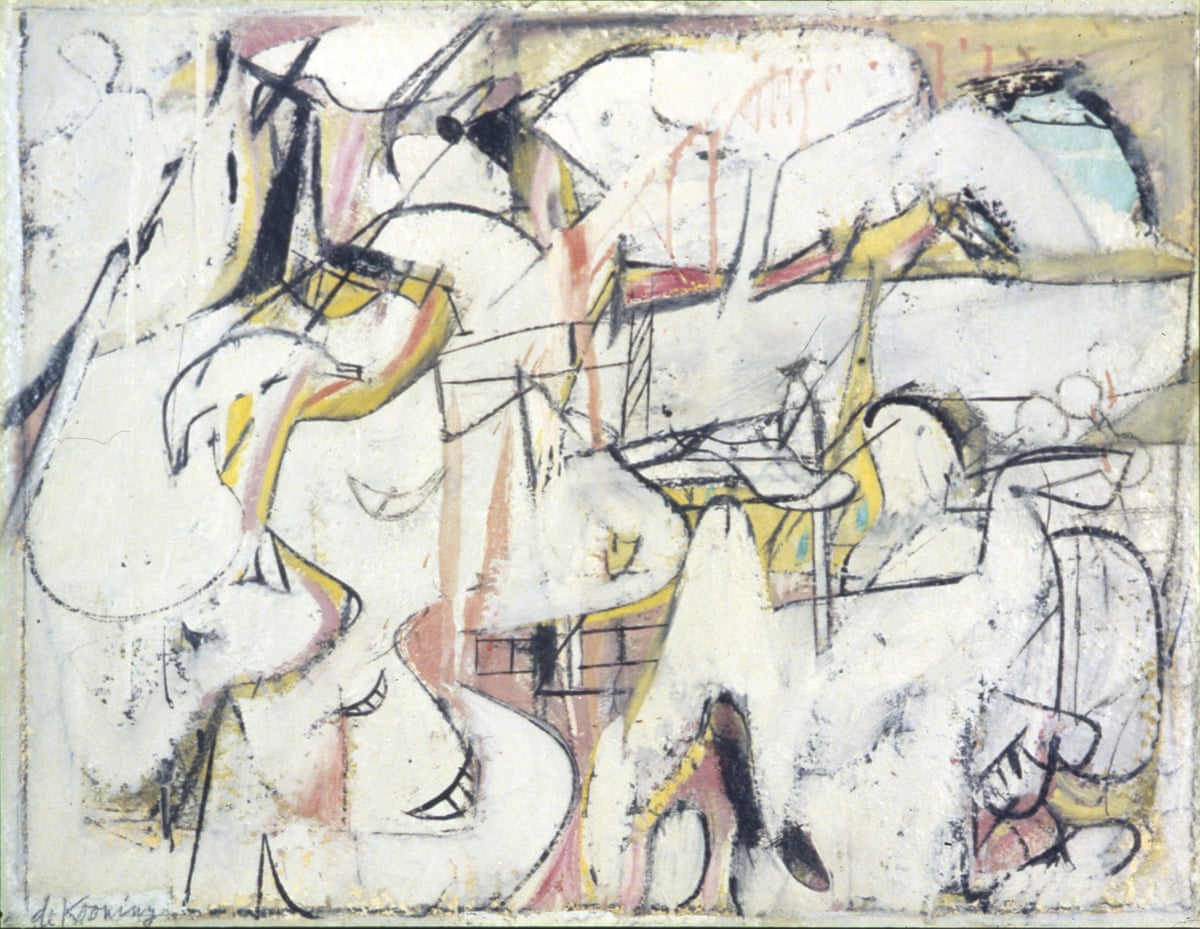
The Breakthrough Years offers a focused presentation of many signature works from this fertile phase of de Kooning’s career, including notable pieces such as Black Friday and Dark Pond. The exhibition’s palette is notably restrained, dominated by blacks and tans with occasional bursts of color, such as the vibrant yellow in Secretary and the warm ocher tones in Gansevoort Street. The artist’s sinuous lines animate the canvases with controlled dynamism, and his precise use of shading creates compelling negative space within these works.
“There is something about him reducing his means and working without chromatic color, which really gives these paintings a kind of intensity,”Elderfield observed.
“He’s using black as a color, which makes these paintings seem extraordinarily vivid and very present.”
The mid to late 1940s marked a period of intense artistic development for de Kooning as he emerged as a leader of the New York School.
“What happened in the 40s was absolutely transformative in his career,”said Elderfield.
“He becomes an absolutely mature artist in that five-year period.”

During this decade, the Museum of Modern Art made the first museum acquisition of one of de Kooning’s paintings. The work, simply titled Painting, was acquired in 1948 and is included in The Breakthrough Years. This period also saw the development of a rivalry with fellow Abstract Expressionist Jackson Pollock.
“Part of his development as an artist was intertwined with the fact that Pollock was making waves at the time,”Elderfield noted.
“Some of his works after the Egan exhibition seem to be in competition with Pollock.”
Role of Elaine de Kooning and Naming of Works
Despite his creative talent, de Kooning was not particularly adept at marketing himself or managing his artistic career. His wife, Elaine de Kooning, an accomplished artist herself, often acted as his informal publicist. She was instrumental in organizing the Charles Egan show and encouraging de Kooning to seek the recognition his work merited.
“His wife was realizing that other artists were getting a lot of coverage because they were having shows, so she pushed him to have a show,”Elderfield explained.
“I think de Kooning felt like he didn’t really have a whole group of paintings together and he was being pushed along by her.”
Elaine also assisted de Kooning in a task he showed little interest in: titling his paintings. Along with other supporters from the Egan gallery, Elaine participated in informal naming sessions where they assigned titles to the works.
“They’re all sitting in the galleries, drinking, having a good time, and they say: ‘What are we going to call these?’ It’s just names they thought that people would remember them by.”According to Elderfield, de Kooning cared so little about titles that sometimes the purchaser of a work would name it.
“In one case someone bought a work and named it, and de Kooning didn’t seem bothered by it,”he said.
Later Career and Legacy
From the 1950s onward, de Kooning continually reinvented his style, notably returning to figuration with his famous woman paintings. This shift reflected his maverick, anti-conformist nature but was controversial among peers. His longtime rival Pollock criticized the move, calling him a traitor.
“Pollock said: ‘You’ve betrayed the cause by making figurative paintings again,’”Elderfield recounted.
Despite mixed reactions, the woman paintings resonated with figures such as Bob Dylan. Elderfield personally guided Dylan through the Museum of Modern Art’s major 2011 de Kooning exhibition, which he organized.
“Bob Dylan said he wanted to go through the show with me, and he remarked how de Kooning’s style kept changing all the time. When we got to the woman paintings, he told me: ‘This is when de Kooning went electric.’”
De Kooning’s work continues to captivate audiences and command record prices. In 2015, his painting Interchange sold for $300 million, setting a record at the time for the highest price paid for a painting. Elderfield noted that the works attracting such high prices tend to be more flamboyant than those in The Breakthrough Years.
“The ones that are bravura paintings are the ones that seem to attract people most,”he said.
“Collectors like to have works where people come into their home and say: ‘Oh look at the de Kooning!’ but they probably won’t say it about these works.”
De Kooning’s influence extends to contemporary artists as well, with sculptor Richard Serra among those inspired by the paintings in The Breakthrough Years. Elderfield reflected on the challenge of selecting works for the exhibition:
“Trying to do a selection of de Kooning’s work is like picking clouds from the sky,”he said.
“There’s too many of them.”The 18 paintings on display at Princeton clearly demonstrate the depth and intensity of de Kooning’s early artistic achievements.


