Art Revitalizes Sicily’s Ghost Towns and Urban Spaces
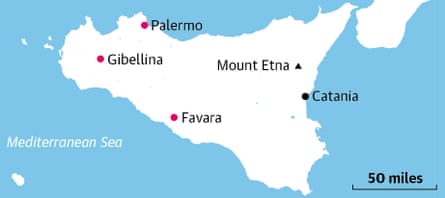
Art is playing a pivotal role in revitalizing Sicily’s abandoned towns and deserted urban areas. The earthquake-affected town of Gibellina has been named Italy’s first Capital of Contemporary Art, marking a significant milestone in the region’s cultural resurgence.
Palermo’s Via Maqueda and the Transformation of Convento dei Crociferi
From the ornate baroque square of Quattro Canti to the Teatro Massimo, Palermo’s Via Maqueda is bustling with tourists. Vendors selling pomegranate juice arrange pyramids of fruit on their carts, while waiters entice passersby with happy hour offers on Aperol spritzes. Amid this lively atmosphere, number 206 stands out with an arched doorway featuring a stone cross darkened by time—a hint at its past.
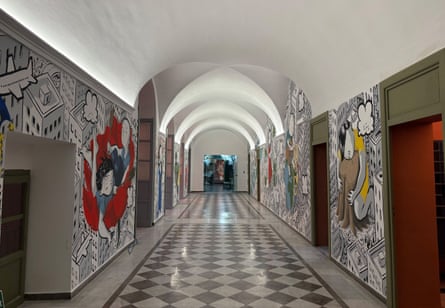
The Convento dei Crociferi had been abandoned for 30 years until Sicilian entrepreneurs Andrea Bartoli and Florinda Saievi acquired and transformed it into Palermo’s newest arts venue, the Museum of World Cities, scheduled to open at the end of February. Inside, a cloister with high scalloped porticoes encloses a lush courtyard filled with palms and banana trees. Bartoli greeted me enthusiastically and guided me to the grand marble-floored rooms on the first floor, currently hosting a self-referential exhibition on urban change.
“Cities change because people make them change,” Bartoli explained.
This philosophy underpins their organization, Farm Cultural Park, which has rehabilitated four urban sites across western Sicily since its founding in 2010. The former sulfur mining town of Favara experienced rapid depopulation after the mines closed post-World War II, leaving many buildings in the historic center abandoned as owners emigrated abroad.
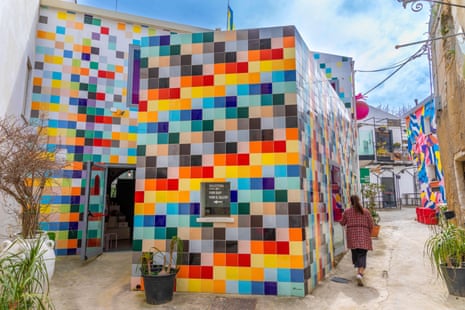
Bartoli and Saievi transformed a cluster of empty, dilapidated palazzos into a vibrant casbah of art studios, exhibition spaces, and trendy cafes. This initiative revitalized the town, attracting tourists and boosting local hospitality. A frequently cited statistic highlights that before their intervention, Favara had only one six-room hotel; today, the town offers 600 tourist beds.
“What happened in Favara was a miracle. But you can’t just put art in a place and hope it solves all of the problems,” Bartoli said pragmatically. “Contemporary art can’t change Sicily. It can’t improve the healthcare system or education.”
However, art serves as a tool to attract visitors, create jobs, and potentially encourage residents to return. Farm Cultural Park, alongside other art foundations, gallery owners, and artists, has seized this opportunity. Sicily’s depopulation crisis coincides with a cultural revival, leading to the acquisition and reuse of vacant churches, prisons, and convents.
Close to Palermo harbor, another arts organization, Spazio Franco, has converted the cavernous, dark interior of the deconsecrated San Mamiliano church into a contemporary art exhibition space. The church’s ornate frescoes and tapestries are dimmed to better highlight the displayed artworks. Nearby, in Palermo’s Vucciria district, Cristina Giarnecchia and Adriano La Licata have repurposed an unused storage space and former warehouse into Casa Planeta, a studio, exhibition venue, and incubator for contemporary artists and curators.
Gibellina: A Town Reborn Through Art
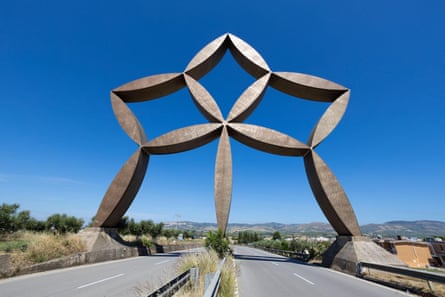
The creative energy extends beyond Palermo. Gibellina, a town rebuilt after a devastating earthquake in 1968, has long been an art hotspot but is now gaining broader recognition. Art is evident upon entering the town; an enormous stainless steel star, Stella d’ingresso al Belice by Pietro Consagra, spans the dual carriageway welcoming visitors.
Gibellina was reconstructed from scratch following the earthquake that razed the original town. The then-mayor, Ludovico Corrao, invited artists and architects to reimagine the city, integrating art into its fabric. His bold post-disaster reconstruction plan transformed Gibellina into a showcase of experimental postmodern buildings, sculptures, and mosaics.

“The founding principle of Gibellina is that artists would live here and work with the community to create works of art they would then leave behind,” explained Antonella Corrao, Ludovico Corrao’s daughter, who manages the local arts organization Orestiadi with her sister. “Gibellina has never been a place where art is commodified.”
In recognition of its artistic heritage, the national government recently designated Gibellina as Italy’s first Capital of Contemporary Art, aiming to rejuvenate a town that has largely faded from the tourist map.
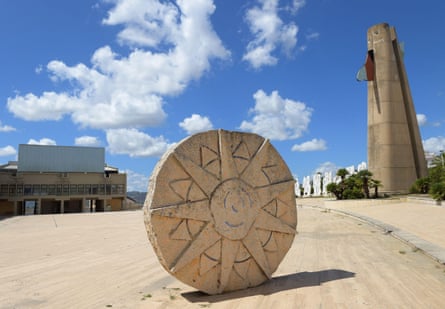
An old civic center designed by Nanda Vigo has been cleared of debris after decades of neglect and repurposed to host residencies for visiting artists, dance troupes, and performers. Graffiti has been removed from Francesco Venezia’s roofless, postmodern spiral, the Cretto di Burri. The town also features the Torre di Gibellina, a concrete tower with colorful wings designed by architect Alessandro Mendini. Originally equipped with speakers that played regional folk songs several times daily, the tower is scheduled to resume its musical broadcasts in 2026.
When asked if the Capital of Contemporary Art designation fulfilled her father’s vision for Gibellina, Antonella Corrao was moved to tears, describing it not as an endpoint but as a new beginning for the town:
“This is how a dream becomes reality – with art truly becoming an economic driver for the region.”
Exploring Favara and the Origins of Urban Revitalization
Reluctant to leave Gibellina, as several days of exploration had not revealed all its artworks and postmodern buildings, I headed further south to investigate the origins of this urban revitalization movement.
My partner and I stayed at the Hotel Dimora delle Balze in Favara, located in the heart of Farm Cultural Park, a tranquil luxury enclave within the vibrant casbah. Despite a blustery, rainy night in late November that limited use of our suite’s rooftop terrace and hot tub, we were ideally situated to explore the exhibitions just outside our door. Favara serves as an excellent base for visiting nearby attractions such as Agrigento’s Valley of the Temples or Farm Cultural Park’s latest addition, the former Santa Barbara prison.
The Santa Barbara building was originally a monastery before becoming a prison, and its layered history is evident throughout. The austere monks’ quarters with thick stone walls were repurposed as solitary cells, now hosting one-room art installations. Many local mafiosi served sentences here until the prison closed in 1996. The cells remain time capsules, with walls adorned by football scores, pages from adult magazines, and a poster of Robbie Williams sporting notable sideburns.
I toured the exhibitions with Lorena Caruana, a local architect collaborating with Farm Cultural Park. As we walked around the prison’s perimeter at sunset, watching swallows dart through the sky, she remarked:
“There’s so much collective memory associated with this place. We don’t want to paint over it. The idea is not to transform the space entirely.”
This approach embodies a noble goal: using art to revitalize Sicily’s ghost towns and deserted urban spaces without erasing or overshadowing their history, allowing the present to coexist harmoniously with the past.
Accommodation Information
Accommodation was provided by Hotel Dimora delle Balze in Palermo (doubles from €80) and Hotel Dimora delle Balze in Favara (suites from €110).