

Edvard Munch’s Influence on Paula Rego Uncovered
He is the towering modern artist of the Nordics; she the most influential figurative painter of the Iberian peninsula. Yet, for decades, the connection between Edvard Munch and Paula Rego remained unrecognized.
Recently, the discovery of an early painting by Rego, alongside a previously overlooked letter, has illuminated the formative role the Norwegian artist played in shaping the Portuguese painter’s work and career.
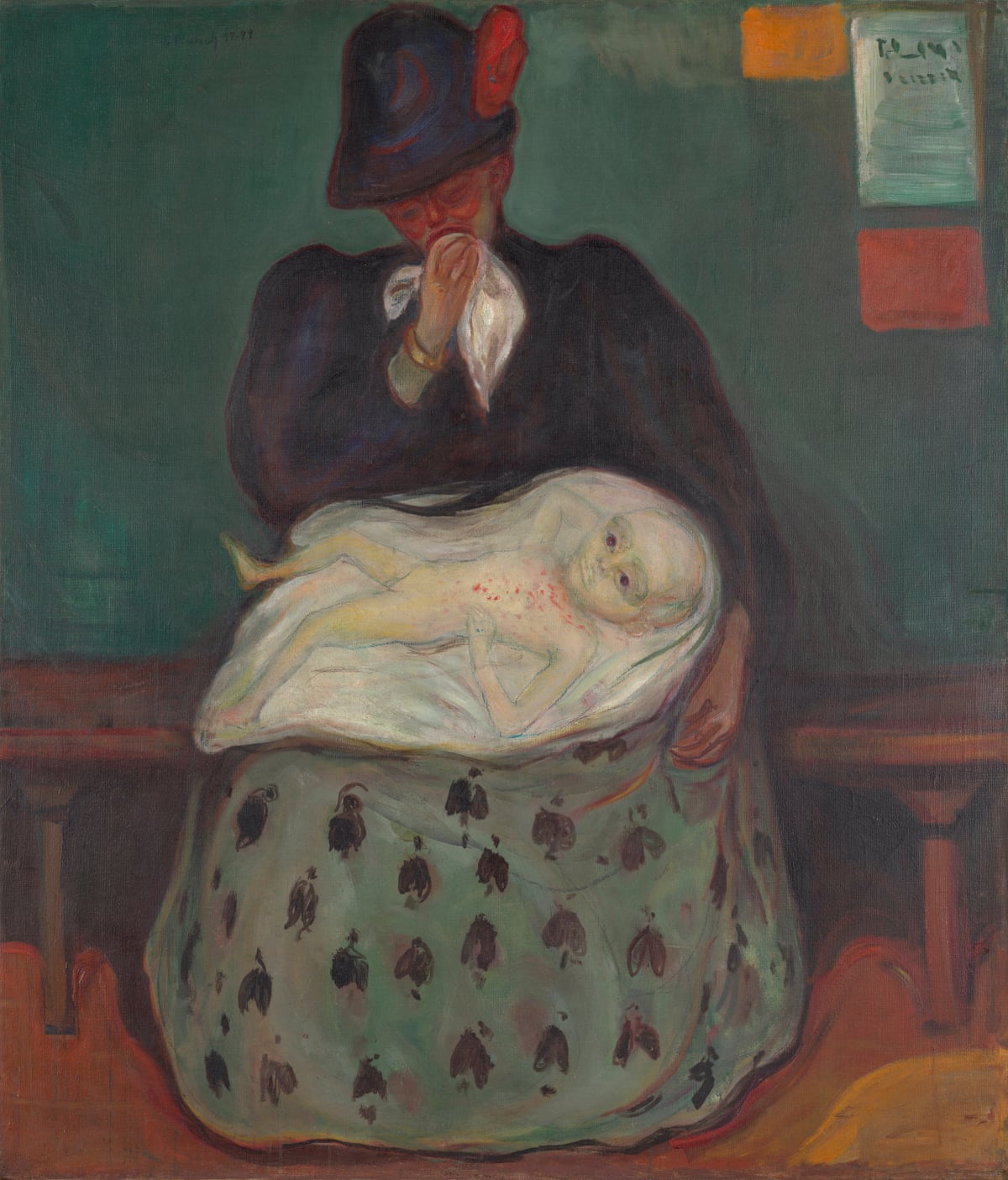
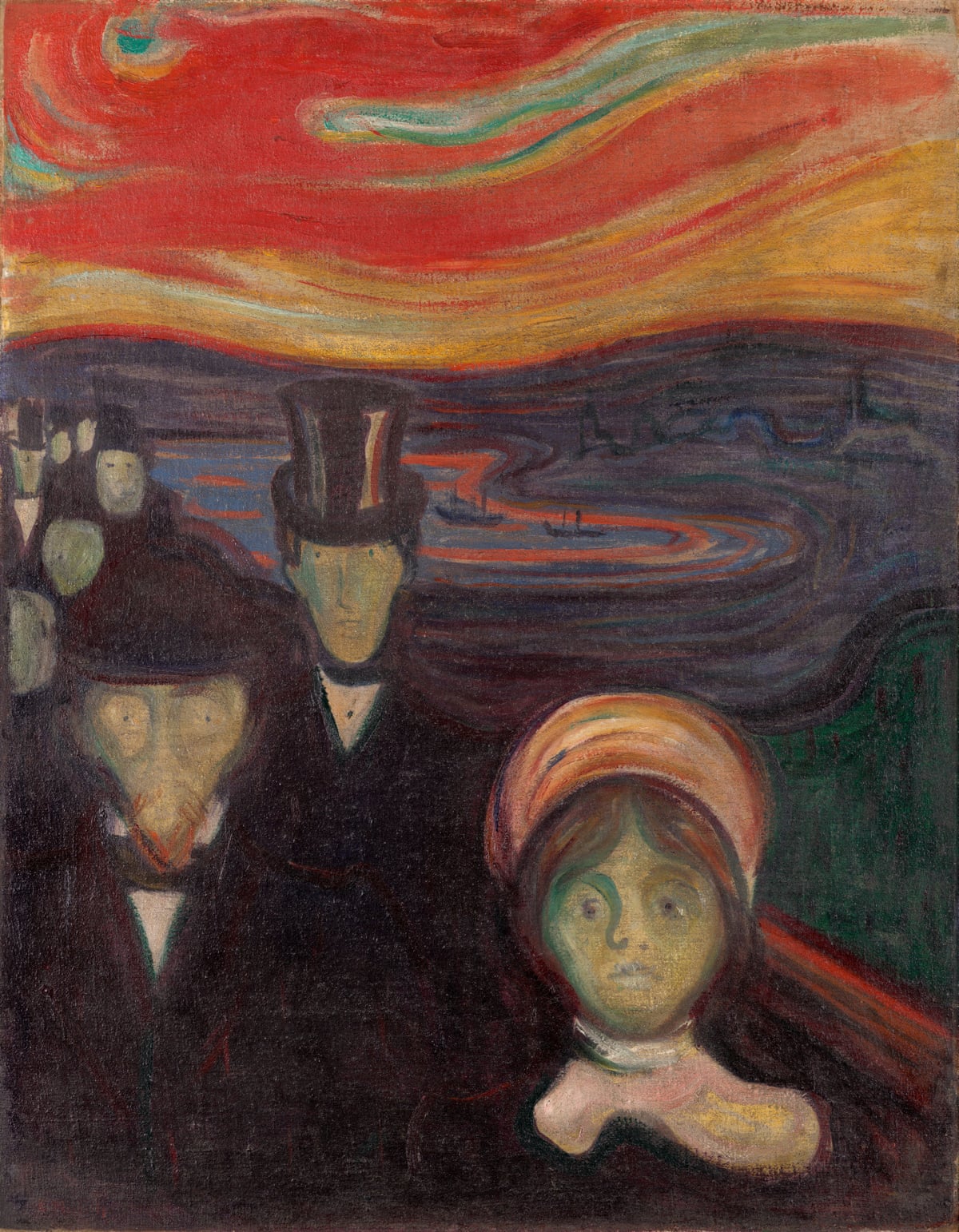
When Rego passed away in 2022 at the age of 87, it was not widely known that 71 years earlier, Munch’s paintings The Scream and Inheritance profoundly influenced her during a 1951 exhibition at the Tate Gallery in London.
Rego’s Early Encounter with Munch
In a newly found letter, 16-year-old Rego, then attending a finishing school in Kent, described a school trip to the Tate to her mother, Maria, who was in Portugal. She wrote in late 1951:
“What impressed me most was an exhibition there by a modern Norwegian painter, Edvard Munch.”
Munch had died seven years earlier at the age of 80.
“I don’t know if you are familiar with that quite famous painting The Scream – that’s his – and he paints almost everything in that genre; he also has many engravings and drawings. But it’s so impressive, so impressive that you can’t imagine. Above all, a painting called Inheritance, which shows a seated woman crying with a skeleton child, all painted green, in her lap.”
Rego’s Painting Inspired by Munch
About a year later, during a severe drought affecting families in Portugal, Rego created a painting using a color palette reminiscent of The Scream. The work depicted an open-mouthed pregnant woman carrying a skeletal infant, her face turned toward the sun.
This small painting, measuring 65cm by 22cm and titled Drought, was rediscovered by Rego in 2015 while she and her son, Nick Willing, were organizing her family home in Portugal.
The painting was stored in a portfolio in her London studio until after her death. It was uncovered last October by Willing and the head of her estate and has never been publicly exhibited.
Willing showed the work to Kari J Brandtzæg, an art historian at Norway’s Munch Museum, who immediately recognized its connection to The Scream and Munch’s Anxiety.
“It was so obvious in the use of red and yellow and also how it was painted, very roughly, as Munch did in his 1890s paintings,” Brandtzæg said.
Upcoming Exhibition and Artistic Dialogue
The painting will be a highlight of Paula Rego: Secrets & Stories, the first major museum exhibition in the Nordic region dedicated to Rego, opening at the Munch Museum in Oslo on 24 April.

When Brandtzæg was invited to curate the exhibition 18 months ago, she was unaware of Rego’s early exposure to Munch’s work.
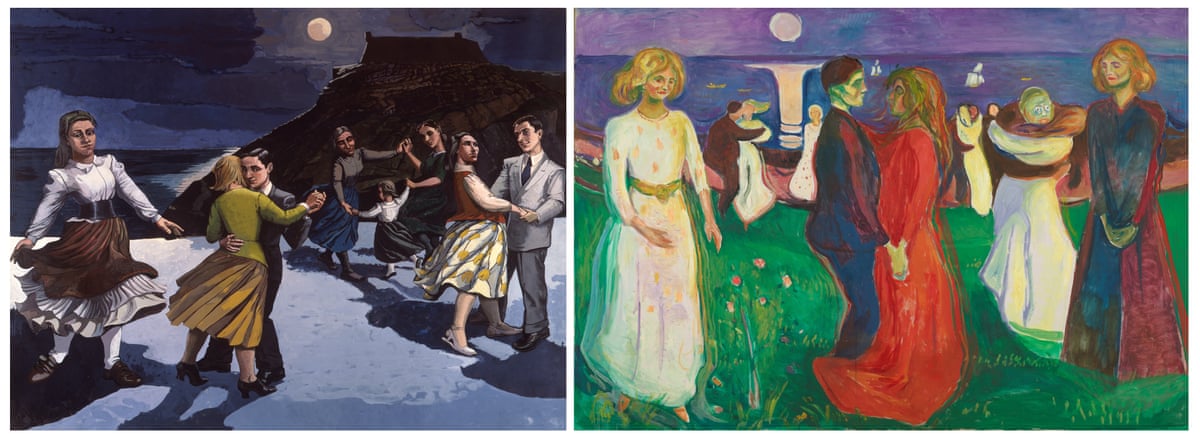
However, as she selected Rego’s paintings, she noticed striking similarities between Rego’s The Dance (1988) and Munch’s The Dance of Life (1925), as well as between Rego’s Untitled (1990) and Munch’s Death in the Sickroom.
“There is a kind of dialogue with Munch’s pictures. It is almost as though Rego is having a silent conversation with Munch’s visual world,” Brandtzæg said.
Research and Discovery of Evidence
Willing confirmed that his mother admired Munch, but despite extensive research, Brandtzæg found no evidence that Rego visited Oslo or other locations to view Munch’s works in person.
“There was no concrete evidence connected to when and how Rego might have experienced Munch’s work,” she said.
Almost ready to abandon the inquiry, Brandtzæg’s discovery of Drought in October reignited her investigation.
“It was like working as a detective,” she said. “I got butterflies in my stomach. I was very excited.”
Knowing the painting was created during Rego’s teenage years, Brandtzæg focused her research on the 1950s.
Willing and Rego archivist Eloisa Rodriguez assisted in searching the artist’s archives for letters from that period, many written in Portuguese.
A few weeks later, the letter describing the 1951 Tate exhibition was found among Rego’s papers, an event Brandtzæg described as:
“Electrifying.”
Additional Insights from Oral History
Brandtzæg also uncovered a 2004 oral interview Rego gave to the British Library’s National Life Stories project, where Rego recalled attending “a big show” of Munch’s work in the early 1950s in Paris.
“In 1952, at the Petit Palais, she saw nearly the same touring exhibition with her parents,” Brandtzæg explained. “That gives you some understanding of how important and connected she felt to Munch, that she might have insisted on going to the exhibition and looking at many of the same pictures she had seen at the Tate a year before.”
Rego described Munch’s paintings as:
“Amazing” and “very emotional”: “I loved the life in them and all these things that were going on seem to me what I was trying to do, really.”
Legacy of Inspiration
Brandtzæg believes Munch became an idol for Rego, inspiring her feelings and providing courage and creative impetus.
“Munch became a friend in art she could look at and get ideas from,” Brandtzæg said. “Something deep within her resonates with Munch’s work, something that she wants to express. Both for Rego and for Munch, art is a way of finding and being yourself.”


