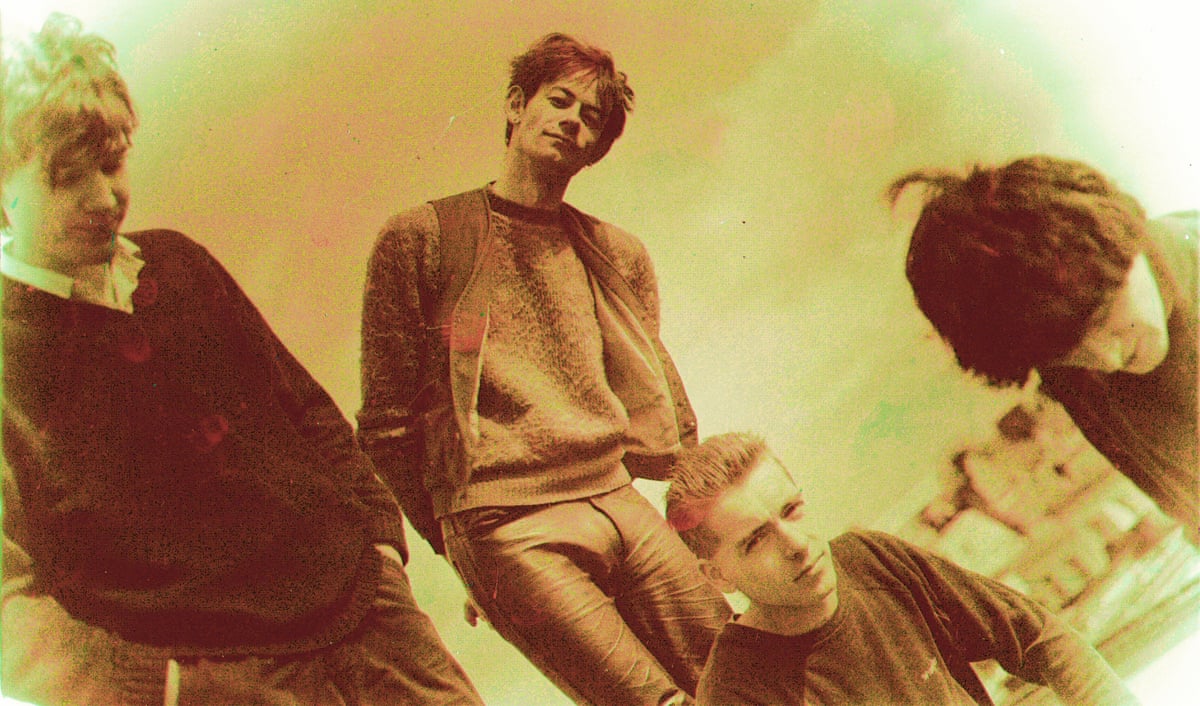
The Unique Punk Spirit of Swell Maps
Supported by BBC’s John Peel and signed to Rough Trade, Swell Maps emerged in 1977 as a punk band, though their interpretation of punk was far from conventional. Their music embraced DIY ethos, psychedelia, prog rock, and krautrock influences, blending these with spontaneous sounds created from whatever was at hand. Unlike many late 70s bands that adopted a grey, dour aesthetic, Swell Maps prioritized enjoyment and experimentation.
“We took what we were doing very seriously, but we were determined to have a bit of fun doing it,”says 69-year-old Jowe Head, who has assembled a group of musicians to revive Swell Maps with a new album, Swell Maps C21, their first new material since 1980’s Jane from Occupied Europe.
“We had a saying: ‘serious fun’. A lot of the bands around at the time – some of the ones on the Rough Trade scene – were very dour and frowning all the time, wearing grey. We weren’t like that.”
The band members adopted pseudonyms as punk exploded, inspired by a hippy ethos rather than the more aggressive punk acts. Stephen Bird became Jowe Head, while brothers Adrian and Kevin Godfrey took on the names Nikki Sudden and Epic Soundtracks. Alongside them were Phones Sportsman (David Barrington), Biggles Books (Richard Scaldwell), and Golden Cockrill (John Cockrill). Despite Nikki Sudden’s rock’n’roll persona, Head and Soundtracks avoided some of his more eccentric name suggestions.
“I was at school with Adrian,”Head recalls.
“This is the early 70s, in our early teens. We used to meet up and do a bit of travelling together – cycle down to the south coast from the Midlands.”They attended gigs for bands like Mott the Hoople and Led Zeppelin. While Adrian favored T Rex and the Stones, Head and Kevin were drawn to prog rock. The group began making music in bedrooms, inspired by Faust’s budget-priced sound collage album – Faust, which demonstrated the creative possibilities of recording and playback.
Punk’s arrival was a catalyst for fresh ideas as the hippy scene waned. Encouraged by the Buzzcocks’ release of Spiral Scratch, Swell Maps recorded their debut single Read About Seymour in 1977.
“Adrian, or Nikki as he had started calling himself, turned up with this song, and it sounded like ska or reggae, and he said it was about the king of the mods in the early 1960s.”The band began playing gigs, gaining access to venues that previously required demo tapes or cover versions.
“We could sneak on to a punk night, even though we didn’t look like punks or sound like punks. We were trying to do something a bit different to the Sex Pistols or the Damned or the Clash.”
John Peel championed Swell Maps from the start, and Rough Trade released their debut album A Trip to Marineville in 1979. Nikki Sudden moved to London expecting the band to join him full-time, but Head and Soundtracks pursued art college studies in Manchester and Portsmouth, respectively. The band’s momentum faltered after a difficult Italian tour in spring 1980.
Before the tour, Head was severely beaten by skinheads after spraying them with a water pistol, requiring surgery and a lengthy recovery.
“It was a terrifying incident, and I was unwell for a considerable period, more than I like to admit,”he says.
“I felt guilty because I’d done something dumb that rebounded on the band, and I was in denial about my condition. In those days there was no term for PTSD, but I was very shaken up, to put it mildly. I had a scar, too, which wasn’t healing, and kept opening up on that tour. That was problematic. Maybe we could have had a break from it for a couple of months, but no, we decided to dramatically split up.”

Rather than align with major punk and post-punk acts, Swell Maps found kinship with scrappier, stranger bands such as Alternative TV, The Mekons, PragVEC, and Scritti Politti, with whom they toured the Low Countries. They especially bonded with the Television Personalities (TVPs) and their leader Dan Treacy. This core group, including Sudden, Soundtracks, Head, Treacy, TVPs co-founder Ed Ball, and Joe Foster, later became central figures in Creation Records during the 1980s, influencing numerous indiepop bands.
Head joined the TVPs after Swell Maps disbanded, participating in one of pop’s most notable missteps in 1984 when the TVPs opened for Pink Floyd guitarist David Gilmour’s UK solo tour. On the opening night, Treacy read out the address of Syd Barrett, Pink Floyd’s co-founder, in a mischievous act that led to the band being removed from the tour.
“Dan got a bit carried away,”Head recalls.
“We were in a mischievous mood that night, and Dan the most mischievous of all. We were trying to be a bit satirical. I think we did an extended version of [Pink Floyd’s] Interstellar Overdrive and I had some confetti, and I was throwing that up in the air. They made me go back and sweep the stage after, and then we were bundled off the tour.”
The new Swell Maps lineup includes musicians who played in later versions of the TVPs, such as guitarist Lee McFadden.
“Television Personalities and Swell Maps had the same thing,”McFadden says.
“The TVPs would have people come up to us after the gig and saying. ‘Why didn’t you sound like the record?’ And it’s because we never could.”For both bands, spirit and imagination were prioritized over technical perfection.

Epic Soundtracks passed away in 1997, followed by Nikki Sudden in 2006, leaving Head as the band’s archivist. He curated old tapes for compilations, convinced Mute to release an album of their Peel sessions, and published a book about the band in 2022. To celebrate, he gathered like-minded musicians to honor Swell Maps’ music, which evolved into the new album.
The album combines old, rediscovered, or unfinished songs with new compositions. Contributions come from Phones Sportsman, Golden Cockrill, and acclaimed artist Luke Haines, who cites Swell Maps as an influence. With the band expanded in size, Head remains committed to pushing creative boundaries.
“I am determined that we still stretch the boundaries of what we can do,”he says. Reflecting on their lack of chart success, he optimistically declares:
“Here come the hits!”