Master Cinematographer Roger Deakins on His Career and the Future of Film
Roger Deakins, the acclaimed cinematographer known for his collaborations with Martin Scorsese and Sam Mendes, has earned 14 Oscar nominations with two wins, five BAFTAs, a knighthood, and a reputation as one of the greatest practitioners of his craft alive. Despite his accolades, Deakins finds it difficult to succinctly define what cinematography is.
“Argh!”he exclaims when asked.
“Well, I started off trying to be a still photographer, someone like Don McCullin. And it’s been a whole arc through cinematography. Now what is cinematography? I don’t know. It’s very different from still photography. But the essentials are the same. You’re trying to tell a visual story.”He emphasizes that cinematography is
“very much a collaboration”involving
“hundreds of people”and describes it as a
“wonderful experience … I suppose I’m not answering your question, because actually I’ve got no idea,”adding that
“The cliché is visual storytelling, but it’s much more than that.”
Deakins’s five-decade career has produced a vast and varied body of work, from the stark desert landscapes of Jarhead to the surreal urban environments of Blade Runner 2049. He has captured the dreamlike visuals of Martin Scorsese’s Kundun, the shadowy sequences of James Bond’s Skyfall, and, early in his career, the tragic romance of Sid Vicious and Nancy Spungen in Sid and Nancy, which was his first significant trip to the US in 1985. At that time, he had no idea he would return to work extensively in America.
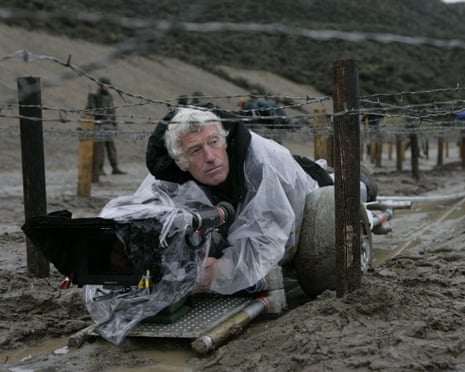
Currently based in Santa Monica, Deakins presents himself in a casual black T-shirt and rectangular glasses held by a cord. His manner is straightforward and unpretentious, yet confident. He jokes about his tendency to talk at length and enjoys fishing in Devon, where he grew up. His wife, James Ellis Deakins, who met him on the set of the 1992 thriller Thunderheart, often works alongside him as a script consultant and production liaison. She provides essential context and helps keep Deakins focused during interviews and on set.
James elaborates on the role of a cinematographer, highlighting the importance of visual storytelling within the frame.
“But isn’t the cinematographer also thinking,”she says,
“how can I tell the story visually in the frame?”She explains how the cinematographer considers framing, lighting, and composition to evoke emotions such as joy, sadness, or fear.
“Say there’s a shot that makes you feel melancholy or afraid, and you don’t know why,”she adds. For her, a cinematographer succeeds when their work encapsulates the story’s feeling, even if audiences do not consciously recognize the cinematography’s contribution.
Deakins’s new book, Reflections: On Cinematography, co-written with James, serves as both memoir and technical guide. It offers insights into his projects and reveals the multifaceted nature of cinematography: directing camerawork, sculpting light, monitoring weather, solving problems, and leading a technical crew that becomes a collaborative team.
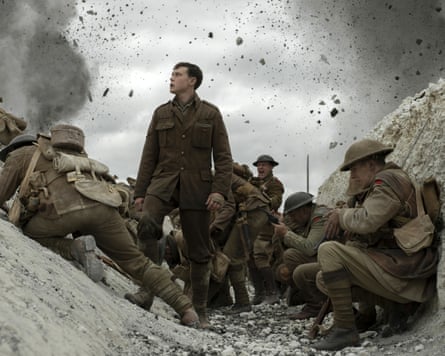
He shares how he simulated daylight in the blacked-out factory used as the central cell block in The Shawshank Redemption by installing skylights with diffusion panels. The effect was so convincing that a fellow cinematographer mistakenly believed the film was shot entirely in natural light. Deakins also describes the patience required to wait for ideal weather conditions, such as snow for the Coen brothers’ Fargo or consistent cloud cover for Sam Mendes’s 1917, which was filmed to appear as one continuous take.
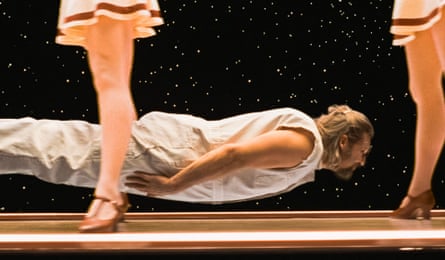
He recounts moments of ingenuity on set, such as when a dolly operator filmed a tumbling bowling ball in The Big Lebowski by pushing the camera down the alley with a pole, and how for Skyfall, his chief electrician lit Liverpool Street station with vivid green lights to mimic Shanghai’s color palette and disguise the location for London viewers.
Writing the book has prompted Deakins to reflect on his unlikely career path.
“I think my career path has been unlikely. It certainly seems unlikely if I look back at myself at 16,”he says. He also expresses concern about the film industry’s current state, noting that
“the film industry is in a bit of a decline at the moment.”
Hollywood faces challenges including the rise of artificial intelligence, diminished earnings, streaming dominance, and an emphasis on franchise reboots and superhero films that rely heavily on CGI and green screens. Deakins’s naturalistic, painterly style may become increasingly rare, representing a fading tradition.
Deakins’s childhood in Torquay was marked by hardship. His parents met during World War II; his father, William, was an explosives expert with the Royal Engineers, and his mother, Josephine, served in the Women’s Auxiliary Air Force. She developed multiple sclerosis in 1949, the year Roger was born, became bedridden, and died when he was nine. During his teenage years, Deakins struggled with occasional excessive drinking and skipped school to fish.
“I was lost,”he admits. He enjoyed watching films at local cinemas, particularly Stanley Kubrick’s Dr Strangelove and Peter Watkins’s The War Game, but never considered filmmaking as a career.
He knew only that he did not want to work at a bank, a fate his teachers predicted for him. He attended art school in Bath, where he developed an interest in photography but lacked a clear career direction. Although initially rejected by the National Film School, he was told he could join the following year. In the interim, he photographed life in north Devon, documenting a community adapting to mass tourism.
Deakins’s realization that cinematography was his calling came in his mid-30s on the set of Michael Radford’s adaptation of 1984. He had previously worked on documentaries in Zimbabwe during the war of independence, followed yachtsman John Ridgway’s circumnavigation, and shot music videos for Eric Clapton, Meat Loaf, and Marvin Gaye. However, 1984 was his first major studio film, where he felt he was truly making a movie.
“Wow. How did I get here? I want more.”

His career trajectory parallels that of Ridley Scott, another British filmmaker who entered feature films relatively late after working in advertising. Deakins credits documentaries with building his confidence and life experience.
“That was the thing I was really lacking as a kid: the experience of life and travelling, and seeing there are many things to worry about than what’s happening in your own interior.”James adds that documentary work requires quick decision-making and capturing unique moments without second chances, skills that proved valuable in narrative filmmaking.
Deakins believes that directors raised solely within the film industry often recycle the same stories, lacking broader life experience.
“Life experience is something that is not talked about a lot,”he says.
The variability of a cinematographer’s role depends greatly on the director. Deakins’s long collaboration with the Coen brothers began in 1991 with Barton Fink and includes films such as A Serious Man and True Grit. He describes the Coens as knowledgeable and specific about their visual goals, which he finds refreshing. By contrast, he recalls working with a director who admitted ignorance of camera work and wanted to focus solely on script and acting.
James compares meeting a director to interviewing a potential roommate, assessing compatibility. Deakins enjoys operating the camera himself and recalls an interview with a director who also operated the camera, leading them to conclude they would not work well together. This director was Ridley Scott. Despite this, Deakins and Scott maintain a good relationship.
Deakins values specificity and intentionality in his work.
“I don’t like shooting films with dozens of cameras,”he says. He appreciates working with directors like the Coens and Denis Villeneuve, favoring precision and finding the scene during filming rather than relying on extensive coverage and editing. His still photography often features desolate, mournful black-and-white images. He believes good cinematography should be invisible, immersing viewers without drawing attention to itself. He and James recently rewatched the 1963 film Hud, praising its simplicity and precision.
In contrast, he criticizes modern films for excessive camera movement, flashy lighting, lens flare, rapid cuts, and uncritical adoption of new technologies such as drone shots. These elements, he argues, distract audiences and diminish the cinematic experience.
Film sets can be stressful, and Deakins recounts experiences of being publicly insulted by directors and witnessing disputes among actors over trivial matters. He shows little interest in awards, focusing instead on the work itself.
“Where I lose my patience is when I don’t feel people have the passion, or make the most of opportunities,”he says.
“I find it really hard to put up with. I’m not the easiest person to get on with on set, frankly.”James counters this, noting that those working closely with him appreciate his focus and readiness, though he struggles with politics on set.
The Hollywood Deakins admired in his youth, exemplified by Paul Newman films, differs greatly from today’s industry. He is not fond of big action films. When Sam Mendes approached him to shoot Skyfall, Mendes warned him not to hang up when hearing the project’s scale. Deakins has expressed nostalgia for the types of films no longer commonly made. James advises against bitterness, acknowledging that entertainment evolves. Deakins agrees, noting that character-driven films like Hud are increasingly rare, replaced by spectacle-driven “event” movies.
There has been criticism of cinematography in contemporary productions, such as a review of a typical Netflix film that cited
“terrible lighting”and flat, oversaturated scenes. Deakins attributes this partly to advances in digital camera technology that reduce the need for traditional lighting techniques. He explains that producers often avoid investing time in lighting, assuming that a visible image suffices, leading to a decline in the art of visual storytelling. Increasingly, footage is shot flat and manipulated in post-production.
Regarding artificial intelligence, Deakins remarks that his experience is rooted in real-world, location-based filmmaking and collaboration.
“I don’t want to experience 24 weeks on a volume [a wall made of LED screens] with a virtual reality background.”
Despite concerns about the industry, Deakins and James run an educational website and forum aimed at demystifying filmmaking for newcomers. They engage with a broad audience, including students. Deakins is also working on a second photography book. They maintain perspective on the film business, recognizing it is not the most important thing in life.
Deakins recalls meeting a farmer in Dartmouth who built stone walls without mortar, taking joy in his work.
“Isn’t that just life?”he reflects.
“You’ve got to love what you do, whatever it is. It doesn’t have to be film-making; it can be anything.”
Reflections: On Cinematography by Roger Deakins is published by Octopus.