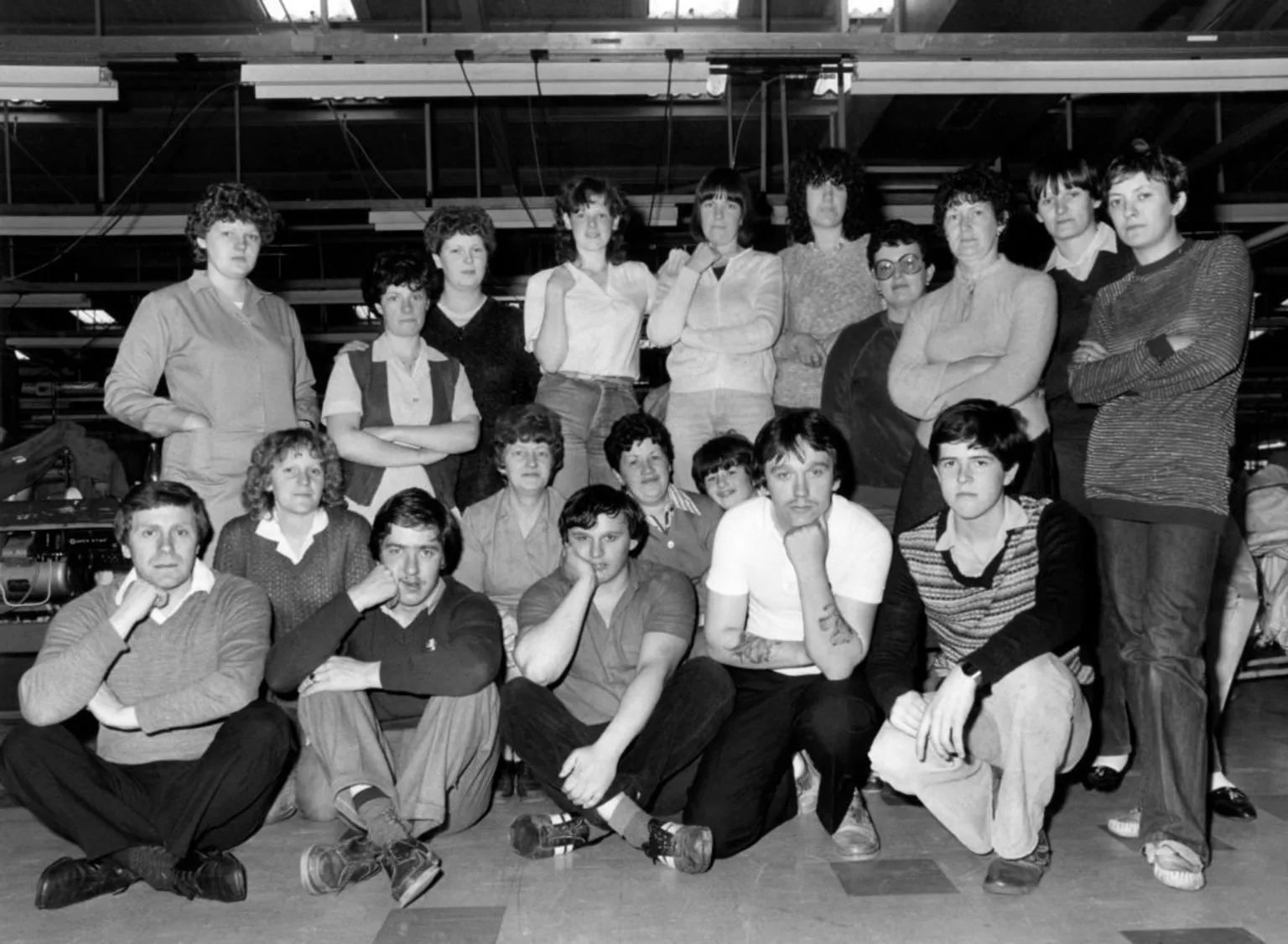
Lee Jeans Factory Sit-In of 1981
In February 1981, workers at the Lee jeans factory in Greenock ceased work and barricaded themselves inside the building. Helen Monaghan, the shop steward of the National Union of Tailor and Garment Workers, had been negotiating with the American owners, Vanity Fair Corporation, for several months.
The company, which had received a grant to establish operations in Greenock a decade earlier, had already relocated the cutting room to Northern Ireland and was offered a grant to move the entire operation there.
"We offered to job share," she says.
"We offered a three day week. And when everything was a no, we realised they just wanted rid of us."
This led to one of the most remarkable episodes in Scottish industrial history, as the predominantly female workforce occupied the factory for seven months.
The Inverclyde community supported them by raising funds and sharing food and provisions.
Entertainment was also provided; the political theatre company 7:84 brought a show about striking miners and brass bands to the factory. Newly written by playwright John Burrows, this performance preceded the film comedy Brassed Off by 15 years and entertained the Lee workers with a song about the challenges of taking a shower during a strike.
However, it would be nearly 45 years before the workers themselves inspired a theatrical production.
Journalist Paul English, who grew up in Inverclyde where the story remains well-known, collaborated with writer Frances Poet to approach the National Theatre of Scotland about a new stage musical titled Stand and Deliver: The Lee Jeans Sit In, which opened at the Tron Theatre in Glasgow this week.
"Music is important to the play - and not just because the soundtrack in the play contextualises it in place and time," he says.
"Music was important to them in the sit-in. They adapted the popular chart songs of the day, reworked the lyrics, had them up on the wall, and sang them together. It was a collective bonding which sustained them during the sit-in."
The play has been an emotional experience for the four women who shared their stories. In addition to Helen Monaghan, who will soon turn 90, it draws on the memories of Maggie Wallace, her sister Cathie, and their friend Catherine Robertson, all in their teens or early twenties at the time.
"They called us the Dirty Dozen," says Maggie.
"They used to send us out when the photographers came down."
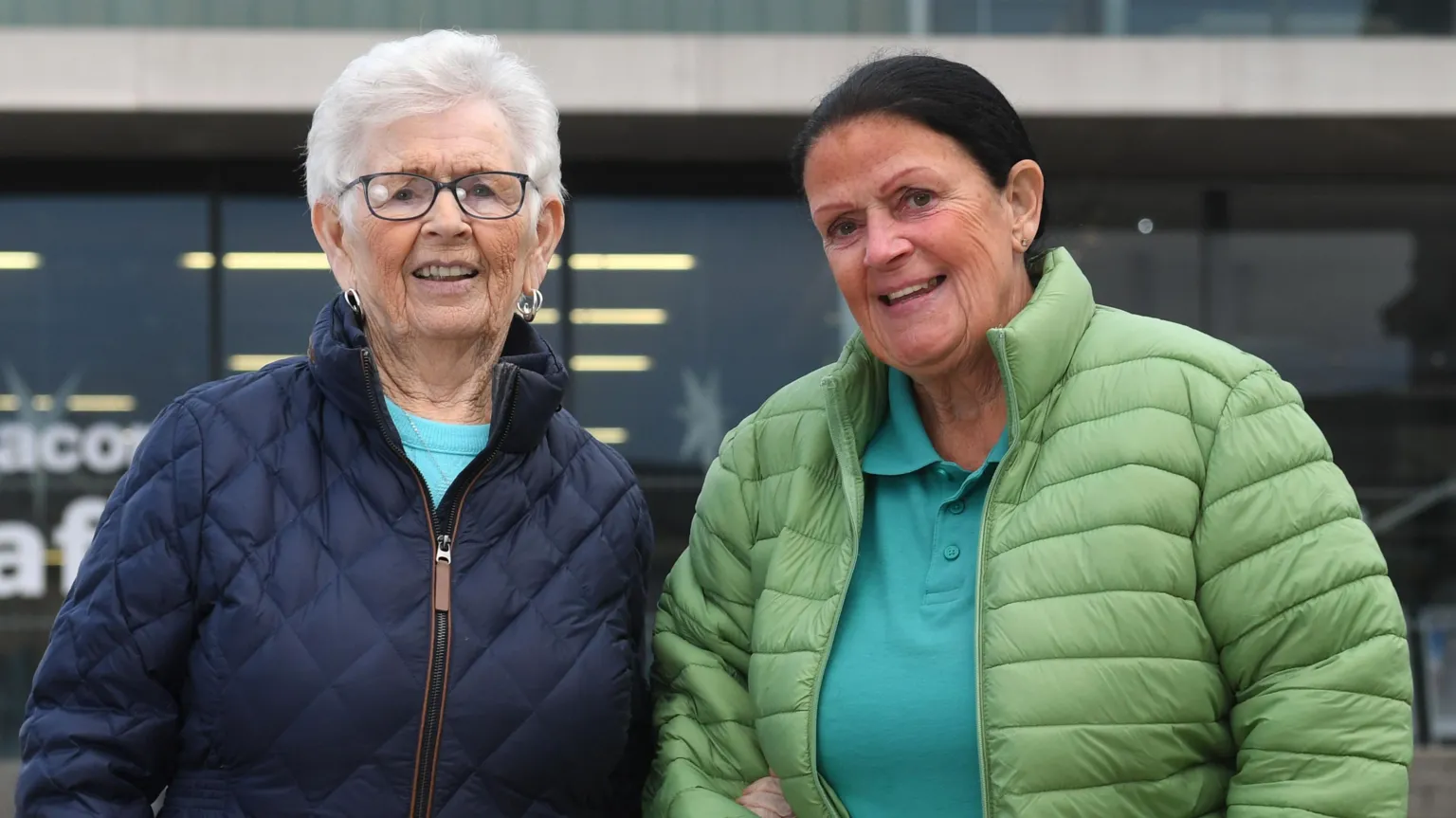
Fish Supper Run and Community Support
Maggie was responsible for a daring trip to procure fish and chips for the striking workers.

"They nominated me and wee Huey Malcolm to go up and over the roof with a bag of money."
"I usually went in to Aldos for a fish supper for my mum and dad but this time, I went in and told them I needed 240 fish suppers."
While the fish shop owner prepared the order, Maggie went home to inform her mother about the situation.
"She was mad. She said your tea is in the oven and it's ruined."
After convincing her mother to contact the press and TV stations to report the strike, Maggie returned to the factory where the workers enjoyed their fish suppers and held a concert.
Other unions expressed solidarity. Local shipyard workers contributed an additional 50p to their weekly subscriptions to support the strike.
"We used some of that money to allow each worker to have a night away from the factory," says Helen.
Visitors to the sit-in included Tony Benn and then Labour leader Michael Foot. Many workers also delivered speeches throughout Scotland.
"Nobody knew anything about politics but we made history," says Catherine Robertson.
"It's brilliant to have this play because your kids can say my mammy was there, or my granny was there."
Life During the Sit-In
The women recall sleeping on beds made from cardboard covered with their coats.
"We only thought we'd be there for one night," says Catherine.
By August, they had established an efficient system with rotas for cleaning, cooking, and campaigning.
At that point, the American owners agreed to a local management buyout.
The new company, Inverwear Limited, offered one hundred fewer jobs, and its success was short-lived. Two years later, receivers were called in.
Nonetheless, this remains one of the most significant moments in trade union history. Maggie Wallace believes it is important to remember and introduce the story to new generations.
"It's good to show what you can achieve when you stick together," she says.
"That you don't need to have fear. It's possible to take the big company on and win."
The New Musical
Stand and Deliver is currently showing at the Tron Theatre until 9 May before touring to Aberdeen, Kirkcaldy, Edinburgh, St Andrews, Peebles, Tobermory, Inverness, Cumbernauld, and Greenock.