

Review of Emerald Fennell’s Adaptation of Wuthering Heights
Emerald Fennell’s interpretation of Emily Brontë’s classic novel is an emotionally vacant and overly theatrical adaptation that misuses the talents of Margot Robbie and Jacob Elordi, while making notable use of Martin Clunes.
Fennell amplifies the camp elements as she reimagines the story of Cathy and Heathcliff set on the windswept Yorkshire moors into what feels like a 20-page fashion shoot filled with relentless silliness, featuring shredded bodices and a provocative touch of BDSM. At one point, Cathy secretly ventures to the moor for a comedic scene of self-pleasure – regrettably, there are no parallel scenes of Heathcliff, portrayed by Elordi, engaging in similar acts in the stable, accompanied by his gruff Yorkshire accent.
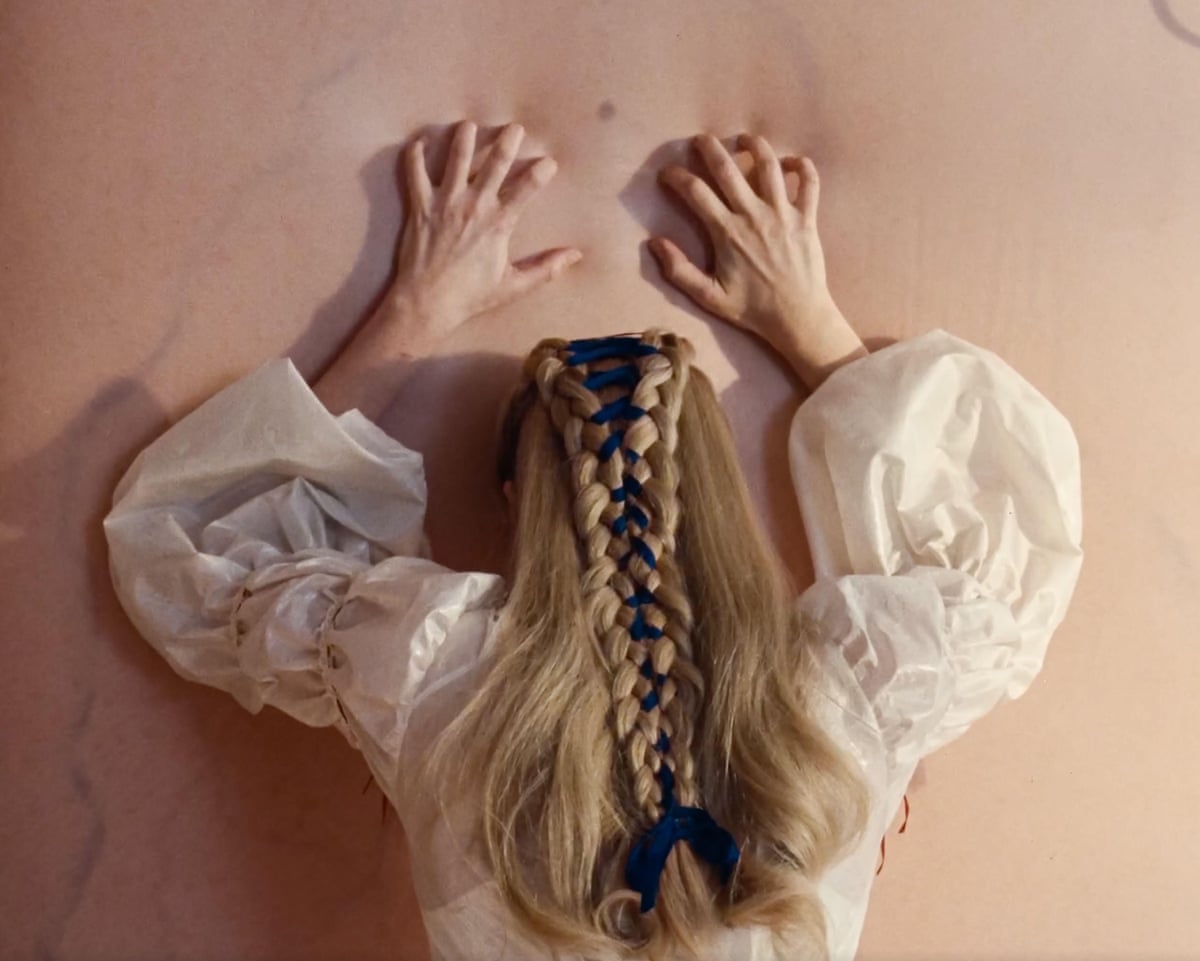
This is Fennell’s "Wuthering Heights," with the title ironically presented in inverted commas, though the postmodern irony seems unnecessary. Cathy is depicted as a primped belle trembling in Heathcliff’s presence, who is portrayed as a moody, long-haired, bearded outsider, evoking an unsettling comparison to Scarlett O’Hara embracing Charles Manson. Later, Heathcliff adopts a more refined appearance, sporting a shorter, more approachable hairstyle and a perpetually damp, translucent shirt.
As a child, young Cathy Earnshaw (Charlotte Mellington) is a lively girl, indulged by her jovial, twinkly-eyed father, a role in which Martin Clunes dominates the film. Fennell notably removes the character of Cathy’s elder brother Hindley, along with his wife and son, from the narrative, transferring Hindley’s destructive drinking and gambling habits to the father. Additionally, consistent with traditional adaptations, the second half of the novel focusing on the grown children of Cathy, Hindley, and Heathcliff is omitted. The film also weakly downplays Heathcliff’s dark skin, possibly explaining the ironic quotation marks around the title as a dismissal of authenticity concerns.

Mr. Earnshaw, on a whim, rescues a young street urchin from Liverpool during a business trip and adopts him as Cathy’s stepbrother; this is Heathcliff, portrayed as a sullen boy by (the young star of Netflix’s ). The children run wild together, but as adults from near-aristocratic and servant classes respectively, their feelings remain unacknowledged and unconsummated.
Due to the family’s financial difficulties, Cathy marries the wealthy but unremarkable neighbor Edgar Linton (Shazad Latif), breaking Heathcliff’s heart. Heathcliff leaves but returns years later wealthy, engaging in a passionate affair with Cathy, who discovers the reasons for his departure. He later spitefully marries Edgar’s meek sister Isabella (Alison Oliver, who amusingly channels Sophie Thompson). Fennell downplays his cruelty toward Isabella by portraying her as a smirkingly consenting submissive.
The character of the all-knowing housekeeper Nelly Dean (Hong Chau) is complex in the novel, serving as the primary narrator through whose perspective most events are seen. Nelly is considered English literature’s quintessential unreliable narrator, the deadpan witness and instigator of the central tragic misunderstanding that destroys Cathy and Heathcliff’s happiness. Fennell interestingly includes a scene where Cathy confronts Nelly on this point. Eventually, the story reaches an emotional climax with a flood of tears, presented in a frenzied, exhausting style reminiscent of Baz Luhrmann, making the film feel like a 136-minute music video for the soundtrack’s songs.
Fennell’s Wuthering Heights lacks the raw impact of her earlier films such as Pamela and Promising Young Woman, or the 2011 adaptation of Brontë’s novel, which genuinely conveyed the passionate truth of Cathy and Heathcliff’s love. Instead, Fennell’s version appears as a luxurious pose of unserious abandon. It is quasi-erotic, pseudo-romantic, and ultimately ersatz-sad, resembling a club night of mock emotion.


