Immersed in Art at the Chelsea Hotel
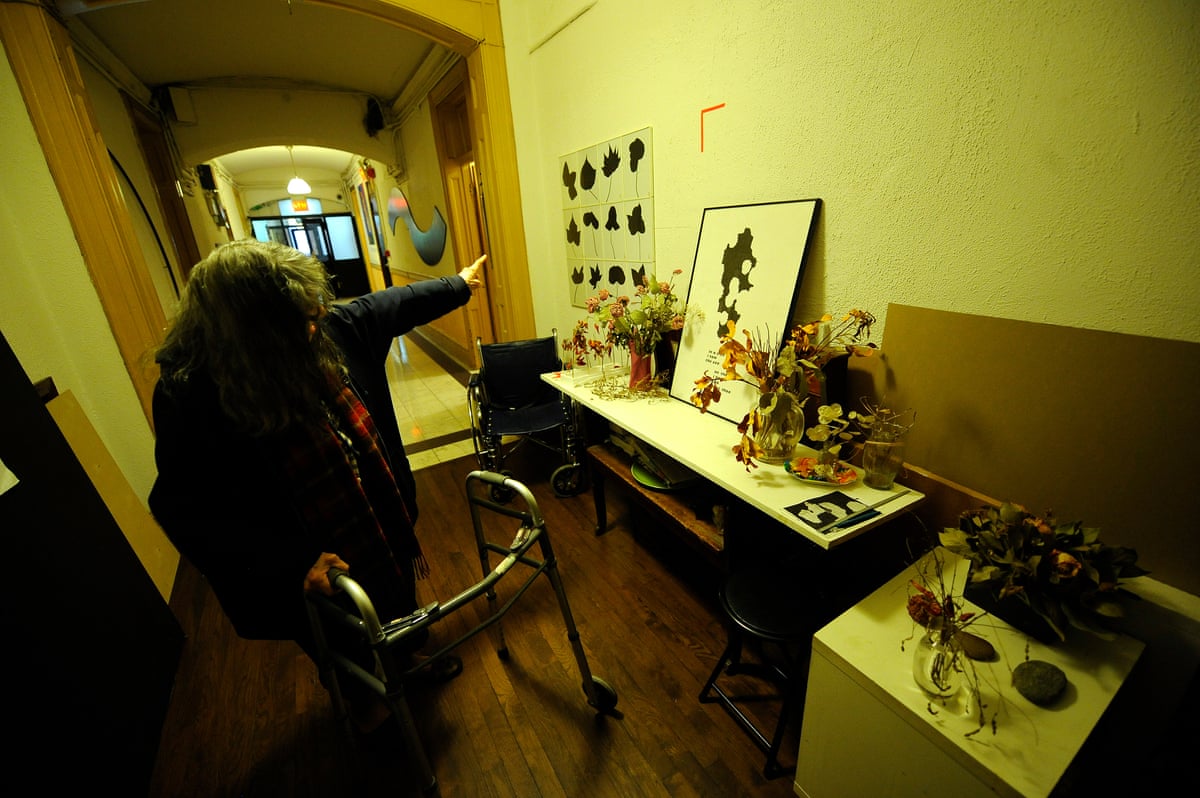
When artist Yto Barrada entered room 503 on the fifth floor of the Chelsea Hotel, she was struck by the overwhelming sight before her. The walls were completely covered with Xeroxed word art, graphic reproductions of geometric sculptures, hundreds of photographs capturing passersby on the street below, and meticulously arranged collections of leaves in grids. Cardboard boxes and crates filled with additional artworks, prints, books, and maquettes formed precarious pathways through which Barrada had to maneuver sideways. Sculptural pieces crafted from brass, marble, and wood occupied every visible surface. Amid this extensive accumulation of four decades of intense creative work, Bettina—the artist and long-time resident of the iconic New York hotel—rested on a small daybed.
A Life of Solitude and Creative Devotion
In the book Bettina, edited by Barrada and designer Gregor Huber and published by Aperture in 2022, Barrada reflects on her impression of the artist:
“One sees Bettina and understands that some disaster has taken place, long ago.”Barrada was among the very few individuals allowed access to room 503 since Bettina moved into the Chelsea in 1972. Despite the hotel's vibrant artistic community, which included figures like Patti Smith, Bob Dylan, and members of Andy Warhol’s circle, Bettina chose seclusion. She dedicated her life to producing conceptual art that seemed to emanate ceaselessly from a profound internal source, an impulse she described as a divine energy.
As her body of work grew, Bettina became increasingly isolated from family and friends and wary of external interest. For years, when venturing out for groceries, she transported her latest works and portfolios in a shopping trolley to protect them from theft. She even slept in the hallway on a lawn chair as her prolific creations eventually filled every room of her apartment. When Barrada met Bettina in 2015 and visited her, she felt Bettina inhabited a parallel world entirely of her own making.
Exhibition and Artistic Innovations
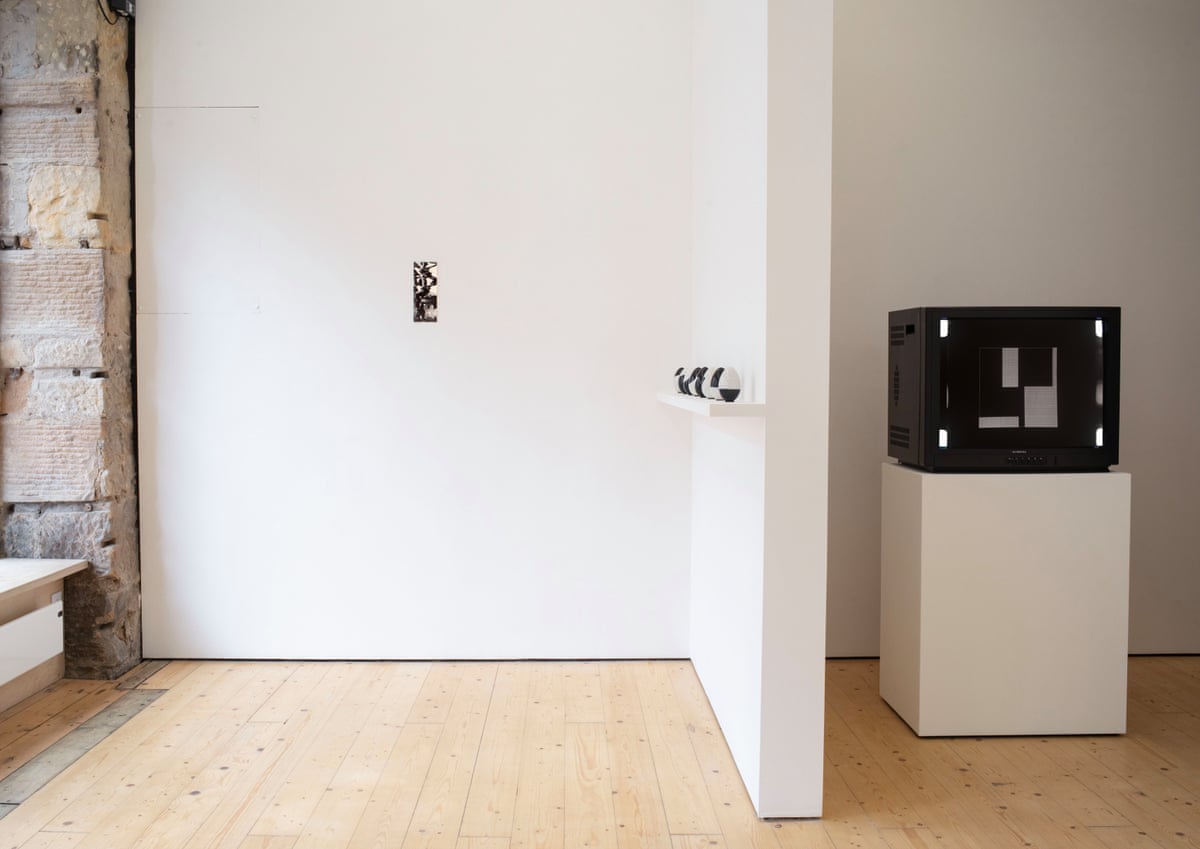
Bettina’s sculptures, photographs, and films are currently featured in the exhibition Bettina: Finite Structures, part of the Glasgow International. The show includes industrially cut marble sculptures and a newly digitized 8mm animation titled Penetration of Four Equal Constants by Eight Elements of Progressive Displacement (1975-76). Created with physicist Robert W Weinberg’s assistance, the animation was programmed on a computer-controlled cathode-ray oscilloscope and is being displayed publicly for the first time.
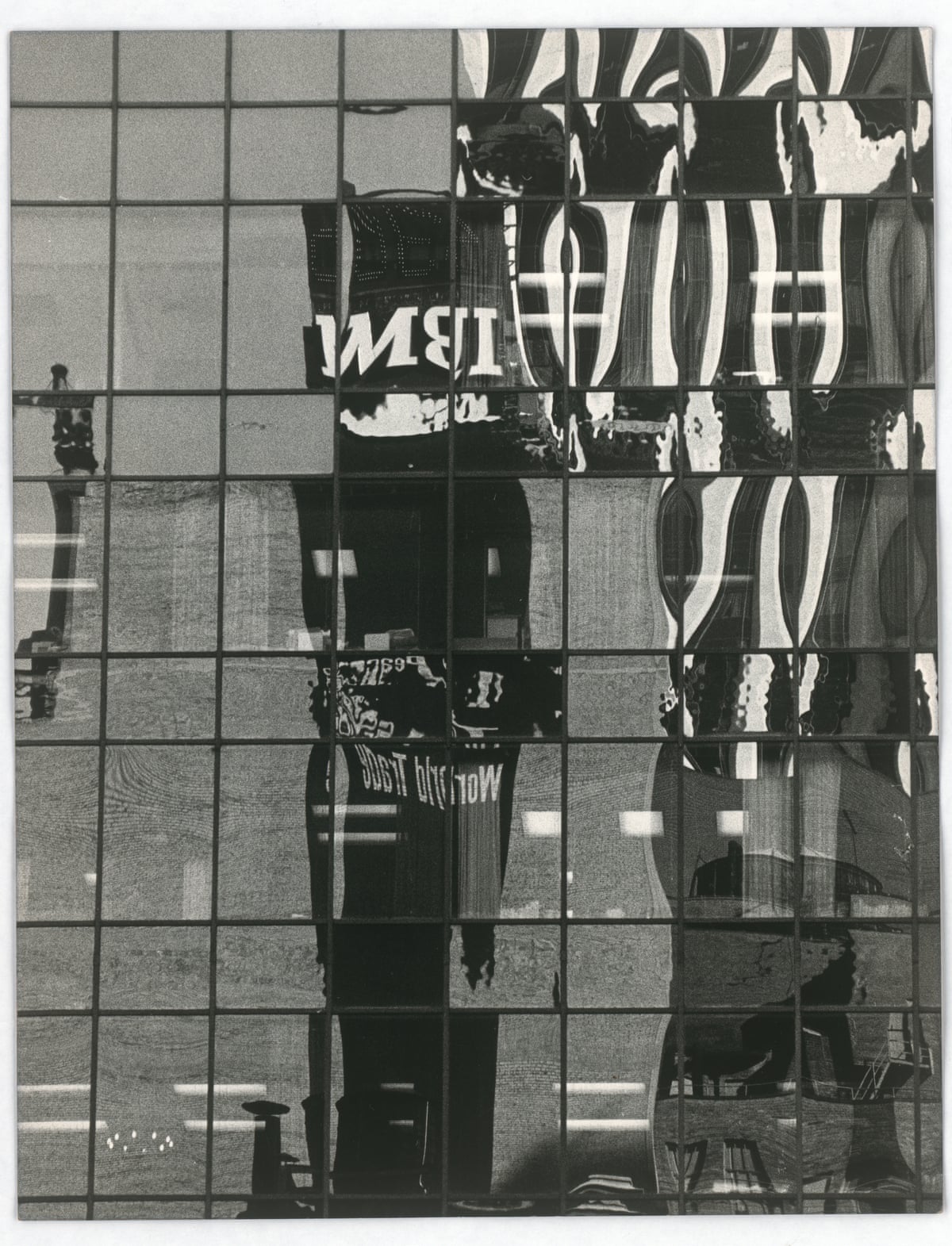
Photographic works from the 1970s, developed and printed in Bettina’s bathroom, are also on view. Among these is Phenomenological New York, which captures distorted reflections in the glass and steel skyscrapers emblematic of Wall Street’s financial architecture. A series of self-portraits from the same period, titled Rencontres Psychic, explores connections between these wavering distortions and the contours of the female body.
Early Life and European Influences
Bettina Grossman was born into an Orthodox Jewish family in Brooklyn in 1927 and was known as Betty during her youth. She studied commercial art in high school and soon supported herself as a textile designer and stylist. At age 30, in the late 1950s, she traveled to Paris intending to spend a year exploring Europe. Instead, she spent eight years traversing the continent, continuing her textile work while acquiring skills in glassmaking, sculpture, silversmithing, and photography.
During this period, Bettina explored the marble quarries of Carrara, designed silverware in Stockholm, and learned stained glass production from master artisans in Chartres, France. She also adopted the name Bettina, moving away from her earlier nickname.

Return to New York and Artistic Evolution
In 1966, Bettina returned to New York and established a live-work studio in Brooklyn Heights. Although primarily known as a commercial designer, she began to recognize parallels between her European work and the systemic painting and geometric abstraction emerging in New York’s contemporary art scene. This realization fostered a new confidence in exploring form and perspective, leading her to develop a conceptual framework centered on flatness, space, pattern, and their relationship to the individual.
However, this period of optimism was short-lived. Months after resettling in New York, a devastating fire destroyed her studio overlooking New York Harbor. She lost all her possessions, including her artworks from Europe and her cat. This loss erased the physical record of her formative years and the complex ideas she had been developing.
Rebirth Through Art
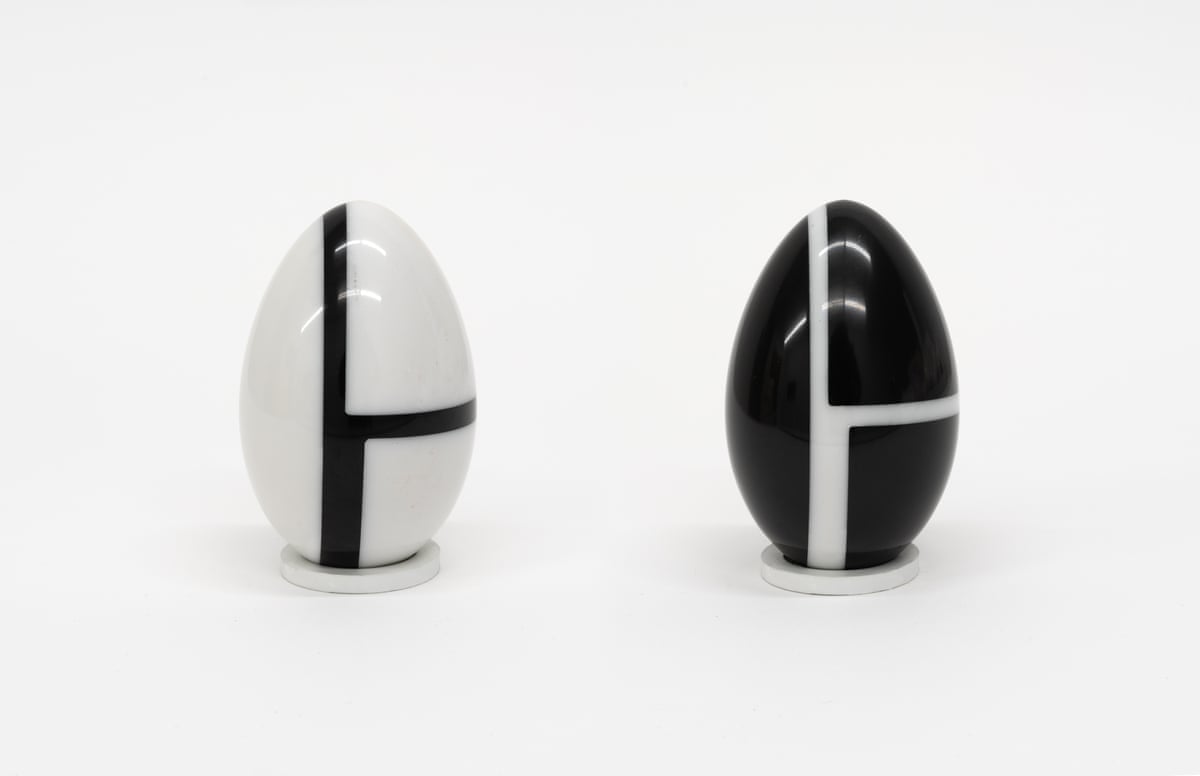
Following the fire, Bettina abandoned commercial design and committed fully to her art. She briefly returned to Europe after receiving a grant to study marble sculpting in Italy. There, she began recreating lost works and created a new series of marble egg sculptures symbolizing rebirth and reproduction. Transitioning from textiles and paper, she sought materials with greater resilience and presence.
“After the fire – when I had to start all over again – I found, psychologically, that two dimensions weren’t sufficient,”she wrote. Her work grew increasingly theoretical, diagrammatic, and expansive, with contours that extended into the mystical. Influenced by the esoteric Russian philosopher Peter Ouspensky, she became convinced she perceived an invisible web of relations she termed the fourth dimension.
Life at the Chelsea and Philosophical Pursuits
Bettina worked obsessively to manifest what she believed existed beyond human perception. She withdrew socially and moved into the Chelsea Hotel. Reflecting her philosophical interests, she posted a sign on her apartment door referencing Immanuel Kant:
“The Institute for Noumenological Research.”
Recognition and Legacy
Bettina passed away in 2021 at age 94, having begun to receive recognition late in life. News of her enigmatic presence and extraordinary body of work at the Chelsea Hotel spread among New York’s younger artists. Filmmaker Corinne van der Borch produced Girl with Black Balloons about Bettina, which led Barrada to discover her work and advocate for museum exhibitions.
Two months before her death, Bettina saw a selection of her pieces displayed at MoMA PS1, an affiliate of MoMA. However, much of her story remains to be uncovered. As executor of Bettina’s estate, Barrada and a team continue to unpack, document, and catalogue the artist’s extensive archive. Room 503 still holds many secrets yet to be revealed.