Introduction
Beth McKillop, a distinguished museum curator and scholar specializing in Korean art, passed away at the age of 72 due to metastatic breast cancer. Long before Korean film, television, and music gained global recognition, McKillop advocated for the appreciation of Korean artistic traditions as significant cultural expressions in their own right, rather than as secondary to the histories of China or Japan.
Her career at the Victoria & Albert Museum (V&A) and the British Library was instrumental in reshaping the understanding of Korean art in Britain. Through her efforts, she introduced visitors, students, and researchers to Korea’s ceramics, books, and design, helping to establish Korean art as a central field within East Asian art studies in the UK.
Major Contributions and Achievements
Between 1990 and 1993, McKillop was seconded from the British Library to the V&A as the Samsung curator of Korean art. During this period, she established the United Kingdom’s first permanent museum gallery dedicated to Korean art. By cultivating relationships across Korea, she expanded the V&A’s Korean collection by over 120 objects, encompassing both historical and contemporary works.
Among these acquisitions was a notable celadon vase created in 1990 by the ceramic artist Yu Geun-Hyeong. This piece exemplifies the dialogue between tradition and innovation that McKillop sought to emphasize. In her catalogue, she wrote:
“The vase pays homage to the Koryŏ tradition [AD 918-1392] with its spreading rim, small loops at the shoulders, and delicately inlaid pair of white and black cranes in flight, yet diverges with its angular body. The trunk of a pine tree seems to grow out of one of the edge lines that divide the bottle into irregular facets, and its leaves trail into the lines of the glaze crackle.”
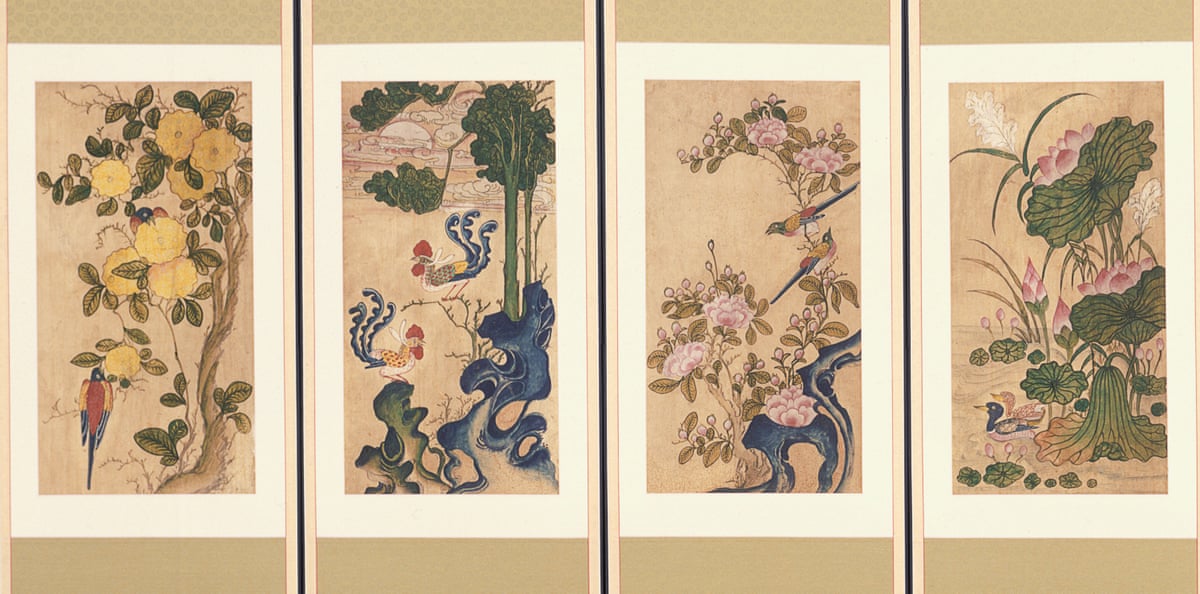
Beyond ceramics, the gallery showcased Korean textiles, furniture, and decorative arts. A 19th-century Korean flower and bird screen depicted the four seasons with birds and flowers, illustrating traditional themes in Korean art.
A hanbok, crafted by the fashion designer Lee Young-hee, demonstrated how Korean traditions continue to evolve in contemporary design. Additionally, a 1991 tanch’ŏng painting—used to decorate wooden architecture—showcased the mastery of the Buddhist monk Kim Hong-do.
Early Life and Education
McKillop’s interest in Korea began somewhat unexpectedly. While working in the Chinese section of the British Library during the early 1980s, she noticed the lack of specialist expertise in the institution’s Korean collections. Supported by the library, she began studying Korean at the School of Oriental and African Studies (SOAS), University of London, under Professor David McCann, one of the founders of Korean studies in Britain. What initially was a practical response to a curatorial need evolved into the defining intellectual commitment of her career.
Born in Glasgow, Beth was the eldest of four children to Mary (née Chalmers), a teacher, and Norman McConochie, a quantity surveyor. She attended Glasgow High School, where she skipped a year, before moving to Laurel Bank School. At age 16, she entered the University of Glasgow, earning a humanities degree. She then pursued a second degree in Chinese studies at Churchill College, Cambridge, where she was among the first cohort of women admitted to the college.
Early Career and Experiences in China
After graduating in 1975, McKillop was selected by the British Council for an academic exchange program in China. She studied first at a language institute in Beijing and subsequently at Peking University during the final years of the Cultural Revolution. This experience left a lasting impression on her. She later recalled participating in wheat harvests, transplanting rice seedlings, and assisting in assembling railway engines alongside fellow students.

Following a brief period with the BBC Monitoring Service, where she summarized Chinese-language broadcasts, she joined the British Library in 1981. Initially a research assistant, she later became curator of the Chinese and Korean collections.
Scholarly Work and Collaborations
Among her significant projects was work on the British Library’s collection of manuscripts from Dunhuang, acquired by the explorer Aurel Stein. Collaborating with Chinese scholars and conservators, McKillop helped make thousands of rare manuscript fragments more accessible through cataloguing, conservation, and publication.
She also worked closely with the Japanese scholar Yukio Fujimoto to produce the first detailed catalogue of the library’s early Korean books. McKillop became one of Britain’s leading authorities on Korean book history and printing. Her essay, "The History of the Book in Korea," was published in the Oxford Companion to the Book in 2010.
Engagement with North Korea and Later Career
Following the establishment of diplomatic relations between Britain and North Korea in 2000, McKillop joined British Library and British Museum delegations on visits to North Korea in 2001 and 2002. These visits culminated in the publication of the book North Korean Culture and Society (2004), co-written with her colleague Jane Portal. Reflecting on her experiences, McKillop observed that North Korea reminded her of China during the Cultural Revolution, recalling dinners held in vast, sparsely occupied halls where damp tablecloths were used to remove creases before official banquets.
In 2004, she returned to the V&A as Keeper of Asia. Over the following decade, she oversaw major projects including China Design Now in 2008 and the creation of the V&A’s new Asia galleries. She later served as Director of Collections and Deputy Director of the V&A.
Continued Scholarship and Leadership
Even after retiring from executive leadership in 2016, McKillop remained an active scholar, pursuing new research projects. Her final major publication, co-written with Jane Portal, was Precious Beyond Measure: A History of Korean Lacquer (2024).
Known as a thoughtful and fair-minded leader, she was admired for encouraging younger curators and researchers, many of whom credited her with shaping their careers.
Her influence extended beyond the institutions where she worked. She taught at SOAS, delivered lectures at international programs including the Korea Foundation, and served as president of the Oriental Ceramic Society from 2018 to 2021.
She was also a trustee of National Museums Scotland and the Sir Percival David Foundation of Chinese Art. In this capacity, McKillop was responsible for brokering the foundation’s Chinese ceramics collection into the custodianship of the British Museum in 2025. The museum’s director, Nicholas Cullinan, described this as “the greatest gift to any museum in the modern era.”
Personal Life
In 1973, she married Andy McKillop, a publishing director who later became a gardener and artist. He survives her, along with their daughter Lucy, son Joe, and grandson Sam.