

AI Analysis Challenges Attribution of Van Eyck’s Saint Francis Paintings
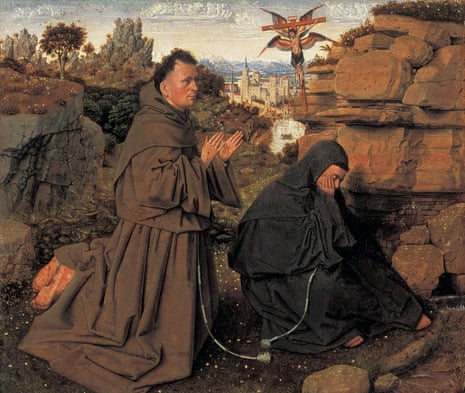
Scientific examination of two versions of Saint Francis of Assisi Receiving the Stigmata, housed in museums in the United States and Italy, has raised significant doubts about their attribution to the 15th-century Flemish master Jan van Eyck.
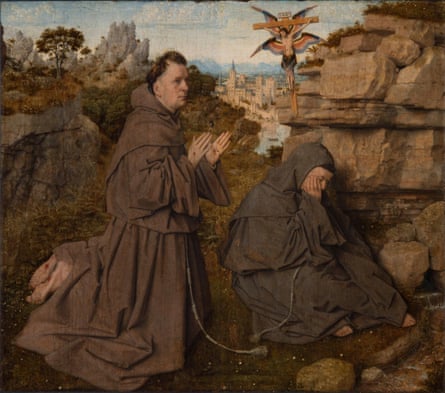
The near-identical unsigned paintings are displayed in the Philadelphia Museum of Art and the Royal Museums of Turin. They are among the limited number of surviving works attributed to Van Eyck, a pivotal figure in Western art known for his naturalistic portraits and religious compositions.
However, recent tests using artificial intelligence (AI) conducted by Art Recognition, a Swiss company collaborating with Tilburg University in the Netherlands, failed to detect brushstrokes characteristic of Van Eyck in either painting. The AI analysis concluded that the Philadelphia version was “91% negative” and the Turin painting “86% negative” for Van Eyck’s hand.
Expert Opinions and Implications
Till-Holger Borchert, a leading Van Eyck scholar and director of the Suermondt-Ludwig-Museum in Aachen, noted that the findings support previous scholarly suggestions that both paintings might be studio works—created in Van Eyck’s workshop but not necessarily painted by him personally.
“Although I was surprised by the analysis, it poses further questions that need to be explored,” Borchert said.
Dr Carina Popovici, CEO of Art Recognition, described the high negative percentages as particularly striking. In contrast, another Van Eyck painting, Portrait of Giovanni Arnolfini and his Wife, housed in the National Gallery in London, was assessed as 89% likely to be authentic by the same AI technology.
“I expected that, if one painting was negative, the other would be positive. But no, both came out negative,” Popovici said.
She added to ,
“I’m guessing that the Philadelphia and Turin museums won’t be happy. It’s not good news on these paintings.”
The Philadelphia and Turin museums have been contacted for comment. Some critics argue that factors such as the paintings’ condition and subsequent restorations might affect AI-based brushstroke analysis.

Further Analysis and Context
Dr Noah Charney, an art historian who discussed the initial findings regarding the Philadelphia painting on his podcast, characterized Art Recognition’s prior analyses as “remarkably accurate.” He noted that the unexpected negative results for both paintings prompted additional testing to confirm the findings.
“I had expected that the Turin picture would be confirmed as by Van Eyck, and that the Philadelphia version would emerge as a copy, whether from the artist’s workshop or later,” Charney said.
He suggested that the negative results imply both paintings are studio works, potentially indicating the existence of a lost original more fully painted by Van Eyck himself.
“If a work comes out of Van Eyck’s studio, it doesn’t necessarily mean that he actually physically painted the surface level of all aspects of it,” Charney explained. “That’s a misconception that people get from this 19th-century idea of the lone artist in a garret in Paris drinking absinthe, smoking cigarettes, wearing a beret and doing every aspect of the work themselves.”
Van Eyck’s Legacy and Artistic Significance
Jan van Eyck is widely regarded as a pioneer of oil painting. While he did not invent the medium, he perfected it to such an extent that subsequent artists worked in his shadow for centuries.
“His surfaces shimmer with light in detail so fine you need a magnifying glass to take it all in. Every stone, hair, reflection, and a glint seems to be rendered with a kind of supernatural clarity,” Charney said.
He emphasized Van Eyck’s ability to make the everyday luminous, which contributes to his reputation as not only a great painter but also one of the greatest observers of reality in Western art.
Despite his fame, Van Eyck’s surviving oeuvre is limited, with fewer than 20 paintings universally accepted as entirely by his hand.
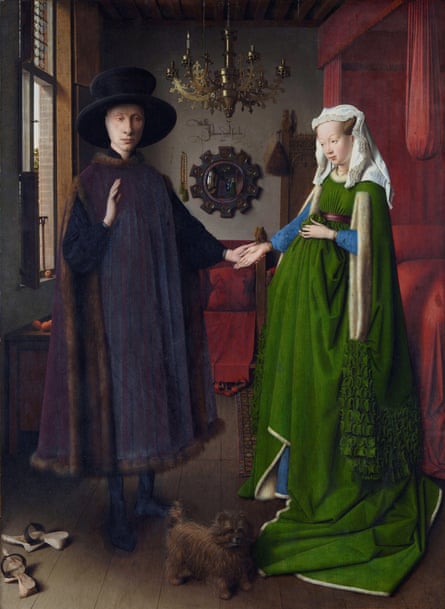
The National Gallery in London is preparing a November exhibition focused on Van Eyck’s portraits.
Additional AI Findings in Art Authentication
Art Recognition has previously identified up to 40 fake paintings offered on the art market in 2024. In 2021, the company also concluded that Rubens’ Samson and Delilah in the National Gallery was “91% negative,” supporting long-standing doubts about its attribution to the 17th-century Flemish master.


